
Home » Cost Guides » Louisiana Cost Guides » How Much Does it Cost to Build a House in Baton Rouge?
Baton Rouge is recognized for being the location of Louisiana’s flagship university and the melting pot of the Cajun and Creole cultures. The city is located at the mouth of the Mississippi River and plays an important role in America’s logistics and energy network. Following the onset of the COVID-19 pandemic, Baton Rouge’s economy has been affected by storms and tight supply chains. Fortunately, markets expect local performance to improve as 2022 passes.
Businesses have begun to adapt to the shift in market trends, including consumer behavior and an uptick in infrastructure projects like roads, bridges, and flood protection. The Baton Rouge Economic Outlook Summit 2022 discussed the changes taking place in different sectors of the local economy. Adam Knapp, president and CEO of the Baton Rouge Area Chamber, mentioned that firms are looking into more creative ways to reach more talent to hire. One effort is an app that taps into the college and university students by offering internships, which is expected to help alleviate the problems arising from the outward migration of 25 to 44-year-old professionals. Still, Baton Rouge is doing better compared to its peer cities.
The Cost of Building a Home in Baton Rouge


According to Knapp, the top obstacle for employers is workforce-related. About 18.5% of employers in a BRAC Survey put workforce issues as its top obstacle, followed by traffic (12.18%) and material costs (11.54%).
Associated General Contractors of America officials noted that there is a growing number of job openings, which is an indication of increasing labor shortages. About 83% of contractors reported difficulties in finding skilled workers to hire. Despite construction employment doing better in most metro areas, contractors still prefer to hire workers.
As a result of the labor shortage, the construction industry is experiencing an overstretched workforce, project delays, and an increase in costs.
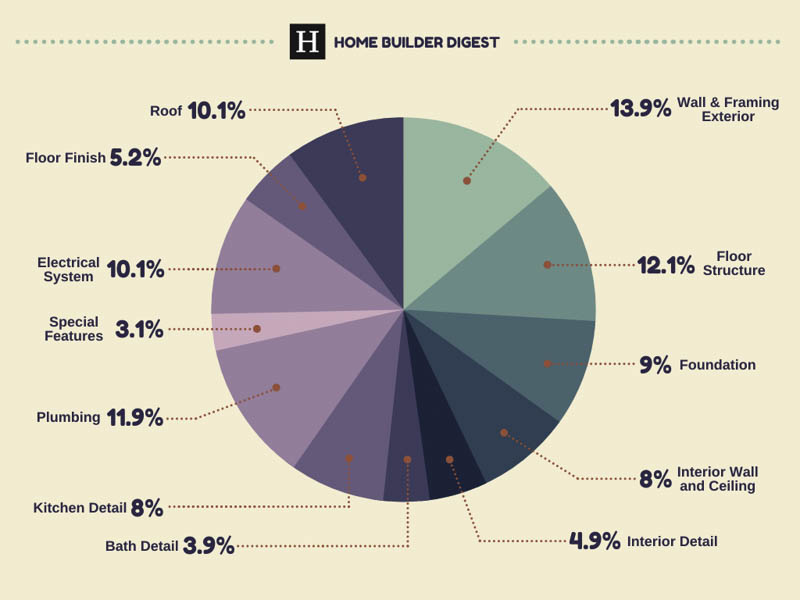
Figure 1. Typical cost breakdown of a single-family home constructed using the conventional method, according to Home Builder Digest. Image Source: National Cost Guide.
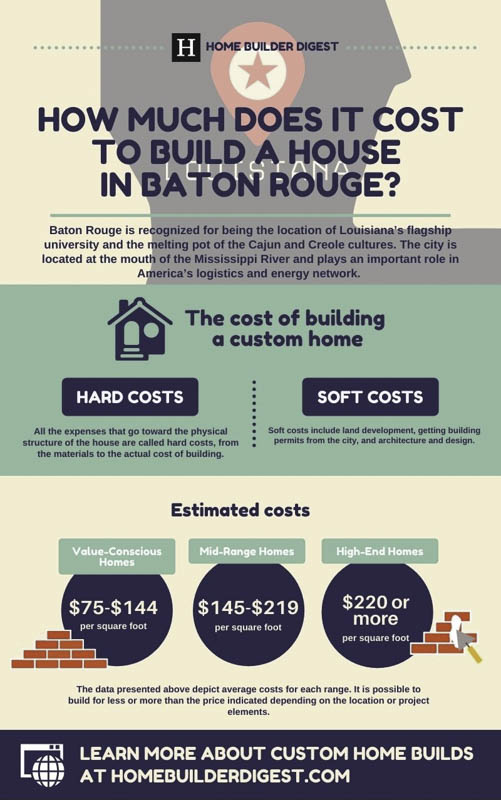
Compared to the national average of new home construction of about $207 per square foot, a real estate group said it is around $150 per square foot for Baton Rouge. Cost per square foot will differ from project to project, typically based on the type and quality. Prospective project owners can expect to see firms charging $75 to $220 per square foot for the home building cost. Overall construction cost, however, will also be affected by hard and soft costs.
Hard costs cover the aspects of construction that are physically part of the house itself. It typically includes things like framing, foundation, plumbing, flooring, and roofing. Meanwhile, soft costs are things like architectural and design fees, permitting fees, and land costs. Project owners should keep in mind that hard and soft costs will fluctuate independently of each other without prior notice.
Hard Costs
Typically, new home construction projects in Baton Rouge will cost anywhere between $147,338 and $436,401. Some new home construction projects may cost more, depending on the square footage and additional features. Some firms may offer to work at $75 per square foot for an extremely basic and simple home, however, it is uncommon. It is more common for project owners to come across a $145 to $219 per square foot price range, usually for a mid-value type home. Projects priced at $220 per square foot and above are mostly for high-end luxury homes in the Baton Rouge area.
In addition to basic construction costs, project owners also have to factor in other hard costs like foundation, roofing, HVAC installation, and electrical installation.
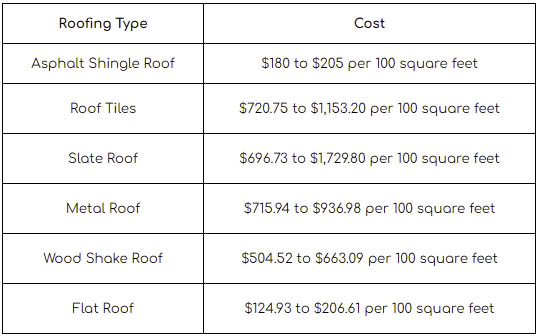
Roofing costs in Baton Rouge can range anywhere from $153 to $1,729 per 100 square feet, depending on the roofing type. The following table provides price ranges that project owners can expect to see:
The cost of site work is composed of several aspects. One of the major parts of site work is the foundation, which can cost about $5.55 to $6.18 per square foot. Another is concrete footing that can sometimes result in $2,892 to $22,600 for the overall work. There is drywall installation, costing $1.40 to $2.20 per square foot.
Major systems, meanwhile, are typically centered around HVAC, electrical, and plumbing. HVAC systems will generally cost $1,615 to $1,931 per furnace material costs and plumbing is usually $70 per hour of labor. Electrical wiring is about $87 to $699, while electrical fixture installation is at a fixed $124.93 to $142.23 per 120-volt outlet.
Flooring costs between $705 and $5,291, but may be higher or lower depending on whether the project owner is looking for materials on top of labor.
Soft Costs
Soft costs are concerned with the non-physical aspects of new home construction. Most project owners will pay most attention to things like design costs, permitting costs, and land.
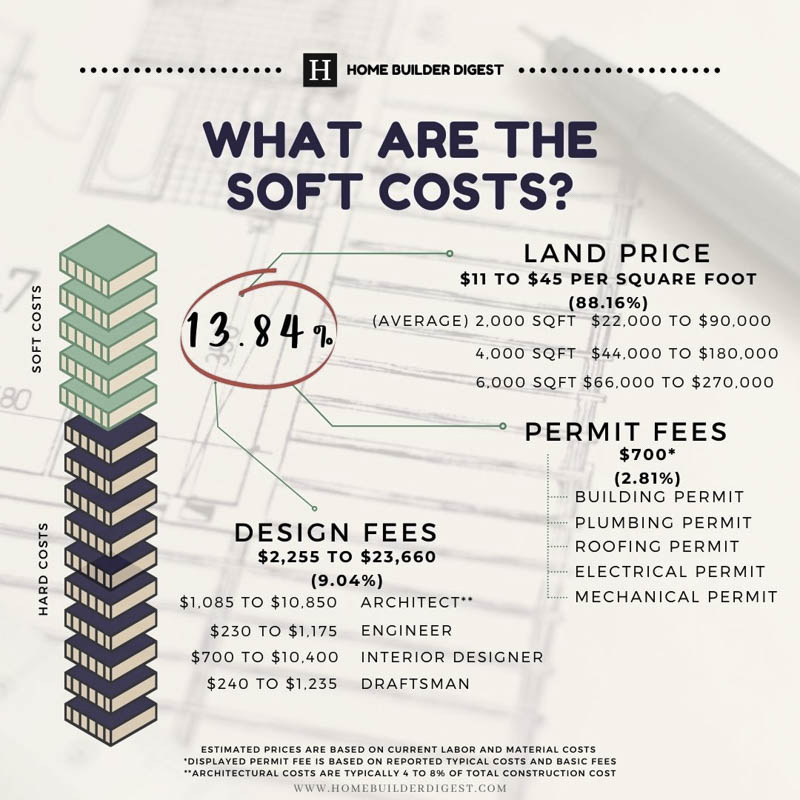
Figure 2. Soft cost percentage and average price range of additional fees, determined from the overall cost of custom home building in Baton Rouge.
Cost of the Land
While Baton Rouge was one of the fastest-growing cities in the south, it is now experiencing stagnant population growth. The sluggish population growth means that land prices will not increase as much as areas with higher inbound population growth.
The parcels of land available for residential development in Baton Rouge on Redfin have an average price of $179,553.33. The cheapest lot available is $9,900 for 2,613 square feet. It is located on 36th Street. Meanwhile, the most expensive lot is priced at $560,000. The lot is 12,225.53 square feet and is located along Ingleside Drive.
Permits and Other Fees
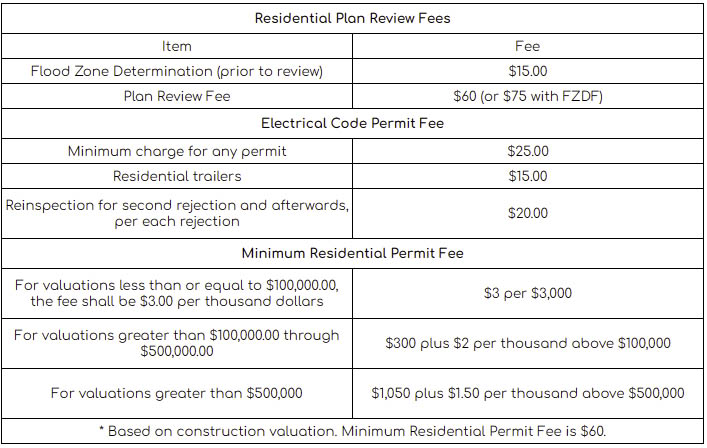
Information regarding obtaining permits in Baton Rouge can be found on the local government’s website. Permits can be applied for through the online platform MyGovermentOnline. The website also provides a list of works that do not require a permit and information required for residential plan reviews.
The local government has provided typical situations that require a permit:
- Any accessory structure over 200 square feet
- Any electrical work
- Any fencing that is 4 feet tall or higher
- Any modification of floor plan or structural aspect
- Changing out an air conditioning unit or components (excluding window units)
- Changing out or relocating a water heater
- Changing windows or doors
- Covered patios
- Gas line work
- Home additions and renovations
- Installing generator or solar panels
- A new residence
- Pools, in-ground and above ground
- Relocation of a house or mobile home
- Roofing and decking that exceeds 100 square feet
- Sewer line work
- Solid fencing that is 3 feet tall or higher
The following table provides information on the usual fees that need to be considered:
Architecture and Design Fees
Architects will typically charge based on the total cost of construction or total construction value. Baton Rouge will charge between 4 to 8%, depending on the services rendered, project complexity, and architect experience.
There are also architectural firms that may charge by the hour or by square footage. Pricing is based on the request, project location, and the architect’s position, experience, training, and reputation. Some of the common services new home construction projects require are layered drawings, project management, concept development, consultation, and site visits.
As for interior design, firms that are paid by the hour will generally charge $50 to $200 per hour. It is common to see services being offered between $85.77 to $97.34.
Some projects have total architectural costs at as low as $500 and as high as $17,000. The average total price most project owners have paid is $1,800 to $8,900.
The Future of Baton Rouge’s Residential Construction Industry
Despite Baton Rouge expecting a full job recovery by 2023, the construction industry will continue to experience the pressure of having a labor shortage. About 72% of general contractors foresee the labor shortage to be their biggest challenge for 2022.
Some firms have looked into making up for the lack of labor through the use of technology. Supposedly, having the right construction software and combining it with an automated drone surveying workflow will improve everyday efficiency. A survey in 2020 showed that about 32% of general contractors are looking into new technologies to optimize labor.
Innovating the industry will bring some relief to a workforce harried by supply chain issues and Hurricane Ida. While Baton Rouge was spared from the worst of things, there are still contractors that are helping families clear out debris and rebuild certain areas. This may result in higher project costs and longer completion times. There is also still a delay in materials like lumber, concrete, and steel.
The delays construction firms are experiencing are extending the completion time by about three months, which results in the average time to build a house going up to more than six months.
Cost Saving Tip for Building a Home in Baton Rouge
Elevate Strategically to Reduce Flood Insurance Costs
Baton Rouge’s low-lying geography along the Mississippi River means that flood risk—and flood insurance—is one of the most significant long-term cost factors for homeowners in the region. One of the smartest financial decisions you can make during the design of a new custom home is to build with elevation that exceeds the minimum Base Flood Elevation by at least one to two feet. While FEMA requires homes in designated flood zones to meet the BFE, voluntarily exceeding it provides two powerful benefits: dramatically lower flood insurance premiums under the National Flood Insurance Program’s rating structure, and meaningful protection during the major flood events that have affected Baton Rouge with increasing frequency. Under FEMA’s updated Risk Rating 2.0 methodology, every foot of elevation above the BFE translates into measurable premium reductions that compound annually. For homes built outside of mapped flood zones, adding elevation above the surrounding grade still provides protection against the kind of unprecedented rainfall flooding that devastated Baton Rouge in 2016, when many homes outside mapped zones were inundated. The incremental cost of additional elevation during initial construction is a fraction of what it would cost to retrofit or raise an existing home. Discuss elevation strategy with your builder early in the design process, and request a flood zone determination and elevation certificate as part of your pre-construction due diligence.
Frequently Asked Questions
Which areas in—or near—Baton Rouge are among the best for custom home building?
The southeastern corridor of Baton Rouge, particularly the neighborhoods along Highland Road and in the Country Club of Louisiana, has long been among the most prestigious areas for custom home construction, offering established infrastructure, proximity to LSU, and strong community amenities. University Club, a gated community with golf course living, attracts luxury custom builders seeking resort-style amenities. The Santa Maria and Kenilworth areas provide large lots with mature live oaks and a gracious Southern character. Zachary, north of Baton Rouge, has become one of the most popular suburbs for families building custom homes, driven by its highly regarded school district and small-town atmosphere. Central, east of the city, similarly benefits from its independent school system and growing commercial base. Denham Springs, while significantly impacted by the 2016 flooding, has seen substantial rebuilding and new development, with many lots now elevated and improved. The Prairieville and Gonzales areas in Ascension Parish to the southeast provide more affordable land with growing infrastructure and strong schools. Within Baton Rouge proper, the Mid City and Garden District neighborhoods attract infill custom builders seeking walkable urban locations with character. Buyers throughout the metro should prioritize flood zone research during lot selection.
How does Baton Rouge’s climate potentially impact home building costs?
Baton Rouge’s subtropical climate is defined by long, intensely hot and humid summers, mild winters, and heavy annual rainfall that ranks among the highest of any U.S. metro area. These conditions create construction requirements that directly affect costs. Moisture management is the dominant building challenge, requiring sealed building envelopes, mold-resistant materials throughout the structure, robust HVAC systems with high dehumidification capacity, and properly designed attic and crawl space ventilation. Louisiana’s building code mandates wind-resistant construction features to address the hurricane and tropical storm risk, including reinforced roof-to-wall connections and rated roofing systems, though Baton Rouge’s inland location means wind-load requirements are lower than for coastal parishes. The extreme rainfall—both from tropical systems and routine afternoon thunderstorms—makes site drainage, foundation waterproofing, and gutter systems critical design elements. Many Baton Rouge homes are built on slab-on-grade foundations elevated above the surrounding grade to manage water, and homes in flood zones require additional elevation that adds to structural costs. The mild winters mean frost-line concerns are minimal, keeping foundation depth requirements modest. Year-round construction activity is possible with few weather shutdowns, though the hottest summer months can slow exterior work and affect worker productivity.
What should I know about soil and terrain conditions before buying a lot in Baton Rouge?
Baton Rouge sits on the Mississippi River floodplain and alluvial terraces, and the predominant soil conditions reflect this geography. Much of the metro area features heavy clay soils that are highly expansive—swelling significantly when saturated by Baton Rouge’s frequent heavy rains and shrinking during occasional dry spells. This constant movement is the leading cause of foundation issues in the region and makes engineered foundation systems, such as post-tensioned slabs or deep pier foundations, a worthwhile investment for new construction. A geotechnical investigation before purchasing any lot is strongly recommended, as clay content, bearing capacity, and water table depth vary across the metro area. The flat, low-lying terrain throughout much of Baton Rouge means that drainage must be carefully engineered, as water does not naturally flow away from structures. Proper site grading, French drains, and robust gutter systems are essential. Perhaps most critically, buyers must thoroughly research FEMA flood zone designations for any lot under consideration. The 2016 flood demonstrated that many areas outside mapped flood zones can still experience catastrophic flooding. Reviewing both official flood maps and historical flood records—and consulting with local builders about specific neighborhood experiences—provides a more complete picture of actual flood risk than the FEMA map alone.
Broadly speaking, is it cheaper to build or buy an existing home in Baton Rouge right now?
Baton Rouge offers one of the more affordable housing markets among mid-sized Southern metro areas, with both building and buying costs remaining below national averages. Existing home prices have risen since the pandemic but remain accessible compared to faster-growing Sun Belt markets. On a cost-per-square-foot basis, buying an existing home is generally less expensive than building a comparable custom home. However, Baton Rouge’s existing housing stock carries unique risks that can significantly affect the true cost of ownership. Many older homes sit on foundations affected by the region’s expansive clay soils, and foundation repair is a common and expensive issue. Homes built before current Louisiana building code updates may lack wind-resistant construction features and modern moisture management systems. Most consequentially, many existing homes were either damaged in the 2016 flood or sit in areas with elevated flood risk, and the cost of flood insurance is a major ongoing expense. Building new in Baton Rouge allows you to start with a properly engineered foundation, incorporate current wind and moisture resistance standards, and design the home’s elevation and drainage for optimal flood protection—all of which translate into lower insurance premiums, reduced maintenance, and better long-term resilience. For buyers who plan to stay long-term, the investment in new construction often provides better financial protection in a market where flood risk is the defining variable.
Considering building a home in Baton Rouge?
Contact us for a free consultation