
Home » Cost Guides » Colorado Cost Guides » How Much Does it Cost to Build a House in Colorado Springs?
Colorado Springs is known for its small-town atmosphere despite becoming one of Colorado’s major metropolitan areas. It underwent expansion and development during recent years, which has enticed more and more tourists and businesses alike to flock to the area. Colorado Springs’ economy has also shown resilience during the COVID-19 pandemic through its slight decline compared to the more considerable losses of other local economies. The city has reportedly outperformed several of Colorado’s other metro areas.
Losses incurred by the hotel, education, healthcare, and other service industries were partially offset by the income from the financial, government, and construction industries. Moreover, the Colorado Springs residential construction industry is currently experiencing market growth, which is expected to provide an opportunity for better performance down the line.
The Cost of Building a Custom Home in Colorado Springs
Construction firms are looking into creative solutions to address concerns brought about by the effects of the COVID-19 pandemic. This effort is especially true considering the nationwide housing shortage and continued increase in demand, resulting in a substantial rise in single-family home prices and competition between buyers. As of October 2021, the “Months Supply of Inventory” is 0.5—a 22% decrease from the same period of 2020.
Residential construction firms have also noted an increase in construction costs. There are higher costs for land, labor, and insurance—the cost of materials has also taken up a more significant portion of costs. For example, recent home construction projects spend an average of $24,386 for lumber. One firm has reported increasing total construction cost by $35,000 to $40,000, with lumber accounting for around $25,000 to $30,000 of the increase.
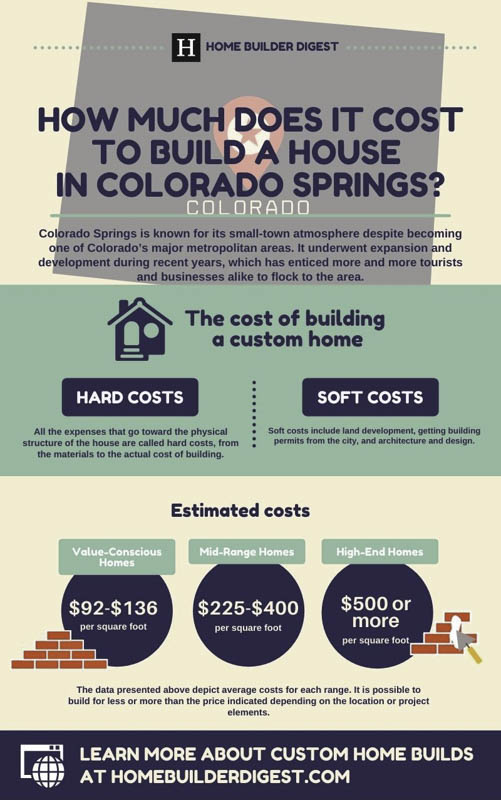


The national average cost for new home construction is between $100 to $155 per square foot. Meanwhile, a value-conscious home construction project in Colorado Springs costs $92 to $136 per square foot. Depending on the finishes and details, the more decent custom home construction projects generally range between $225 to $400. For more high-quality detailing and custom finishes, a homeowner can expect to pay at least $500 per square foot.
Total construction costs will vary depending on the details of each project, as well as the hard and soft costs. Hard costs cover the physical aspects of the house itself like framing, foundation, plumbing, and roofing. On the other hand, architectural and engineering fees, permitting, land, and additional custom features will fall under soft costs. These factors can fluctuate independently, so home builders are advised to pay attention to all the resources going into the project.
Hard Costs
Value-conscious home construction projects in Colorado Springs are typically priced between $92 to $136 per square foot. A more customized home with better quality materials and finishes will cost $225 to $400 per square foot. Meanwhile, a fully customized home with high-end materials, finishes, and details will cost around $500 or more per square foot.
Depending on their location and expertise, some firms in Colorado Springs will work based on different pricing points. For Elk Ridge Custom Homes, the pricing for value-conscious homes is between $180 to $220, while custom mid-range projects cost around $260 to $400. On the other hand, higher-quality homes are priced much higher at up to $500 per square foot. The firm’s CEO, Phil Jung, noted that these figures are rough estimates since the actual cost will change depending on the project’s finishes, size, and complexity.
According to Gowler Homes’ experience, their average custom home is between $1.7mm-$2mm, not including land. The firm is seeing pricing for mid-range projects come in around $275 to $350 per square foot range, while higher-end projects come in between $350 to over $500 per square foot. Gowler Homes currently has projects underway ranging from $1,175,000 to over $5mm.
Construction costs are expected to continue rising due to several factors. With more people moving into Colorado Springs, the limited supply of homes in conjunction with skyrocketing demand is expected to increase prices. This issue is exacerbated by the recent regulatory requirements for the COVID-19 pandemic, cutting down the already limited number of skilled laborers available to meet the high demand.
Increases in material costs have similarly impacted construction costs, leaving most firms with the issue of accounting for the sudden spike. Material costs typically go up around 2% to 5% yearly, but firms experienced a 300% to 500% increase for most material costs since the beginning of the pandemic. Lumber alone contributes an average of $24,386 for home construction projects.
Additional hard costs include labor, roofing, plumbing and heating, ventilation, and air conditioning (HVAC). Labor currently costs a minimum of $13,261 and a maximum of $110,512 for most projects, while roofing generally costs about $5,189 to $6,590. Meanwhile, shingle roofing costs for Colorado Springs varies based on the roof size and shingle quality. A basic 1,500-square-foot shingle roof can cost around $6,600. Asphalt roofing costs can range from $3.30 to $5.60 per square foot.
Plumbing, on the other hand, is roughly $4 to $6 per square foot. The overall cost can total between $8,000 to $12,000 for a 2,000-square-foot new construction home with two or three bathrooms. Installing fixtures like bathtubs, sinks, and toilets will range between $450 and $1,800 per fixture. Lastly, HVAC installation can be $4,000 to $5,000 in Colorado Springs.
Soft Costs
Soft costs are related to aspects of construction that are not part of the physical structure of the home. These include land, permitting, architecture and design, and engineering.
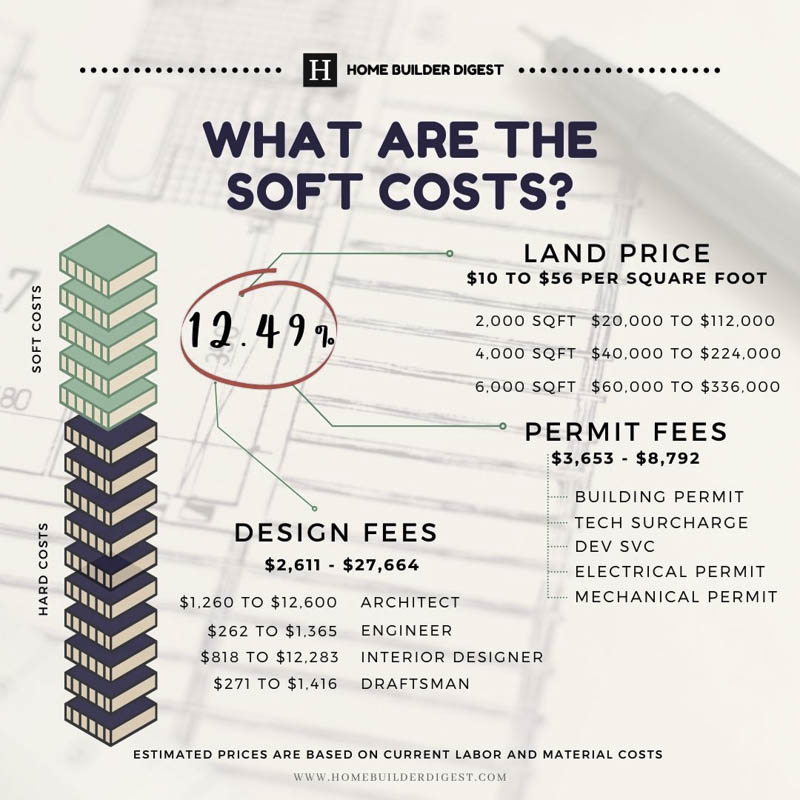
Figure 1. Soft cost percentage and average price range of additional fees, determined from the overall cost of custom home building in Colorado Springs.
Cost of the Land
Based on posts on Redfin, the average cost of land in Colorado Springs is $281,659.93, which is about $8.44 per square foot. The cheapest plot of land for sale is 5,005 square feet and costs $49,999. It is located on Messa Valley Road in the Starlight Acre subdivision. Meanwhile, the most expensive home development lot for sale is $975,000 for around 28,749.6 square feet. It is located on Cucharras Street.
Zillow provides a different range of pricing; however, the cheapest post is the same as the one found on Redfin. The most expensive lot costs $3,500,000 for 233,046 square feet. It is located at Country Lane.
On the other hand, LandWatch’s cheapest lot is about 4,046 square feet and is priced at $120,000. It is located along Black Canyon Road, close to the downtown area. The most expensive lot is at Twisted Oak Circle, sized at around 44,866 square feet and costs $355,000. The land is in a gated community with hiking trails and open space.
Permits and Other Fees
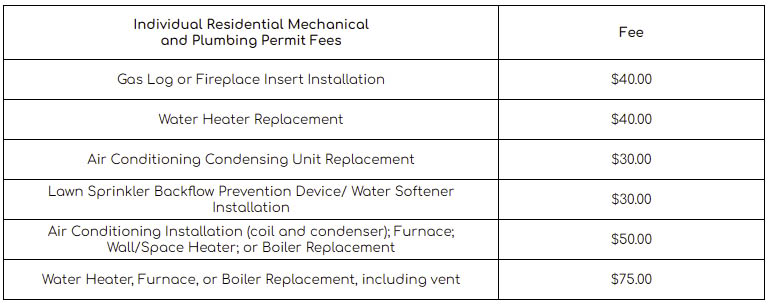
Information on new home construction-related work permits is available on the local government’s website. Filing permits and plan reviewing sessions can be done only by appointment, which can be booked online. Homeowners are encouraged to submit their plans by email before scheduling an appointment.
The schedule of fees can be found on this section of the website. The overall cost can be calculated through the website’s online calculator. The tables below are samples of the roofing and mechanical and plumbing permits.
Architecture and Design Fees
Residential architects in Colorado state, on average, charge 9.77% of construction costs based on the range of 9.25% to 10.29%. Projects priced per square foot cost between $4 to $10 per square foot.
Architects and firms that charge by the hour typically charge between $98.33 to $118.33 per hour. Pricing will vary based on the skill level and position of the architect and the location.
What Leading Custom Home Builders and Architects that Serve the Colorado Springs Area Say
Phil Jung, CEO of Elk Ridge Custom Homes, said the costs per square foot in Colorado Springs are currently $180 to $220, while custom mid-range projects cost around $260 to $400. On the other hand, higher-quality homes are priced much higher at up to $500 per square foot. Jung noted that figures are rough estimates since the actual cost of a custom project still needs to take into account the finishes and the size and complexity of the build. He also notes that given these estimates, the firm works hard to keep those numbers down and give it’s clients the best value for their investment possible.
Despite the effects the COVID-19 pandemic has had on the residential construction industry, Elk Ridge Custom Homes observed market growth and believes that there is a possibility of improving the industry. The pandemic has provided a window of opportunity to explore more creative ways to address flaws in the system.
Matt Gowler, president of Gowler Homes, shared that the pricing for his firm tends to be between $275 to $350 per square foot for mid-range projects and $350 to $400 per square foot for high-end ones. He added that this pricing is 22% higher than what the firm experienced during 2021.
“I believe that construction costs are going to continue to rise,” Gowler said. This view is based on several factors, the first being the current supply and demand of the market. According to Gowler, Colorado is experiencing inbound population growth, further affecting the relationship between supply and demand. The second factor is the supply chain constraints. The third factor Gowler mentioned is the recent regulatory requirements regarding the COVID-19 pandemic. There are currently fewer workers available to meet the industry’s rising demand.
“My advice to project owners: build now,” Gowler said, “yes, prices are as high as they’ve ever been, but they’ll be higher next year!”
Solid Rock Custom Homes, a Colorado Springs-based firm, stated that the average cost of new home construction used to be $200 per square foot. Now, the average has risen to $300 per square foot and can go up to $450 per square foot, depending on the design. Some entry-level projects can cost $250 per square foot, while a mid-level project can cost $250 to $350 per square foot.
Solid Rock expects to have to allocate more time for unforeseen delays for materials and parts. The firm said, “Delays are for everyone, so there is some understanding from customers.” Additionally, more contemporary and alternative materials like steel and glass are becoming more popular.
Solid Rock has a positive outlook for the long-term future of the market, stating, “From late 2023 until 2024, the market will stay strong. Even with a Fed interest rate, you may not see the market temper too much given how much demand there is.”
The Future of Colorado Springs’ Residential Construction Industry
Colorado Springs faces a housing shortage and increasing demand, following the national trend. Home value has risen to an average of $507,507 in November 2021. The low housing supply and rising costs are causing homeowners to shift towards home construction.
Phil Jung, CEO of Elk Ridge Custom Homes, shared that his firm sees market growth and opportunities to refine certain aspects of the industry. Currently, firms are in a rut that comes from “always having excess.” The COVID-19 pandemic encourages businesses to develop more creative ways to deal with problems.
One of the obstacles the construction industry faces is the rising cost of construction, which can be partially attributed to rising material costs. Costs have been rising for the past 18 months and were recorded at 30% across the board. A home construction project that would have cost $600,000 in the past now costs $780,000.
In addition to the material cost going up, firms will have to continue to contend with material shortages. Lead times for materials are unpredictable, which causes firms to run into problems with their sequences and completion times. Projects may end up being finished a month or so later. There are also materials that firms cannot get their hands on or cannot access quickly.
Despite these problems, the construction industry in Colorado Springs is expected to experience continued growth. Most builders have a positive outlook for 2022, considering how subcontractors have had more business in the past two years compared to the previous decade. Pricing and material availability are anticipated to equalize throughout 2022, although there are no expectations of returning to pre-COVID levels
Cost Saving Tip for Building a Home in Colorado Springs
Invest in Fire-Resistant Construction for Colorado Springs’ WUI Zones
Colorado Springs sits at the base of the Rocky Mountain Front Range, and many of its most desirable building sites are located in or near the wildland-urban interface where wildfire risk is a serious and well-documented concern. The 2012 Waldo Canyon and 2013 Black Forest fires demonstrated the devastating potential of wildfire in the Colorado Springs metro area, and building with fire resistance in mind is both a safety imperative and a sound financial strategy. Incorporating Class A fire-rated roofing, fiber cement or stucco siding, tempered windows, enclosed eaves and soffits, and non-combustible decking adds a modest premium during construction but can dramatically reduce the risk of home loss and qualify homeowners for insurance premium reductions from carriers who have become increasingly selective about properties in fire-prone areas. Colorado’s building code has strengthened wildfire-related requirements for WUI construction, and many Colorado Springs builders now offer fire-resistant construction as a standard practice rather than an upgrade. Creating defensible space around the home—thinning vegetation, removing ladder fuels, and using fire-resistant landscaping—is also more cost-effective when designed into the initial site plan. For buyers building in the foothills, Black Forest, or anywhere near the WUI boundary, fire-resistant construction protects both your family and your investment.
Frequently Asked Questions
Which areas in—or near—Colorado Springs are among the best for custom home building?
The Broadmoor area on the southwest side of the city remains the most prestigious custom home destination in Colorado Springs, offering proximity to the historic Broadmoor resort, Cheyenne Mountain views, and established luxury neighborhoods. Flying Horse, a master-planned community on the north side, provides golf course living with mountain panoramas and custom lot availability. The Black Forest area north of town attracts buyers seeking five-acre-plus wooded parcels with a rural estate character, though wildfire mitigation is an important consideration. Peyton and Falcon to the northeast offer more affordable acreage with open prairie views and strong school options. The Briargate and Northgate communities provide newer suburban infrastructure with family-friendly amenities and proximity to the United States Air Force Academy. Monument and Palmer Lake, north along I-25, combine small-town character with Tri-Lakes views and convenient commuting access. Within the city, the Old North End and Patty Jewett neighborhoods attract custom builders seeking walkable streets with mature trees and historic character near downtown. Manitou Springs, immediately west of the city, offers a bohemian mountain-town atmosphere with unique custom building opportunities near the Pikes Peak gateway. The foothills communities along Gold Camp Road and Cheyenne Canyon provide dramatic mountain settings close to town.
How does Colorado Springs’ climate potentially impact home building costs?
Colorado Springs sits at approximately 6,000 feet of elevation along the Front Range, producing a semi-arid climate with cold, dry winters, warm summers, intense UV exposure, and dramatic weather variability including hail, high winds, and rapid temperature swings. The frost line extends approximately three to four feet, requiring foundations to be set at depth. Full basements and garden-level basements are common and add living space while addressing the deep foundation requirements. High-performance insulation, energy-efficient windows, and tight air sealing are important for managing heating costs during winters that can produce extended cold snaps, though Colorado Springs receives over 240 days of sunshine annually, which helps moderate daytime temperatures and makes solar energy installations highly productive. Hail is one of the most significant climate-related building costs in the Colorado Springs market—the Front Range experiences some of the most frequent and destructive hailstorms in the country, and Class 4 impact-rated roofing is increasingly standard for new construction, providing both durability and insurance premium reductions. Wildfire risk in the WUI zones requires fire-resistant construction materials and defensible space design. The dry climate minimizes mold and moisture concerns, and the relatively mild summer temperatures reduce cooling costs compared to lower-elevation markets.
What should I know about soil and terrain conditions before buying a lot in Colorado Springs?
Colorado Springs’ geology is shaped by its position at the transition between the Great Plains and the Rocky Mountain Front Range, creating diverse and sometimes challenging building conditions. The most significant soil concern is expansive clay, particularly the bentonite clay formations found in parts of the metro area. These clays can exert extraordinary pressure on foundations—swelling dramatically when wet and shrinking when dry—and are among the most problematic soils for residential construction anywhere in the country. A geotechnical investigation before purchasing any lot is absolutely essential in Colorado Springs, as clay type and expansion potential vary significantly across neighborhoods. Areas with high bentonite content may require specialized foundation systems, including deep drilled piers, structural floor systems suspended above the soil, and void forms that accommodate anticipated soil movement. The terrain ranges from flat prairie on the east side to steep, rocky foothills on the west, and lots with mountain views often come with sloped terrain that requires retaining walls, engineered grading, and increased site development costs. Rocky subsurface conditions in the foothills provide excellent bearing capacity but increase excavation costs. Buyers should also be aware of radon, which is common in Colorado and may require mitigation systems in homes with basements.
Broadly speaking, is it cheaper to build or buy an existing home in Colorado Springs right now?
Colorado Springs has experienced significant home price appreciation over the past several years, driven by strong population growth, military presence, and an influx of remote workers attracted to the outdoor lifestyle and more affordable housing compared to Denver and Boulder. Existing home prices have risen substantially, and the market remains competitive for desirable properties. Construction costs have also increased, affected by Colorado’s growing labor demand, rising material prices, and the site development challenges inherent in building on the Springs’ varied terrain and problem soils. On a cost-per-square-foot basis, buying an existing home is generally less expensive than building a new custom home, particularly when land acquisition and the potentially expensive soil remediation are factored in. However, many of Colorado Springs’ existing homes were built on foundations that may have been affected by expansive clay, and foundation repair costs in the area can be substantial. Building new allows you to start with a foundation properly engineered for the specific soil conditions of your lot, incorporate hail-resistant roofing, design for energy efficiency at altitude, and build with fire resistance in WUI areas. Colorado’s relatively low property taxes and the absence of hurricane, flood, or earthquake risks that drive up costs in other markets make homeownership in Colorado Springs a strong long-term value proposition.
Considering building a home in Colorado Springs?
Contact us for a free consultation