
Home » Cost Guides » Indiana Cost Guides » How Much Does it Cost to Build a House in Fort Wayne?
As the second largest city in Indiana, Fort Wayne is one of the state’s major metropolitan areas. Fort Wayne is noted for being a center for learning and a progressive environment for businesses and individuals. In recent years, the local economy proved itself to be resilient following the effects of the COVID-19 pandemic on day-to-day life.
The Cost of Building a Home in Fort Wayne


Fort Wayne—along with the rest of Allen County—set a new record for jobs and construction value in 2021. Greater Fort Wayne Inc., the area’s chamber of commerce and economic development organization, recorded positive numbers for attracting and retaining talent. There were about 27 business expansions and relocations within 2021, which is a single-year record for Allen County.
Despite the difficulties posed by the pandemic, people continued to build and expand their homes and businesses in the area.
Unfortunately, construction firms have reported a struggle to find qualified workers to meet the demand for homes. Additionally, while firms are expanding payrolls, the Associated General Contractors of America (AGC) and its chapters are looking for ways to prepare the next generation of construction workers. Some efforts include digital advertising campaigns.
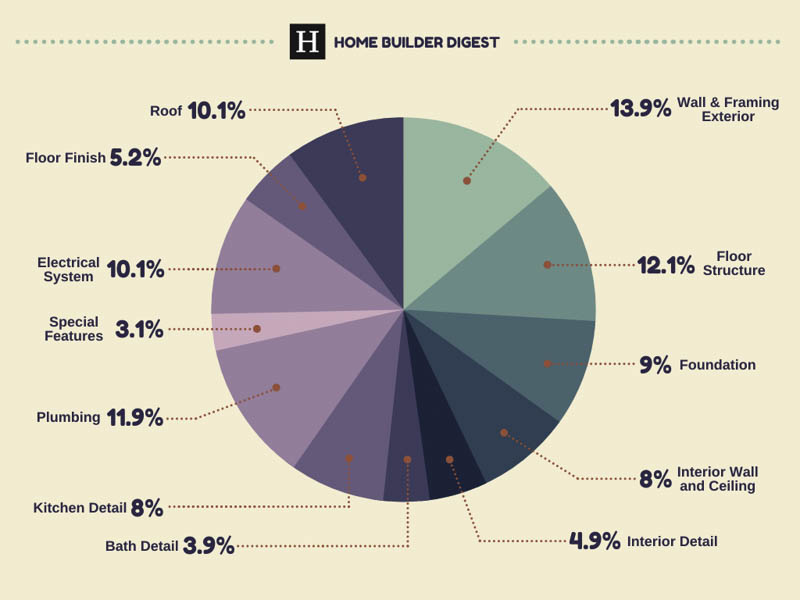
Figure 1. Typical cost breakdown of a single-family home constructed using the conventional method, according to Home Builder Digest.
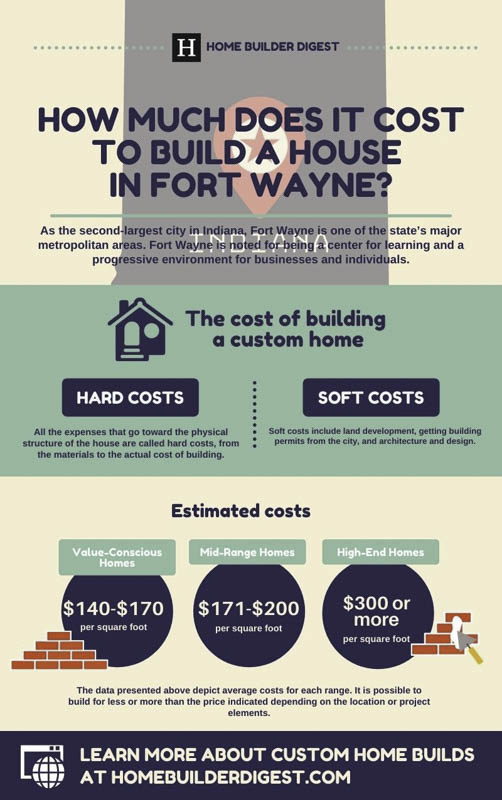
The average cost of construction for Fort Wayne is about $170 per square foot, which is lower than the national average of $207 per square foot. Project owners can expect to see most firms charging anywhere between $140 to $200 per square foot for the home building cost. The actual construction cost will differ from project to project, depending on the type and quality. This does not include hard and soft costs, however.
Hard costs concern the aspects of home construction that are physically part of the house itself. These are things like framing, foundation, plumbing, flooring, and roofing. Soft costs, on the other hand, are things like the cost of land, permitting fees, and architectural and design fees. It should be noted that hard and soft costs will fluctuate independently of each other, sometimes without prior notice.
Hard Costs
New home construction in Fort Wayne can start at $140 to $170 per square foot for a basic and simple design. Project owners who are looking to build a home with more customized features will come across firms that offer their services in the $171 to $200 per square foot range, which is usually for mid-value type homes. Building a fully customized and high-end luxury home, meanwhile, could cost $300 to $400 per square foot and above. However, these figures are estimates; projects may be priced higher or lower, depending on the square footage and additional features.
On top of basic construction costs, there are other hard costs to take into account. Some of the well-known ones are foundation, roofing, HVAC installation, and electrical installation.
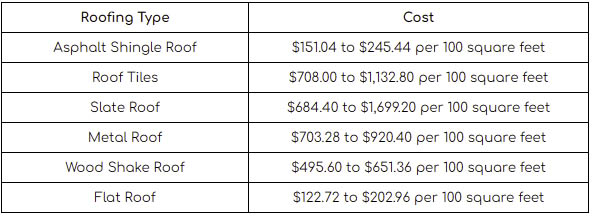
Fort Wayne’s roofing costs range from $122.72 to $1,699.20 per 100 square feet, depending on the roofing type. The following table features price ranges that project owners can expect to see:
Major system costs are composed of things like heating, ventilation, and air conditioning (HVAC), electrical, and plumbing. HVAC system installation will likely cost about $1,806, but some services for air conditioning installation have also cost an average of $6,372. Meanwhile, plumbing costs between $64.90 to $73.63 per hour and electrical costs about $61.36 to $74.58 per hour plus materials and parts. Electrical fixture installation would cost about $122.72 to $139.71 per 120-volt outlet.
New flooring installation costs between $3 and $22 per square foot, which is about $2,950 for a 500-square-foot space on average. Labor for floor installation, on the other hand, is about $0.60 to $4, depending on the contractor and project scope.
Soft Costs
Soft costs are expenses that go beyond the actual building of the structure. These costs include the cost of land, permitting fees, and architectural and design fees.
Cost of the Land
Fort Wayne’s population is currently growing at an annual rate of 1.06%. The positive population growth means that the land in the city may increase in price more than land in areas with stagnant or negative population growth.
The parcels of land available for sale in Fort Wayne on Zillow have an average cost of $33,040. The cheapest lot costs $4,000 for 2,178 square feet. It is located along Drexel Avenue. Meanwhile, the most expensive lot on Zillow costs $150,000. The land is located along Swinney Avenue and is 24,394 square feet.
Permits and Other Fees
Information related to the permitting process for homeowners in Allen County, where Fort Wayne is located, can be found on the local government’s website. The website has a homeowner’s guide for homeowners who wish to obtain a permit as an owner and occupant for self-perform work. The permit application form, homeowner affidavit, and advanced structural affidavit are to be completed and submitted to the Building Department.
There are two ways to send the necessary documents:
- Email the completed forms to Ownerpermits@allencounty.us
- Place the files in the drop box located outside of the Building Department office located at 200 E Berry St. Ste. #180, Fort Wayne, IN 46802
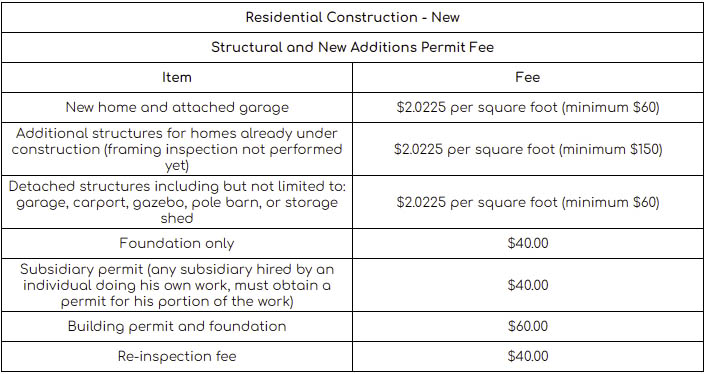
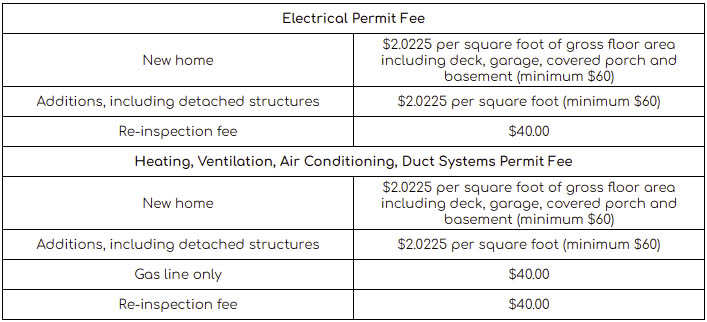
The permitting fee schedule can be found on pages 27 to 29 of the PDF file provided by the local government. Some of the fees are provided in the table below:
Architecture and Design Fees
Architects commonly base their costs on the total cost of construction or total construction value. For Fort Wayne, that would be around 5 to 20%, depending on the services rendered, project complexity, and architect experience.
Some architectural firms may also charge by the hour or by square footage. Pricing will be based on the request, project location, and the architect’s position, experience, training, and reputation. Most project owners will avail of services like layered drawings, project management, concept development, consultation, and site visits.
Interior design services are about $790 to $11,871 in total. The cost will also depend on the work being done.
For prospective project owners who are looking into availing landscaping services, it should be noted that pricing will be based on the project size. A small project with a basic home planting plan will cost about $400 to $600, while a mid-sized project with a planting plan and basic construction documents will cost $600 to $2,800. Bigger projects with concept drawings, elevation drawings, complex hardscape designs, and detail construction documents will cost $2,800 to $8,500.
What Leading Custom Home Builders and Architects that Serve the Fort Wayne Area Say
Lonnie Norris, the vice president of sales for Granite Ridge Builders, shared his views on the construction market, which is currently being affected by a housing shortage. It will take at least five years for supply to meet demand considering that rising interest rates and costs are putting pressure firms to keep their services affordable.
“Demand remains strong and there is still great consumer confidence and interest that is bringing people to our model homes and office,” said Norris.
Al W. Hamed, Master of Business Administration (MBA), Master of Science in Management (MSM), president of Hamed Homes, noted that the construction industry is, and has been, evolving in recent times. The historically low mortgage rates provide a good opportunity and investment for those who are interested in building a home despite the rising construction costs and labor shortages.
“As these challenges persist, builders will identify and implement new and innovative methodologies to continue to bring their product offering to fruition, without compromising quality or integrity,” said Hamed, noting that the emergence of new and creative trends are aiding builders and buyers build the gap between wants, needs, and associated costs.
With new trends appearing, additional interest in the industry is being fostered in buyers. Hamed shared that it is “very much an exciting time to be aligned with the construction arena.”
The Future of Fort Wayne’s Residential Construction Industry

Much like other sectors in northeast Indiana, Fort Wayne’s construction industry is suffering from the impact of the labor shortage. This labor shortage is expected to last well into 2022. The lack of skilled workers is forcing firms to turn down projects to avoid being unable to complete them within the allotted time. This is also causing prices to rise.
About 90% of firms have reported a struggle to find qualified workers to hire, according to the Associated General Contractors of America (AGC). Moreover, firms are currently looking into bringing more people into the industry, especially with the employment gap created by an aging construction workforce. One of the proposed solutions is the idea of holding training and professional development programs, much like the Building Education with SIPs Training (BEST) by Structural Insulated Panel Association (SIPA). BEST is part of SIPA’s work towards offering accessible training programs to teach its participants to save time and labor when providing health and low-embodied carbon structures.
Cost Saving Tip for Building a Home in Fort Wayne
Invest Early in Mechanical System Quality to Manage Long-Term Ownership Costs
Fort Wayne’s continental climate—with hot, humid summers and cold winters that can bring significant snow and prolonged below-freezing temperatures—makes the mechanical systems in a new home one of the most consequential budget decisions a builder can make. Unlike markets where the climate is mild enough that an undersized or lower-efficiency system is simply inconvenient, in northeast Indiana a poorly specified HVAC system translates directly into elevated utility bills every month of the year. The cost-saving opportunity lies in treating mechanical system quality not as a place to trim the budget but as an investment with a measurable payback. High-efficiency furnaces—those rated at 96% AFUE or above—cost more upfront than standard-efficiency units but recover the difference in lower heating costs within a few years in a climate where the furnace runs consistently for five or more months. The same logic applies to heat pump water heaters, which use dramatically less energy than standard electric resistance units and perform well in an indoor mechanical room environment year-round. Proper Manual J load calculations—rather than rule-of-thumb sizing—ensure that the selected equipment matches the actual thermal envelope of the home rather than being oversized, which causes short cycling, humidity problems, and premature equipment wear. Engaging a mechanical engineer or experienced HVAC contractor in the design phase, before construction begins, is far less expensive than correcting a poorly sized system after occupancy. Fort Wayne’s well-established local builder and subcontractor network means quality mechanical talent is available, and the upfront investment in getting the system right consistently pays dividends over the life of ownership.
Frequently Asked Questions
Which areas in—or near—Fort Wayne are among the best for custom home building?
Southwest Fort Wayne, particularly the communities along the US-24 corridor toward Aboite Township, has long been the most active area for custom home construction in the metro, offering newer infrastructure, strong school districts, and a range of lot sizes from quarter-acre in established subdivisions to multi-acre parcels in rural transition areas. The Covington Farm and Autumn Ridge communities exemplify the type of well-planned residential development that has anchored southwest Fort Wayne’s custom home market. Northwest Fort Wayne and the communities along the Illinois Road corridor attract custom builders seeking proximity to the Jefferson Pointe retail district and Interstate 69 access while remaining within the city’s service boundaries. Just outside the city, Huntertown to the northwest has grown substantially and offers competitive land prices with a small-town feel and access to newer Allen County infrastructure. Leo-Cedarville, northeast of the city, appeals to buyers seeking larger residential lots with a semi-rural character and top-ranked school options. New Haven, east of Fort Wayne, provides affordable suburban land with city amenities at lower price points. For buyers seeking a more distinctive lakefront setting, the chain of lakes in northeastern Indiana—particularly the communities around Lake James, Long Lake, and Hamilton Lake—offer custom home sites with waterfront access, typically within an hour of the city.
How does Fort Wayne’s climate potentially impact home building costs?
Fort Wayne sits in the heart of the Great Lakes snow belt region and experiences a full continental climate that requires new construction to perform across a genuinely wide thermal range—from summer heat and humidity that can push heat indices above 100 degrees to winter temperatures that regularly drop well below zero with wind chill. This climate profile has direct implications for construction costs in several areas. Heating load is the dominant mechanical driver: furnaces, insulation, and window specifications must be sized for cold-climate performance, and Indiana’s energy code requires wall insulation values and air sealing levels that represent a meaningful step beyond what older homes in the region were built to. Basement construction is standard practice in Fort Wayne and across northern Indiana, both because of the tradition of the region and because the deep frost line—frost can penetrate the soil to depths of 36 inches or more in a severe winter—requires footings to be placed below grade regardless. Full basements add usable square footage to the home but also add foundation cost and require careful waterproofing and drainage design, particularly in areas with higher soil moisture. Summer humidity is also a legitimate cost consideration: high-quality vapor barriers, properly detailed building envelopes, and dehumidification capacity in the HVAC system are important investments in a climate where summer moisture can accumulate in wall cavities and crawl spaces if the assembly is not properly designed. The relatively predictable weather compared to coastal markets, however, means construction schedules are manageable and experienced local builders can plan effectively around the seasonal constraints.
What should I know about soil and terrain conditions before buying a lot in Fort Wayne?
Fort Wayne sits at the confluence of three rivers—the St. Joseph, St. Marys, and Maumee—on what is essentially a flat glacial lakebed and outwash plain, and the soils across the metro area largely reflect this glacial heritage. Much of the region is underlain by glacial till and lacustrine deposits, including heavy clay soils that are common throughout northeast Indiana. These clay soils have low permeability, meaning they drain slowly and can remain saturated for extended periods after rain or snowmelt. In practical terms for homebuilders, this means drainage design is a critical part of site planning—poorly drained lots can create wet basement conditions, frost heaving problems, and landscaping challenges if not properly addressed with grading, perimeter drains, and appropriate foundation waterproofing. The bearing capacity of Fort Wayne’s clay soils is generally adequate for standard residential construction, but the expansive nature of some clay layers means that foundations designed without adequate drainage can experience movement over time as the clay wets and dries seasonally. Some areas along the river corridors and in older parts of the city contain fill soils from historical development and should be evaluated carefully before purchase. A soil investigation and percolation test are important preliminary steps for any lot purchase, particularly for sites outside established subdivisions where drainage infrastructure may not already be in place. Buyers interested in rural or exurban lots in Allen County should also verify septic system feasibility early, as the clay soils in some areas have slow percolation rates that can complicate conventional drain field design.
Broadly speaking, is it cheaper to build or buy an existing home in Fort Wayne right now?
Fort Wayne stands out as one of the most genuinely affordable housing markets in the Midwest, and the cost comparison between building and buying plays out differently here than in higher-cost metro areas. Existing home prices in the Fort Wayne market remain well below the national median, making the city one of the more accessible places in the country for first-time buyers or those relocating from higher-cost states. On a per-square-foot basis, purchasing an existing Fort Wayne home is typically less expensive than building a comparable custom home from the ground up—land, permit fees, and construction costs all add up to a total that exceeds what most existing homes in the area trade for. However, Fort Wayne’s housing stock includes a large proportion of homes built in the mid-twentieth century, and these older properties frequently require investment in updated mechanical systems, roof replacement, basement waterproofing, and insulation improvements before they match the performance and comfort level of a new build. The heating and cooling demands of northeast Indiana’s climate amplify the long-term cost of living in an inefficient older home in ways that buyers sometimes underestimate. Building new in Fort Wayne gives buyers access to a cost structure that, while higher than buying existing, is among the most favorable of any U.S. city for custom home construction—the combination of low land costs relative to coastal markets, a well-developed local builder network, and reasonable permit fees makes Fort Wayne one of the more accessible markets in the country for buyers who want a home designed and built to their specification.
Considering building a home in Fort Wayne?
Contact us for a free consultation