
Home » Cost Guides » Florida Cost Guides » How Much Does it Cost to Build a House in Cape Coral?
Cape Coral is a dynamic city that provides its residents with a tropical lifestyle mixed with a small hometown atmosphere. The city was developed with the vision of being a progressive waterfront community and an urban center that offers economic and social opportunities. As a primarily residential area, its community is mostly composed of retirees and working-class families. Cape Coral continues to expand in terms of business and population growth as a result of young professionals and families moving to the area.
The Cost of Building a Home in Cape Coral


Unfortunately, Cape Coral’s construction industry is having trouble keeping up with the high demand for new home construction. Some firms with projects in progress have reported experiencing delays. According to the Cape Coral Construction Industry Association (CCCIA), the average number of single family homes being issued per month rose from the 150 to 250 range to almost 400.
Other construction delays include rising costs and supply and labor shortages. Firms are working on recruiting more employees to alleviate the burden of rising demand, but it is a slow process. One of the problems in hiring employees is the tightness of the labor market. On top of finding employees to hire, firms are struggling to retain workers.
The delays in construction have resulted in projects being completed in a year and a half instead of the usual eight months.
Experts believe that the delay issues are not caused by recent events, but by the effects of the recession 10 years ago. Firms had stopped building homes, which has become a factor in the current limited housing supply. The COVID-19 pandemic has only exacerbated the problem.
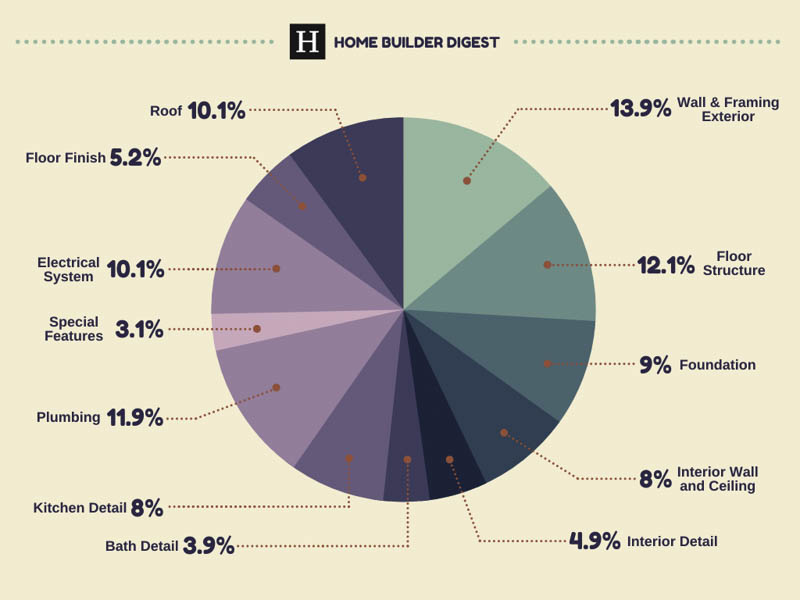
Figure 1. Typical cost breakdown of a single-family home constructed using the conventional method, according to Home Builder Digest.
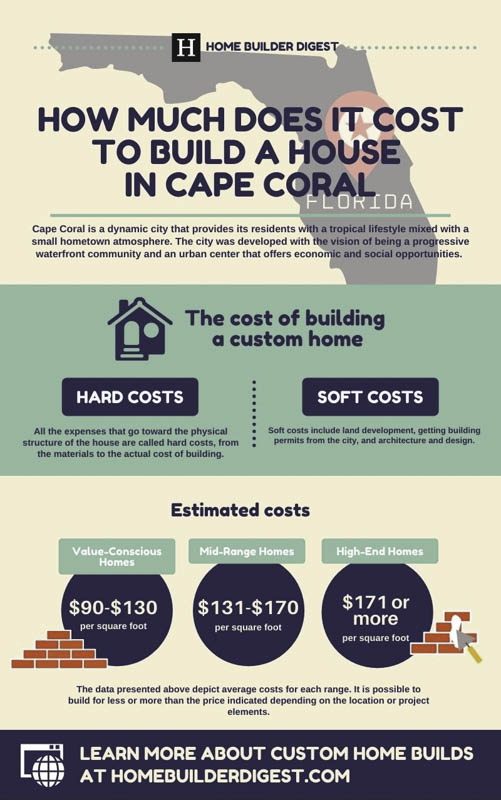
Compared to the national home construction cost average of $207 per square foot, Cape Coral’s average cost is considerably lower at $155 per square foot. The typical range for construction costs in Cape Coral is $100 to $210 per square foot. Pricing will differ from project to project based on details like level of intricacy, customization, and square footage.
Total construction costs are composed of hard and soft costs, which project owners will have to be careful of. Hard costs are related to the aspects of construction that are physically part of the house, including framing, plumbing, flooring, and roofing. Soft costs, meanwhile, are land costs, permitting fees, and architectural and design fees. Hard and soft costs do not affect one another and will fluctuate independently.
Hard Costs
Constructing basic and simple homes in the Cape Coral area will usually cost around $100 to $130 per square foot, while mid-value type homes that have a little more detail will be priced in the $131 to $170 per square foot range. Plans with customized features and higher-end finishes for high-end homes in Cape Coral are about $171 to $210 per square foot and above. It should be noted that these figures are estimates; firms may charge more or less depending on different factors like square footage and additional features.
On top of construction costs, project owners need to take into account the costs incurred from foundation, roofing, heating, ventilation, and air conditioning (HVAC), and electrical installation.
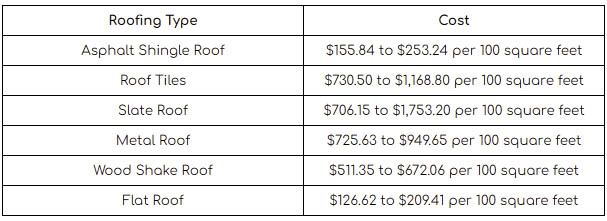
Cape Coral’s roofing costs generally range between $126.62 to $1,753.20 per 100 square feet, depending on the roofing type. The following table provides price ranges that project owners can expect to see:
The cost for Major systems is a combination of HVAC, electrical, and plumbing. The following are the average costs for major systems: an HVAC system is about $4,867, while a plumbing system is $323, and electrical installation is $350.
Soft Costs
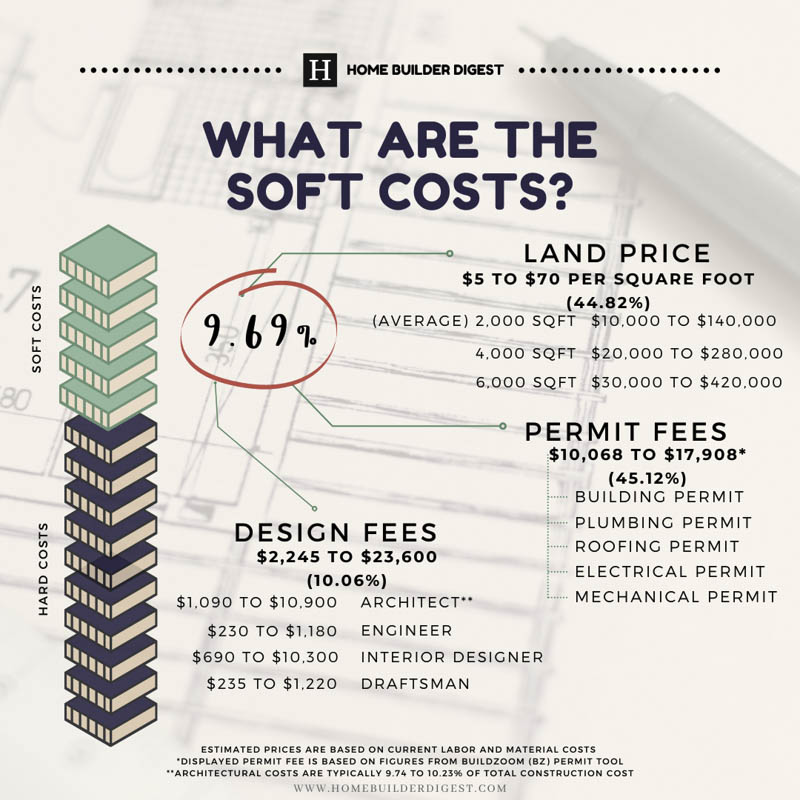
Figure 2. Soft cost percentage and average price range of additional fees, determined from the overall cost of custom home building in Cape Coral.
Cost of the Land
Cape Coral is on the list of the fastest-growing metro areas in America, with an annual growth of 2.52%. Because it has a positive growth rate, it is expected that the cost of land in the city will increase more than those in cities with negative or stagnant population growth.
Plots of land available for residential development on Zillow have an average cost of $99,048.65. The cheapest lot is $35,000 for 10,018.8 square feet. It is located in Northeast Juanita Place. Meanwhile, the most expensive lot is $225,000. The lot is about 10,018.8 square feet and can be found along Southwest 32nd Street.
Redfin’s plots have an average cost of $147,849.50. The cheapest lot is $38,900, which is located along northeast 5th Avenue and is about 10,018 square feet. The most expensive lot is $699,000. This lot is located in Sarasota Court and is 10,062 square feet.
Permits and Other Fees
Information on the permitting process for Cape Coral can be found on the local government website. Applicants can typically set an appointment through self-service on the EnerGov platform, but homeowners are required to come in person for permit application. The in-person application process can be done through QLess.
The local government’s website has a Permit Document Center where things like documents required for permits, the electronic permitting process, and application forms can be downloaded.
The permitting fee schedule can be found in an online PDF file provided by the local government. Some of the fees for residential projects are provided in the table below:
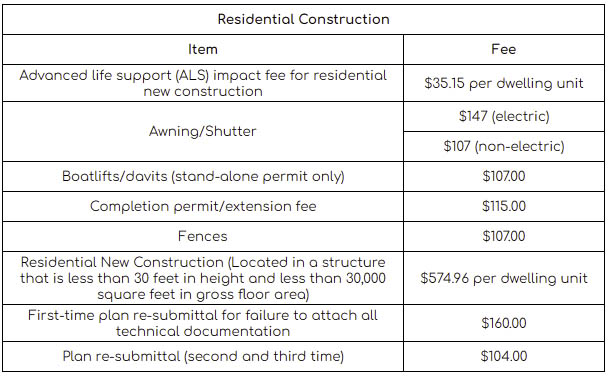
There is a 15% non-refundable deposit at the time of submittal, as well as a 3% surcharge fee to all permits associated with the enforcement of the Florida Building Code.
Residential permit costs may be computed through the local government’s online calculator.
Architecture and Design Fees
Architects will typically charge based on the total construction value. For Cape Coral-based architects, that would be about 9.74 to 10.23%, depending on the services rendered, project complexity, and architect experience.
Project owners may also come across firms that charge by the hour or by square footage. Pricing is dependent on the request, project location, and the architect’s position, experience, training, and reputation. The most common services are layered drawings, project management, concept development, consultation, and site visits.
The Future of Cape Coral’s Residential Construction Industry
LaborIQ by ThinkWhy forecasted a 3.9% expansion in job growth for the construction and extraction industries for 2022. Unfortunately, many do not expect to have enough labor supply to fill in the new job openings.
Consumers benefited from low interest rates and pandemic-related savings, which resulted in the construction industry’s recovery from some of the effects of the pandemic. The industry experienced an upward trend due to the rise in demand for single and multifamily homes. Because of the influx of work, the construction industry added about 121,000 jobs.
Job Market Outlook reported that 7 million people are not enough to fill in the labor gap. Businesses continue to struggle with finding and retaining employees and decreasing the turnover rate. The report noted that more workers are quitting their jobs than ever before.
The construction industry is forecasted to continue struggling with job orders as demand for housing is not expected to calm down any time soon. In addition, the national housing supply is expected to reach historic lows within 2022. The demand for labor will contribute to higher wage growth to retain existing workers and attract new employees. LaborIQ projects a 3.9% increase in annual median wage growth.
Backlog on Permits
A new system is being implemented in Cape Coral to address the backlog of building permits. The local government is working on improving on the online permitting system, EnerGov, to streamline the process for permit applications.
The backlog issues of Cape Coral have resulted in a nine-day freeze on new permit applications between April 9 and April 17, 2022. Cape Coral officials are looking for ways to decrease permit times as well. As a result of the work being put into increasing the process efficiency and addressing issues, the number of backed-up applications has gone down from 5,000 to the low hundreds.
Homeowners and firms can expect to come across fewer delay issues from the permitting side, which will allow them to focus more on the supply chain and material acquisition facets of construction.
Cost Saving Tip for Building a Home in Cape Coral
Lock In Hurricane-Rated Materials Early to Avoid Seasonal Price Spikes
Cape Coral’s coastal Southwest Florida location makes hurricane-rated materials—impact windows, reinforced doors, and wind-resistant roofing—a mandatory part of any new construction project, and these items represent a significant share of the overall build budget. One of the most effective cost-saving strategies is to order these materials as early as possible in the project timeline, ideally during the design and permitting phase before framing begins. Demand for impact-rated products surges after every named storm or active hurricane season forecast, and manufacturers respond with price increases and lead times that can stretch from weeks to months. By locking in pricing during the quieter winter and early spring months—before hurricane season forecasts drive up demand—you can capture meaningful savings on products that would cost significantly more if purchased during peak procurement periods. Some Cape Coral builders maintain standing relationships with regional suppliers who offer pre-season pricing programs or volume discounts on full-house impact glass packages. It is worth asking about these arrangements during your initial builder interviews. Beyond the upfront savings, high-quality hurricane-rated materials qualify homeowners for substantial wind mitigation credits from Florida insurers, and these annual premium reductions compound over the life of ownership. In a market like Cape Coral, where insurance costs have become a major factor in homeownership expenses, the investment in top-tier impact products pays for itself through both protection and long-term savings.
Frequently Asked Questions
Which areas in—or near—Cape Coral are among the best for custom home building?
Southwest Cape Coral, particularly the neighborhoods along the Spreader Waterway and in the Pelican and Yacht Club areas, is among the most desirable locations for custom home building, offering direct sailboat access to the Gulf of Mexico through canal systems that define the city’s character. The unit 64 and 65 areas in south Cape Coral provide gulf-access canal lots with shorter boat rides to open water, which command premium prices. Burnt Store and the northwest Cape are attracting newer development with larger lots and growing commercial infrastructure, appealing to buyers who want more space at a lower entry point while gulf access continues to develop in those sections. For waterfront custom building outside Cape Coral proper, nearby Fort Myers Beach and Sanibel Island offer direct gulf-front settings, though land scarcity and higher costs make these premium destinations. Pine Island, accessible by bridge from northwest Cape Coral, provides a more laid-back, old-Florida feel with waterfront lots and a fishing village character. Fort Myers neighborhoods along McGregor Boulevard and in the Gateway area offer non-canal custom building options with convenient access to Southwest Florida International Airport and the I-75 corridor. Estero and Bonita Springs to the south provide master-planned community settings with golf, resort amenities, and proximity to the beaches.
How does Cape Coral’s climate potentially impact home building costs?
Cape Coral’s tropical climate and direct exposure to Gulf of Mexico weather systems make it one of the most climate-impacted building environments in the country. Florida’s building code mandates hurricane-resistant construction throughout the structure, including impact-rated windows and doors, reinforced roof-to-wall connections, and wind-load-rated roofing systems designed to withstand the sustained high winds and flying debris that accompany tropical storms and hurricanes. These requirements add substantially to construction costs compared to inland or northern markets but are non-negotiable in coastal Lee County. Many Cape Coral lots fall within FEMA-designated flood zones, requiring homes to be elevated above the base flood elevation—which adds significant foundation and structural costs, particularly for canal-front properties. The year-round heat and humidity demand high-efficiency HVAC systems with strong dehumidification capability, sealed and insulated ductwork, and mold-resistant building materials throughout the structure. The salt air environment near the coast accelerates corrosion of metal components, making stainless steel or marine-grade hardware and fasteners a practical necessity for long-term durability. On the positive side, Cape Coral’s warm climate allows for year-round construction activity with virtually no weather-related shutdowns outside of active storm events, helping keep project timelines moving.
What should I know about soil and terrain conditions before buying a lot in Cape Coral?
Cape Coral is built on a flat, low-lying peninsula between the Caloosahatchee River and the Gulf of Mexico, and its terrain and soil conditions are defined by this coastal geography. The entire city sits at a low elevation—most of it just a few feet above sea level—and the water table is extremely high, often just inches below the surface during the wet season. This means that traditional basement construction is not feasible, and all homes are built on slab-on-grade foundations or, in flood zones, on elevated pilings or stem wall foundations. The sandy, shell-based soils common throughout Cape Coral generally provide adequate bearing capacity for residential construction but drain rapidly, which affects irrigation and landscaping plans. Many canal-front lots were created through dredge-and-fill operations when the city was originally developed, and the quality of fill material varies—some lots may have loose or poorly compacted fill that requires soil stabilization or deeper pilings. A geotechnical investigation is particularly important in Cape Coral, as it will reveal bearing capacity, water table depth, and whether the lot’s fill is adequate for the intended structure. Buyers should also carefully verify FEMA flood zone designations, as flood zone status directly impacts foundation requirements, construction costs, and the mandatory flood insurance premiums that are a significant ongoing homeownership expense in Southwest Florida.
Broadly speaking, is it cheaper to build or buy an existing home in Cape Coral right now?
Cape Coral’s real estate market has been one of the fastest-growing in the country, driven by strong migration from northern states and a lifestyle appeal centered on waterfront living and warm weather. Existing home prices have risen sharply, and the market for canal-front homes with gulf access is particularly competitive. At the same time, new construction costs are elevated due to Florida’s hurricane building code requirements, rising impact material costs, and high demand for contractors in a market where building activity has surged. On a pure cost-per-square-foot basis, the gap between buying and building in Cape Coral is narrower than in many markets, because the strong demand has driven existing home prices close to new construction costs in some neighborhoods. Many existing homes in Cape Coral were built before the most recent building code updates and may lack current hurricane-resistant features, modern HVAC systems, and energy-efficient construction—all of which affect both safety and insurance costs. Building new in Cape Coral ensures full compliance with current Florida building code, which can result in significantly lower homeowner’s insurance premiums compared to older construction. Given that insurance has become one of the largest and fastest-rising costs of homeownership in Southwest Florida, the insurance advantage of new construction is a major financial consideration that can shift the build-versus-buy equation meaningfully in favor of building.
Considering building a home in Cape Coral?
Contact us for a free consultation