

Home » Cost Guides » Tennessee Cost Guides » How Much Does it Cost to Build a House in Chattanooga?
Chattanooga is Tennessee’s fourth-largest city and is one of East Tennessee’s two principal cities, along with Knoxville. Nestled between the ridge-and-valley Appalachians and the Cumberland Plateau, the city offers expansive, stunning views of the surrounding mountains, ridges, and valleys. The town was then dubbed the “Scenic City.” Chattanooga is also known as the “Gig City.” The area offers an internet speed of 1 gigabyte per second, which is way above the average U.S. download speed of 25.86 megabytes per second. The city claims to be one of the fastest internet services in the Western Hemisphere.
Aside from the city’s breathtaking surroundings and an advanced internet connection, Chattanooga also offers numerous job offers to professionals. The multiple railroads converging in the area paved the way for the city to prosper and be one of the largest heavy industrial hubs in the southeastern region. The city remains a transit hub today. Chattanooga’s thriving economy now includes automotive, advanced manufacturing, food and beverage production, healthcare, insurance, tourism, and corporate headquarters.
The Cost of Building a Home in Chattanooga


For many people, constructing their own homes is a dream come true. Homeowners are given the opportunity to personalize everything, from extensive paint jobs to small details like doorknobs, to make a practical and comfortable home for each family member. Also, new homes can be more energy-efficient than existing ones and can include modernized materials, appliances, and systems.
The national average cost of building a new custom home ranges from $140 to $320 per square foot — roughly $345,000 to $800,000 for a 2,500-square-foot home — according to data from the online contractor platform BuildZoom (BZ). The National Association of Home Builders (NAHB) estimated that constructing a new home in the country costs about $485,000, which is within the range provided by the website. The association also reported that housing prices had risen by $1,000 across the country attributed to a variety of factors, including the COVID-19 pandemic, production constraints, and labor shortages.
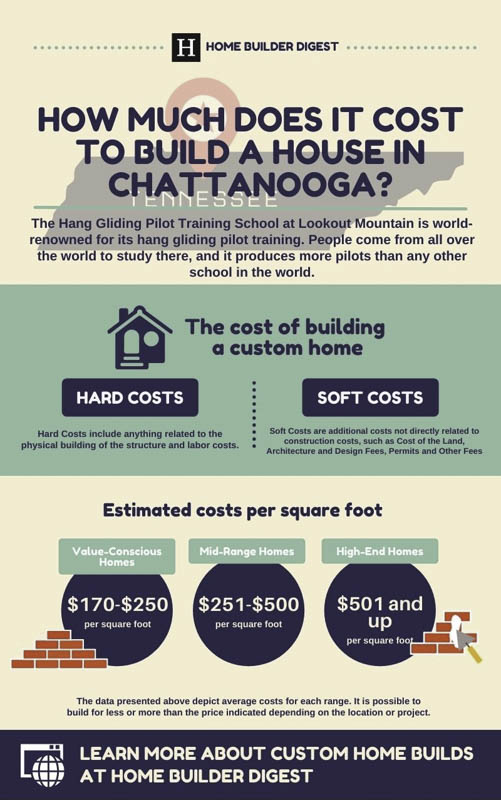
Chattanooga’s homebuilding costs are generally within the estimated national range, with a median price of $250 per square foot. Opting for a value-conscious approach, this value can be as low as $170 per square foot. Choosing a custom-built luxury home will increase this estimate, reaching $500 per square foot or more. To build a 2,500-square-foot home in Chattanooga, aspiring homeowners will require a budget of $425,000 to $1,250,000.
The figures provided here are simply estimates and do not provide a final answer to how much it costs to build a home in Chattanooga. Given that various challenges in the construction sector such as supply chain issues and lack of labor workforce have yet to be resolved, experts recommend setting aside 15% as a contingency budget. Aside from that, several factors, such as size, location, materials, level of customization and site complexity, all play a role in determining final home construction costs. These factors are split into two categories: hard costs and soft costs.
Hard Costs
The term “hard costs” refers to all of the fees associated with the actual construction of the home. Materials used, labor fees, additional amenities, and landscaping are examples of these.
A custom home in Chattanooga costs an average of $115 per square foot. This estimate only covers basic construction costs, such as labor, foundation, standard building materials, basic finishing, and cleanup. Upgrades such as high-end materials, kitchen and bath customization, and the addition of extra amenities could push the price up to $200 per square foot. A 2,500-square-foot home will cost between $300,000 and $500,000 to construct, not including site work, land, and other fees.
Listed below is the price breakdown of each construction work:
- Site Work: $4 to $42 per square foot
- Foundation: $13 to $30 per square foot
- Framing: $13 to $40 per square foot
- Interior Finishing: $33 to $70 per square foot
- Exterior Finishing/Enclosures: $20 to $40 per square foot
- Utilities: $13 to $30 per square foot
- Landscaping: $24,000 to $30,000
- Driveway: $3 to $11 per square foot
- Perimeter Fence: $15 to $60 per linear foot
Material and labor costs contribute the most to the overall construction cost. Oftentimes these are already included in the estimates given by contractors. For instances that these are excluded from the fees, material cost accounts for roughly 30 to 50% of the construction budget, determined by the quality of materials and size of the home. For the labor fees, it typically accounts 35 to 50% of the construction budget, depending on two factors: the amount of labor force and the skill of labor. Completing a project in less time will need more labor workers than usual, thus increasing the labor fees. More experienced workers would also charge higher than the average ones. Bear in mind that materials and labor costs have also skyrocketed since the outbreak and will continue to rise until the industry’s problems are solved.
Suppose homeowners want a total home building arrangement, including site work, material and labor cost, project management, and other construction requirements and expenses. General contractors raise the estimated average price to $350 per square foot. Budget homes start at $170 per square foot, and high-end homes start at $500 per square foot and up. Although it may be costly, hiring them may be beneficial. This puts the homeowner’s mind at ease and may make the home building process easier and more manageable.
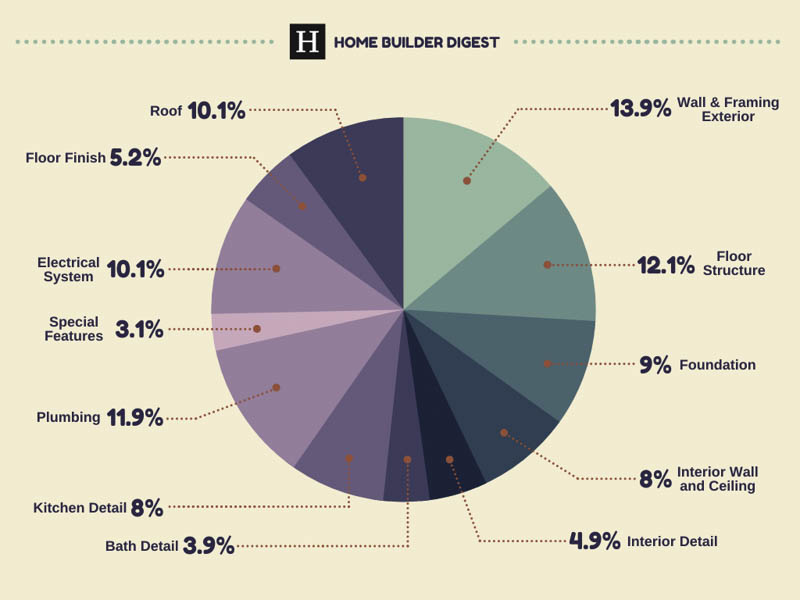
Figure 1. Typical cost breakdown of a single-family home constructed using the conventional method, according to Home Builder Digest.
Soft Costs
Architectural design, site development fees, building permit fees, engineering fees, and other expenses are examples of soft costs that go beyond the actual construction of the property.
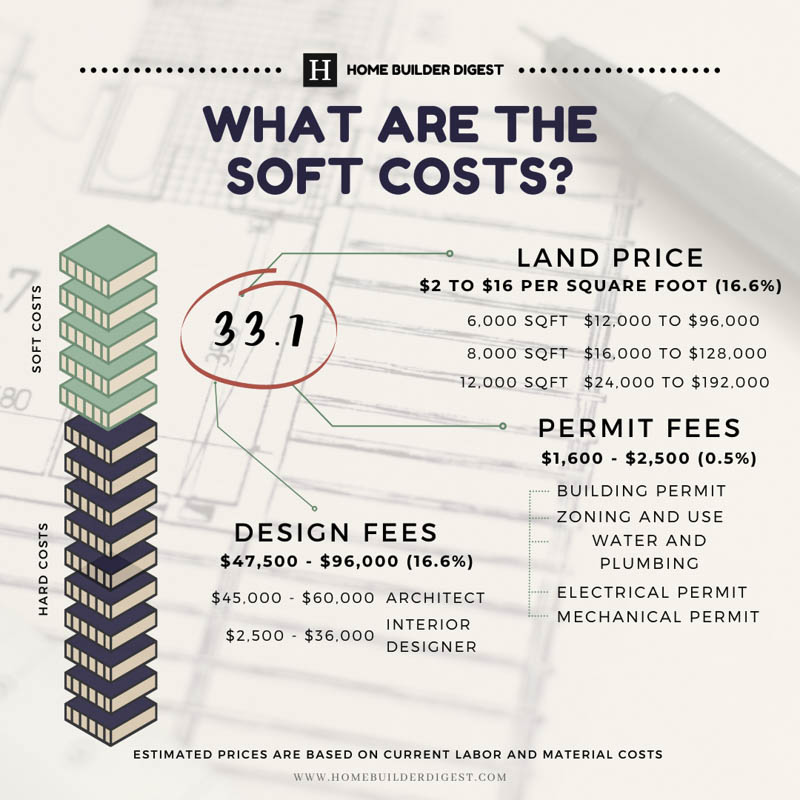
Figure 2. Soft cost percentage and average price range of additional fees, determined from the overall cost of custom home building in Chattanooga.
Cost of the Land
Current residential land listings available in the online real estate marketplace Zillow show an average cost of $77,400, or $4 per square foot. The cheapest land available is situated along Dodson Avenue and is less than 10 minutes away from the downtown area. It costs $27,000 for a 19,602-square-foot lot — almost $2 per square foot. On the other hand, the most expensive land costs $175,000 for an 11,326-square-foot lot — around $16 per square foot. The land is situated in the North Chattanooga area and sits between Hamilton Avenue and Lanoka street. The sloping lot offers stunning scenic views while conveniently within walking distance to various stores and restaurants.
Chattanooga’s General Zoning Classifications state that the minimum lot area for single family homes depends on the home density of the neighborhood. These properties should have at least 2,625 to 7,500 square feet of land per unit. Following this regulation, land acquisition in Chattanooga will cost approximately $10,500 to $30,000.
Permits and Other Fees
According to the city government, the building permit fees for new single family homes in Chattanooga are calculated based on the overall construction cost. The following are the fees for each valuation:
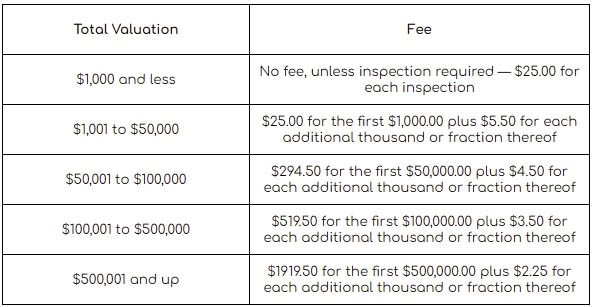
There is a plan checking fee to be settled which costs 30% of the building permit fee, and re-inspections will cost $50 each. These expenses may be doubled if a project is started before a permit is obtained. The city government also stated that payment of the extra fees does not prevent anyone from fully complying with the code’s provisions. Additionally, permit fees are non-refundable once settled.
Suppose building a new 2,500-square-foot home in Chattanooga costs roughly $300,000. The building fee for this home will cost about $1,600.
Architecture and Design Fees
Building a custom home allows homeowners to customize it to their specific requirements and preferences. While hiring an architect and designer will cost money, it is a sure way to guarantee that the project is tailored to the family’s needs. Additionally, the agreed-upon plans would also be strictly followed. Architects and designers charge clients for specific services in a variety of ways. The most commonly used pricing method is through the percentage of the project’s total construction cost.
Architects typically charge new home constructions by 5 to 15% of the total building cost, depending on the complexity and amount of work. Renovations tend to cost more — about 15 to 20% — as they have to work around the home’s existing structure. Suppose building a new 2,500-square-foot home in Chattanooga costs roughly $300,000. The architectural fee for this home will come to a total of $45,000 to $60,000. Keep in mind that this estimate may still increase or decrease depending on the architectural plans.
How do Chattanooga’s custom home building and buying costs compare to nearby cities?
Tennessee is a southern state recorded for being the cheapest area in the country. The median home construction contract price in the South is $110 per square foot — roughly 14% less than the national average of $125 per square foot. According to Business Insider, Tennessee is the third most expensive state in the Southern Region to buy a home in, with $135 per square foot — trailing behind Florida at $167 per square foot and Virginia at $163 per square foot.
Home construction costs in Tennessee’s major cities are relatively similar, ranging from $105 to $460 per square foot — $265,000 to $1,150,000 for a 2,500-square-foot home. The following shows the home building price range for each city:
- Clarksville: $115 to $460 per square foot
- Jackson: $110 to $440 per square foot
- Johnson City: $105 to $420 per square foot
- Knoxville: $110 to $435 per square foot
- Memphis: $110 to $430 per square foot
- Nashville: $115 to $450 per square foot
- Pigeon Forge: $110 to $440 per square foot
What Leading Custom Home Builders and Architects that Serve the Chattanooga Area Say
Written below are insights shared by home builders and architects who serve Chattanooga. These refer to the city’s current challenges and trends while also providing more information on the construction industry and housing market.
Matt Winget of Elemi Architects explained that it can be hard to trust the estimated construction prices as these remain volatile. Building costs may still increase by 30% more than the city’s standard pricing. He also warned project owners to prepare for long wait times. There may be instances that contractors are hard to get a hold of because of the high volume of projects. This is brought by the increasing interest in the city as developers move to Chattanooga to take advantage of lower building prices. Winget predicts that as interest rates rise, housing demands may lessen over time. Material costs may possibly decrease but will not return to its average price two years ago.
Noah Bowling, founder and president of Timber Creek Construction, explained that it could be difficult to use dollars per square foot to estimate home building costs because it greatly varies and may sometimes mislead prospective clients. Also, home prices have significantly increased in the previous years. The unstable prices are worth noting as the building industry has never experienced anything like this in the earlier years. Material and labor prices fluctuated throughout 2020 and 2021 and are most likely to settle on an inclining path for 2022. These costs continuously rise and are higher than everyone expects. Numerous contractors were forced to increase their costs by 30% or more to take into account the surge. A common trend among aspiring homeowners is to wait for the prices to stabilize. Bowling gave his insight regarding this and advised them not to wait unless they are willing to wait for more than ten years. Demand is consistently increasing in Chattanooga as numerous professionals are now permanently working from home and are choosing to relocate to the city. Even developers have decided to double down and buy more land to build new houses. The city’s housing market continues to be a great real estate and land investment for all. Bowling reiterated his advice for aspiring homeowners to start their projects and move forward as soon as possible. Pricing and demand will only continuously rise, especially for a city like Chattanooga that is experiencing a lot of growth and will be for the next 5 to 10 years.
The Future of Chattanooga’s Residential Construction Industry
Chattanooga is not immune to the pandemic’s economic implications. Increased pricing, inventory shortages, and increased demand for housing are just a few of the city’s issues. The value of single family homes has skyrocketed by 44% since the pandemic, costing $195,000 in March 2020 increased to $280,000 by March 2022. Experts predict that these prices will rise even further than in other metro areas in Tennessee. Homes in the area are still steadily increasing by 6.9%, as per Realtor.com, which puts Chattanooga, along with two cities in Florida, as one of the top three metros in the Southern Region for the most growth rate. President of the Chattanooga Association of Realtors, Robert Backer, explained that Chattanooga became a “destination city” because of three reasons: it is part of a no-income-tax state, its low cost of living, and its proximity to Nashville, Atlanta, and the Carolinas. This further drove up the demand, thus increasing home prices. New and existing homes sold in the previous year totaled around 12,300, which is a 12% increase from the year prior. As per Doug Fisher, executive officer of the Home Builders Association of Greater Chattanooga, home prices are also steadily approaching the national average — the median home sales price in Chattanooga is 22.3% cheaper than the national median cost. Fisher also added that the city’s housing inventory is still 24% lower than other major cities in the Northeastern and Western regions.
According to the Comprehensive Market Analysis for Chattanooga, Tennessee-Georgia, the U.S. Department of Housing and Urban Development is expecting demand for at least 5,125 new homes within the next three years. Fortunately, by the end of this year or early next year, 810 homes under construction are expected to meet a percentage of the demand. Additionally, local developers are drawing up plans to provide affordable housing for residents and future Chattanoogans. One of them is Collier Construction, who partnered with the nonprofit group Chattanooga Neighborhood Enterprise. They plan to redevelop an abandoned 40-acre land that was once a mill area. It will be redesigned to become a modern “mill town” complete with offices, retail space, and over 450 homes. Homes will cost about $300,000 per unit, and some homes will be available for lease. About 89 of the planned homes are estimated to be completed by the end of summer 2022, while the remaining 361 homes are forecasted to be completed and sold in the next three years.
.
Cost Saving Tip for Building a Home in Chattanooga
Invest in FORTIFIED Home Construction for Insurance Savings
Chattanooga sits in a region of East Tennessee that is susceptible to severe thunderstorms, high winds, and occasional tornadoes, and one of the smartest cost-saving moves for new construction is building to the Insurance Institute for Business & Home Safety FORTIFIED Home standard. While Tennessee does not mandate the same wind-resistance features as coastal states, voluntarily incorporating FORTIFIED-level upgrades—such as a sealed roof deck, reinforced roof-to-wall connections, impact-resistant garage doors, and fortified gable end bracing—can qualify homeowners for meaningful insurance premium reductions that compound year after year. Many Tennessee insurers offer discounts ranging from 15 to 40 percent for homes that achieve FORTIFIED designation, and the incremental construction cost of meeting these standards during initial build is relatively modest compared to retrofitting an existing home. The savings on annual insurance premiums can recoup the additional construction investment within just a few years, while also providing genuine peace of mind during severe weather events. When interviewing builders, ask specifically about their experience with FORTIFIED construction and whether they have a working relationship with an approved FORTIFIED evaluator who can certify the home during the building process. This certification adds documented value to the property and can be a significant selling point if you ever list the home for resale.
Frequently Asked Questions
Which areas in—or near—Chattanooga are among the best for custom home building?
Signal Mountain, perched above the Tennessee River northwest of downtown, is one of Chattanooga’s most established custom home destinations, offering stunning valley views, cooler temperatures, and a tight-knit community feel with highly regarded schools. Lookout Mountain, straddling the Tennessee-Georgia border, provides dramatic bluff-top settings and historic character, though building on its steep terrain can require significant site engineering. North Chattanooga and the Riverview area have attracted custom builders interested in walkable urban living with proximity to Coolidge Park, the Tennessee Riverwalk, and a growing restaurant scene. For more suburban settings, Ooltewah and Collegedale east of the city offer newer developments with larger lots, family-friendly amenities, and convenient access to Interstate 75. The Hixson and Soddy-Daisy areas to the north provide more affordable land with river and lake proximity. Across the state line in North Georgia, communities near Chickamauga and Ringgold appeal to buyers who want lower property taxes while still commuting easily to Chattanooga. East Brainerd has also seen significant growth with a mix of master-planned communities and individual custom lots near Hamilton Place.
How does Chattanooga’s climate potentially impact home building costs?
Chattanooga’s humid subtropical climate brings hot, humid summers and cool winters with occasional freezing temperatures, creating a set of building demands that affect both material selection and system sizing. High summer humidity requires builders to incorporate effective moisture management strategies throughout the structure, including proper vapor barriers, mold-resistant materials, and well-designed attic and crawl space ventilation. HVAC systems must be sized to handle substantial cooling and dehumidification loads during the extended warm season while also providing reliable heating during winter cold snaps. The region is also prone to severe thunderstorms and sits within a zone of moderate tornado risk, which has led many custom home builders and homeowners to incorporate storm-resistant features such as reinforced roof connections, safe rooms, and impact-resistant garage doors. While these features add to the upfront budget, they can reduce insurance costs and provide genuine safety value. Chattanooga receives significant annual rainfall, which means site drainage, gutter systems, and foundation waterproofing must be carefully planned to prevent moisture intrusion. On the positive side, the moderate winter climate keeps frost-line depths relatively shallow, reducing foundation excavation costs compared to northern markets, and the four-season climate allows for construction activity throughout most of the year.
What should I know about soil and terrain conditions before buying a lot in Chattanooga?
Chattanooga’s dramatic topography—defined by the ridge-and-valley Appalachians, Lookout Mountain, Signal Mountain, and the Tennessee River corridor—creates highly varied soil and terrain conditions across the metro area. Valley floor lots typically feature clay-heavy soils that are prone to the shrink-swell cycle common throughout the Southeast, where soil expands when saturated and contracts during dry periods. This movement can stress foundations if not properly addressed through engineering, such as deeper footings or pier-and-beam systems. Mountain and ridgeline lots offer stunning views but frequently involve steep grades that require substantial investment in grading, retaining walls, and engineered access roads. Shallow bedrock on the mountain and ridge parcels can increase excavation costs but provides excellent structural bearing once reached. A geotechnical investigation is strongly recommended before purchasing any lot in the Chattanooga area, as conditions can change significantly over short distances. Buyers should also check for karst topography—the limestone bedrock underlying parts of the region can create sinkholes and underground drainage channels that affect both buildability and long-term stability. Lots near the river or its tributaries should be evaluated for floodplain designations, as FEMA flood zone status will impact both construction requirements and insurance costs.
Broadly speaking, is it cheaper to build or buy an existing home in Chattanooga right now?
Chattanooga has experienced significant appreciation in existing home values over the past several years, driven by strong in-migration, the city’s growing reputation as an outdoor recreation and technology hub, and limited housing inventory. At the same time, new construction costs have risen due to material price increases and labor shortages affecting the broader Southeast. In most cases, purchasing an existing home in Chattanooga remains less expensive on a cost-per-square-foot basis than building a comparable custom home, particularly in established neighborhoods where the land is already improved. However, Chattanooga has a large inventory of older homes—many built before modern energy codes and storm-resistance standards—that may require substantial updates to HVAC systems, insulation, electrical, and roofing. These renovation costs can be unpredictable and may significantly close the price gap with new construction. Building new in Chattanooga offers the advantage of modern energy efficiency, open floor plans, storm-resistant construction, and a builder warranty, all at a cost that remains below the national average for custom homes. For buyers who prioritize long-term value, lower maintenance costs, and the ability to customize every detail, building in the Chattanooga market continues to be a competitive option—especially given the region’s comparatively affordable land and labor costs.
Considering building a home in Chattanooga?
Contact us for a free consultation