
Home » Cost Guides » Tennessee Cost Guides » How Much Does it Cost to Build a House in Clarksville?
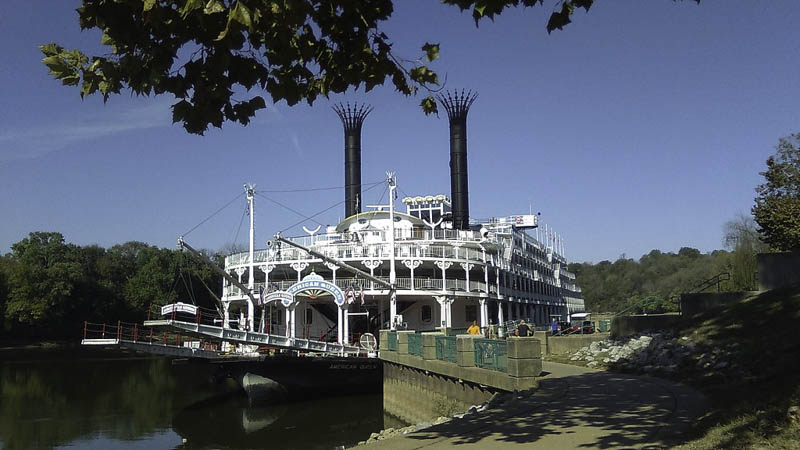
Clarksville, a city in Tennessee, is also known as the Queen of the Cumberland and the Gateway to the New South. It is the county seat of Montgomery County and is the state’s fifth-largest city. It is also the principal central city of the Clarksville, Tennessee–Kentucky (TN-KY) metropolitan statistical area. Clarksville is the home of Tennessee’s oldest newspaper, the Leaf-Chronicle, and of the state’s fastest-growing university, Austin Peay State University. Well-known personalities lived and worked in Clarksville, including legendary electric guitarist, Jimi Hendrix, who was awarded several Grammys post-humously.
After exhibiting a 20.8% increase in its population from 2010 to 2020, Clarksville has become one of the largest growing midsize cities in the U.S. With over 27,700 residents in just 10 years, the city holds the 14th spot on said list. Moreover, it is expected that Montgomery County will have to accommodate around 90,000 more people by 2040. However, it is not just population that is growing, but businesses too. Recently, many businessness have been moving into Clarksville, including the $100,000,000 Amazon Distribution Center currently being constructed in the city. The city is ranked ninth in this list of the most economic growth among small metros in the U.S. in 2021, and is deemed an ideal place to live according to Niche. It is also ranked within the top 50 of several categories such as 15th in “Best Cities to Buy a House in America” and 38th in “Cities with the Lowest Cost of Living in America.”
With that being said, prospective residents and developers ask: how much does it cost to build a home in Clarksville?
The Cost of Building a Home in Clarksville


Nationally, building a 2,000-square-foot home costs an average of around $300,000 according to Forbes. Homes of the same size in Tennessee would cost around $261,940. In a study conducted by Opendoor.com, Clarksville was ranked as having the hottest housing market in the U.S., showing the economic growth in the area. While the area is affordable, this affordability is affecting the demand for housing in the city, pushing the real estate industry and the government to look for adequate supply. There are several proposals for rezoning that would supply the city with an additional 317 new housing units. While this suggestion would have been great in the turbulent housing market, some city officials expressed concern over the possibility of overbuilding, traffic congestion, and even student overcrowding in schools.
The price of a custom single family home in Clarksville varies with the materials, labor, and professional services required to complete it. New home construction usually includes factors that fluctuate independently from each other, such as framing, foundation, plumbing, interior, and exterior finishes. There may also be city-required documents to fill out before starting construction. All of these costs fall into either the hard costs or soft costs of building a home.
Hard Costs
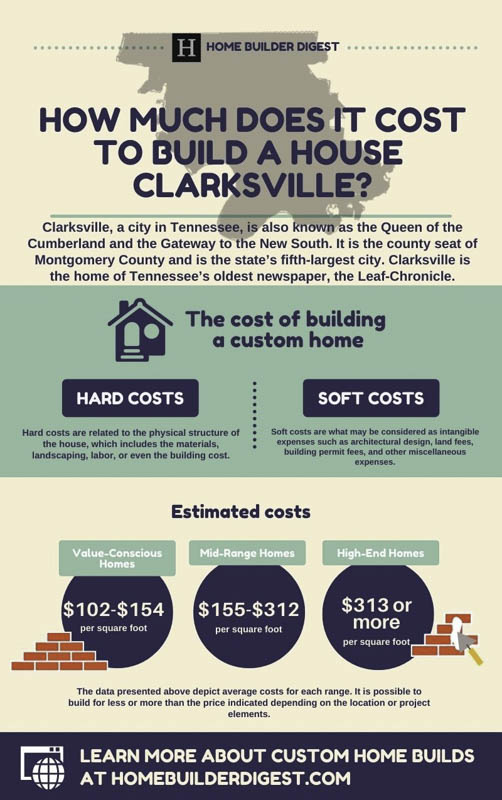
The hard costs are expenses that fund the physical structure and construction of the house. These include the materials, landscaping, labor, and even the total building value. In Clarksville, basic or standard construction starts at $102 per square foot, while middle-range or market homes are around $155 per square foot. Lastly, high-end or luxury homes cost around $313 per square foot or higher.
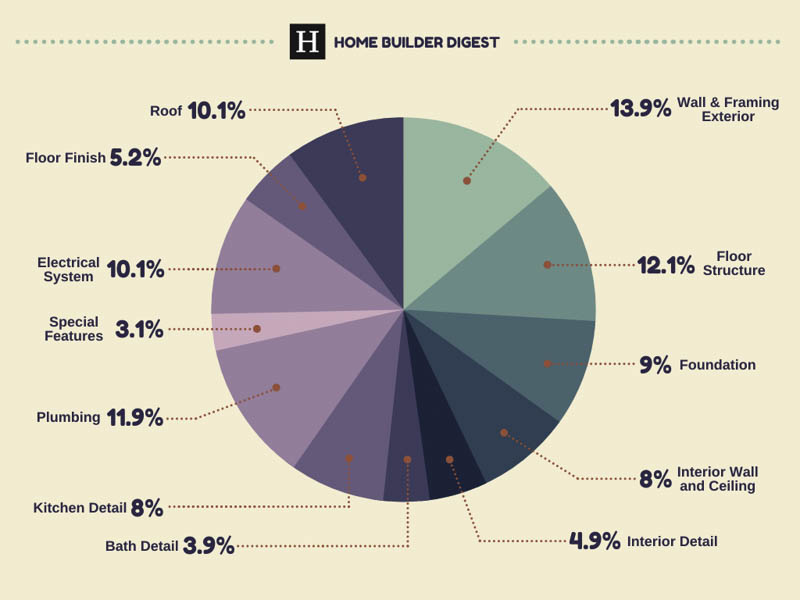
Figure 1. Typical cost breakdown of a single-family home constructed using the conventional method, according to Home Builder Digest.
Starting with the concrete-based parts, ProMatcher shares some of the costs. Concrete block wall installation in Clarksville ranges from $7.07 to $8.80 per square foot. Mudjacking or concrete slab leveling costs $4.20 to $5.15 per square foot of the slab being raised. Concrete floor polishing starts at $3.60, while patio installation costs around $4.46 to $5.98 per square foot of a four-inch reinforced concrete slab. When it comes to exteriors, HomeBlue reports that the cost of asphalt roofing in the city is $3.30 to $5.60 per square foot, which will still vary depending on the accessibility of the roof and the amount of labor needed to install the shingles.
Nashville-based contractor, Harry Helmet, also shares the price per foot of the various materials mainly used when installing gutters in Clarksville. Aluminum gutters cost around $3.03 to $6.05, vinyl gutters range from $3.39 to $4.09, and stainless steel gutters are around $5.67 to $6.21. Copper gutters are the most expensive among the materials, ranging from $23.82 to $25.46 per foot. Framing, which is one of the basics when constructing a house, costs an average of $4,927 as per Manta.
Home systems, such as plumbing, electrical, heating, ventilation, and air conditioning (HVAC) are also crucial before finalizing the interiors of a home since these may affect how the different furniture and appliances will be placed. Clarksville-based contractor, DOC Heating & Cooling Inc., shares that installing an air conditioner in the area generally ranges from $2,800 to $7,800, including the labor. Manta also shares the cost of both electrical wiring and plumbing installations in Clarksville. The average cost of electrical wirings is $360, while plumbing costs around $366.
Soft Costs
Soft costs are the expenses that go beyond the actual construction of the home, such as architectural design, land development fees, building permit fees, engineering fees, and other miscellaneous expenses.
Cost of the Land
In constructing your new home, getting the best lot is crucial for the process. Generally, prices may vary due to proximity to metropolitan areas, views, amenities, and land topography. According to HowMuchly.com, lots in Tennessee cost around $14,400 per acre or approximately $0.33 per square foot. Data from land and real estate listing websites say that the average cost of land in Clarksville is $916,757, with the average size at around 887,958 square feet. This brings the per square foot price of land to $3.23. This value may still increase depending on the development status of the lot since some of the listed properties may be undeveloped for residential construction.
As of May 2022, the cheapest land available in the city is a half-acre property, located on Belmont Road. The lot is priced at $18,000 and is a 13-minute walk from the center of Clarksville. On the other hand, the most expensive residential listing is a 4.52-acre property on Old Trenton Road, priced at $1,400,000.
Permits and Other Fees
All permit applications and payments can be submitted either online or in person on the first floor of the city hall building on One Public Square. For online payments, the city utilizes a website that only accepts credit cards, and as of May 2022, only checks and credit cards are accepted for in-person payments. If a client needs to retrieve online permits or any other permit, they are advised to contact the City of Clarksville building and codes department. For any permit and inspection request, project owners may send an email to BCRESREQ@CityOfClarksville.com.
The cost of building permits in Clarksville depends on the square footage of the home, specifically at $0.22 per square foot around 2009, and applies to both heated and unheated spaces. However, the city government applies a mandatory inflation factor of $0.01 per year, which is effective January 1 of the year. Thus, for 2022, the permit cost starts at $0.35 per square foot. This fee already includes the total cost of the services offered by the city offices, such as building and codes, street department, and fire services. While there is a base fee, other factors will be considered, and the total permit fee will be adjusted accordingly.
Architecture and Design Fees
The cost of architecture and design depends on the size, scope, and complexity of a project. The client’s needs, preferences, and lifestyle may be taken into consideration during the final design consultation. While some projects may be simple, others may require extensive planning and consultation with various industry professionals. When calculating the final cost, some architects may charge a percentage of the total project cost, and others may have fixed hourly rates. Nationally, architect rates range anywhere between 5 and 20% of the project cost. In Clarksville, ProMatcher reports that residential architects charge around 9.54% of the total construction cost.
How do the custom home building costs in Clarksville compare to other nearby cities?
Nashville, the capital and most populous city of Tennessee, is located approximately 52 miles away from Clarksville. On average, construction projects in Nashville cost around $269,332, while the average cost per square foot is $96 per permit gathered through BuildZoom (BZ). New construction projects in the area are mostly residential, such as single family homes and apartments. Single family homes usually include one to two floors, a porch or deck, and a garage that is either attached or detached. Other projects also have basements.
Mount Juliet, the largest city in Wilson County, is regarded as the sixth fastest-growing city in Tennessee. It is a suburb of Nashville and is located 66 miles away from Clarksville. According to permits pulled from BZ, the median cost of construction in Mount Juliet is $323,714. The price of existing homes in the area soared by 14.4% compared to 2021 on Redfin, with an average price of $497,500. Properties have a sale-to-list ratio of 104.1% for regular homes, while in-demand homes sell around 8% higher than the original listing price. The Mount Juliet market is considered very competitive especially since the estates only spend 12 days on the market before it gets sold.
Lastly, Brentwood is a city in Williamson County, Tennessee. The Nashville suburb is located around 60 miles away from Clarksville and is considered one of the wealthiest cities in the country. Niche ranks it as the top city in the state to live and raise a family in. As per the BZ permit database, the average construction project in Brentwood costs around $360,955, or around $89 per square foot. New construction projects are mostly single family homes, with some offices and commercial properties. These single family homes typically include a garage and a deck or porch.
The Future of Clarksville’s Residential Construction Industry
While housing demand all over the country skyrocketed, the COVID-19 pandemic pushed restrictions and shortages, delaying even the smallest projects. Two years after, some people are restarting their homeownership journey in great distress. The existing home prices are no joke, especially with how prospective buyers are still joining bidding wars or foregoing inspections. Clarksville and several bigger cities are coping by approving rezoning plans and converting commercial properties into either mixed-use or purely residential. On the other hand, current residents of Clarksville are dealing with the rising number of developments in the area, including a 903-unit project. Some residents say that while growth is good, there is not enough infrastructure to accommodate the increasing number of cars. Residents say that the city should coordinate with community members to reach a consensus on whether the project is practical in the long term or not.
Another rezoning project, the Killebrew development, was recently approved by the Montgomery County Commission. The said project is a 307-acre, 1,378-unit mixed-use development, set to be completed within the next 15 to 20 years. However, some have spoken against the rezoning plan, expressing concerns as current residents of the area that the development will only push for further overcrowding in not only the housing market but also in schools and on the roads. As more people move into Clarksville, the Clarksville-Montgomery County School System (CMCSS) projected that even with the rezoning projects, the area would need around seven more schools within the next 20 years to tackle the overcrowding issue.
Cost Saving Tip for Building a Home in Clarksville
Take Advantage of Tennessee’s Tax-Friendly Environment When Budgeting Your Build
Clarksville’s position in Tennessee—a state with no income tax—gives custom home builders a meaningful financial advantage that should be factored into the overall budget strategy from the start. The absence of state income tax means that more of your household income is available for mortgage payments, construction draws, and the upfront costs associated with building a custom home. Combined with Clarksville’s property tax rates, which are among the lowest in the Nashville metro area, the total carrying cost of a new home here is significantly lower than in comparable markets in neighboring states like Kentucky, where state income tax and often higher local taxes reduce disposable income. This tax advantage also means that the effective cost of a higher-quality build—better materials, more energy-efficient systems, or a larger floor plan—is more manageable in Clarksville than the sticker price alone suggests. When comparing building costs across state lines, be sure to calculate the total annual cost of ownership including property taxes, state taxes, insurance, and utilities rather than just the construction price per square foot. Many families relocating to Clarksville from Fort Campbell or from higher-tax states find that the tax savings alone fund a meaningful upgrade in home quality compared to what they could afford elsewhere. Factor these savings into your building budget to get the most value from your investment.
Frequently Asked Questions
Which areas in—or near—Clarksville are among the best for custom home building?
The northeast corridor of Clarksville, particularly the Rossview and Exit 11 areas, has become the fastest-growing section of the city for custom home construction, offering newer infrastructure, growing commercial development, and access to the well-regarded Rossview school zone within the Clarksville-Montgomery County school system. Sango, on the east side, provides established neighborhoods with larger lots and a more suburban feel. The areas along Tiny Town Road and north of Exit 8 offer a mix of newer subdivisions and individual custom lots. For buyers seeking larger acreage with a rural character, the communities south and east of Clarksville toward Pleasant View and Adams provide pastoral settings with rolling terrain at very accessible price points. The Trenton Road corridor to the north is experiencing significant growth with both residential and commercial development. Within the city, the downtown area and neighborhoods near Austin Peay State University attract buyers interested in walkable urban settings. Fort Campbell’s proximity is a defining feature of the Clarksville market, and many military families and Department of Defense civilians build custom homes in the neighborhoods with the quickest access to the installation’s gates. Across the Kentucky state line, Oak Grove offers an alternative for buyers who want Fort Campbell proximity with Kentucky residency.
How does Clarksville’s climate potentially impact home building costs?
Clarksville’s humid subtropical climate brings hot, humid summers with temperatures frequently reaching the mid-90s and cool to cold winters with occasional ice storms and snow. The climate profile is similar to Nashville’s but slightly milder in winter due to Clarksville’s lower elevation and proximity to the Cumberland River valley. Summer humidity requires effective moisture management in the building envelope, including sealed crawl spaces, mold-resistant materials, and properly ventilated attic assemblies. HVAC systems must handle both summer cooling with dehumidification and winter heating, and high-efficiency heat pumps are standard in Middle Tennessee new construction. The region sits in a moderate risk zone for severe thunderstorms and tornadoes, and many Clarksville builders offer storm shelter or safe room options. The moderate frost line keeps foundation costs reasonable. Clarksville receives significant annual rainfall, making site drainage, proper grading, and gutter systems important design elements—particularly given the clay soils common in the area. The four-season climate allows for year-round construction activity with brief interruptions during extreme cold or heavy rain. Overall, Clarksville’s climate demands competent all-around design without imposing the extreme requirements—and associated costs—of coastal, mountain, or deep-cold markets.
What should I know about soil and terrain conditions before buying a lot in Clarksville?
Clarksville sits in the western Highland Rim of Middle Tennessee, where the terrain features gently rolling hills and the predominant soils are clay over limestone bedrock—a profile similar to Nashville and Murfreesboro but with some distinctions. The clay soils are moderately expansive, and the shrink-swell cycle can affect foundations if not properly engineered. A geotechnical investigation before purchasing a lot is recommended, as clay content, depth to bedrock, and water table levels vary across the growing metro area. The limestone bedrock underlying Montgomery County creates karst topography with the potential for sinkholes and underground drainage channels, though dramatic sinkholes are relatively uncommon in the immediate Clarksville area compared to parts of Middle Tennessee further east. Many homes in the Clarksville market are built on crawl space foundations, which require proper moisture management including sealed vapor barriers and adequate ventilation or encapsulation in the humid climate. The Cumberland River and Red River, which flow through the Clarksville area, create flood zone concerns for properties near the waterways, and FEMA flood zone verification is essential before purchasing a lot. Newer subdivisions on the city’s rapidly developing fringe should be evaluated for utility infrastructure, as some areas are transitioning from rural to suburban service.
Broadly speaking, is it cheaper to build or buy an existing home in Clarksville right now?
Clarksville has experienced rapid population growth—one of the fastest rates among mid-sized cities in the United States—and housing demand has driven existing home prices upward sharply. At the same time, the volume of new construction has been significant, keeping the market for new homes competitive. On a cost-per-square-foot basis, buying an existing home in Clarksville is generally less expensive than building a comparable custom home, though the gap is narrower here than in many markets due to the high volume of recently built homes available for resale. Many of Clarksville’s existing homes are relatively new—built within the past two decades during the city’s growth surge—which reduces the renovation risk that exists in markets with older housing stock. However, building new still offers the advantage of full customization, current energy-efficient systems, a foundation engineered to the specific lot conditions, and a builder warranty. Tennessee’s lack of state income tax and Clarksville’s comparatively low property taxes make the overall cost of homeownership here very competitive, and the city’s continued growth trajectory supports strong resale values for well-built custom homes. For military families and others planning a defined tenure, the buy-versus-build calculation depends heavily on timeline, while long-term residents benefit most from new construction’s lower maintenance and efficiency advantages.
Considering building a home in Clarksville?
Contact us for a free consultation