
Home » Cost Guides » Tennessee Cost Guides » How Much Does it Cost to Build a House in Murfreesboro?
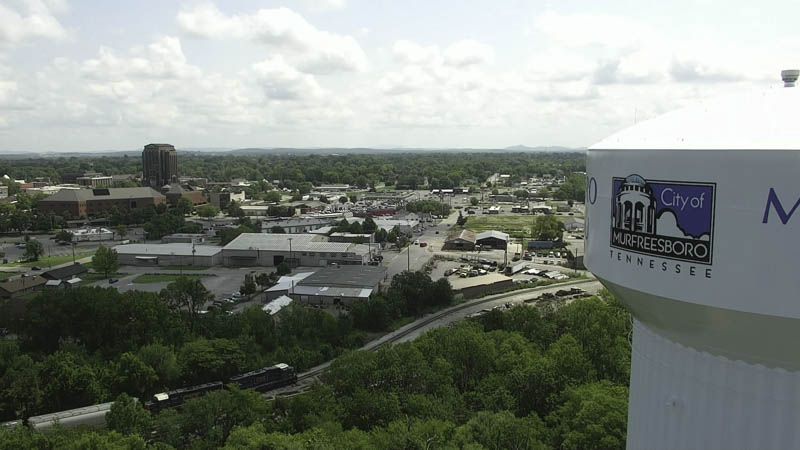
Murfreesboro is the county seat of Rutherford County and is located in the Nashville metropolitan area in Tennessee. It is the sixth-largest city in the state, as well as the largest suburb of Nashville. The city houses the largest undergraduate university in the state, the Middle Tennessee State University. Murfreesboro also holds several bodies of water, such as small wetlands and both natural and human-made lakes. Stones River passes through the city, with several hiking trails and parks lining it.
Despite the abundance of green spaces, the Trust for Public Land ParkScore reveals that only 3% of Murfreesboro’s total city land is dedicated to parks and recreation. Overall, only 14% of its residents live within a ten-minute walking distance from a park. When it comes to living conditions, ranking and review website Niche places the city in the 36th position of Best Cities to Buy a House in America. It is also in several top spots for Tennessee and the Nashville area, including the third Best Suburb for Young Professionals in Tennessee, the fifth Most Diverse Suburb in Tennessee, and the second Best Suburb for Young Professionals in Nashville Area. Given that the job market has become more competitive recently, young professionals may have a much better chance of fixing their finances since there is no income tax in Murfreesboro. Taxpayers are only required to pay two major tax requirements: local property taxes and state and local sales taxes. While nationally, the property taxes in the city are the lowest, its sales tax is one of the highest.
With that being said, prospective residents and developers ask: how much does it cost to build a home in Murfreesboro?
The Cost of Building a Home in Murfreesboro
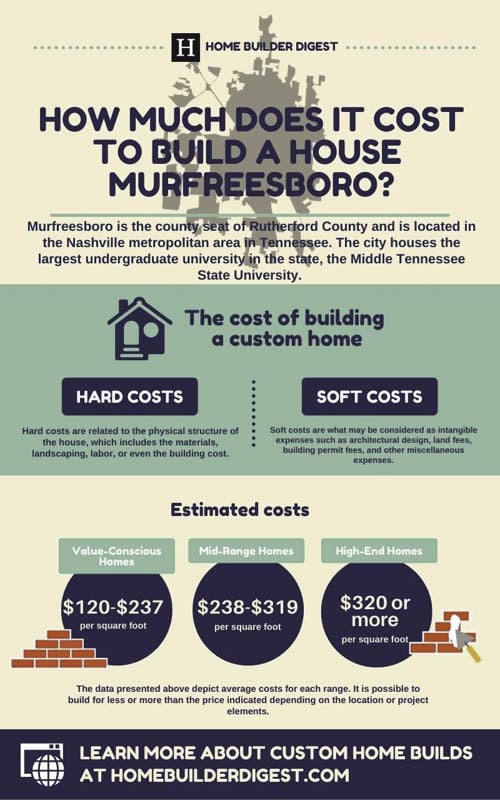


Nationally, building a 2,000-square-foot home costs an average of around $300,000 according to Forbes. Homes of the same size in Tennessee would cost around $261,940. Home prices all over the country increased dramatically during the height of the pandemic. For example, from January 2020 to January 2021, the median home price in Murfreesboro was $304,000. This year, in 2022, the median home price rose to $372,400. The high housing costs also affected multi-family dwellings, where the average rent of high-quality apartments increased from $1,300 to $1,624. However, despite the said price hikes, the overall cost of living the Murfreesboro stays average, with an overall score of 100.6 while the national average cost of living is 100.
The price of a custom single family home in Murfreesboro varies with the materials, labor, and professional services required to complete it. New home construction usually includes factors that fluctuate independently from each other, such as framing, foundation, plumbing, interior, and exterior finishes. There may also be city-required documents to fill out before starting the construction. All of these can fall into either the hard or soft costs of building a home.
Hard Costs
The hard costs are expenses that fund the physical structure and construction of the house. These include the materials, landscaping, labor, and even the total building value. In Murfreesboro, basic or standard construction homes start at $143 per square foot, while middle-range homes cost around $238 per square foot. Luxury or high-end homes in the city cost $320 per square foot or higher.
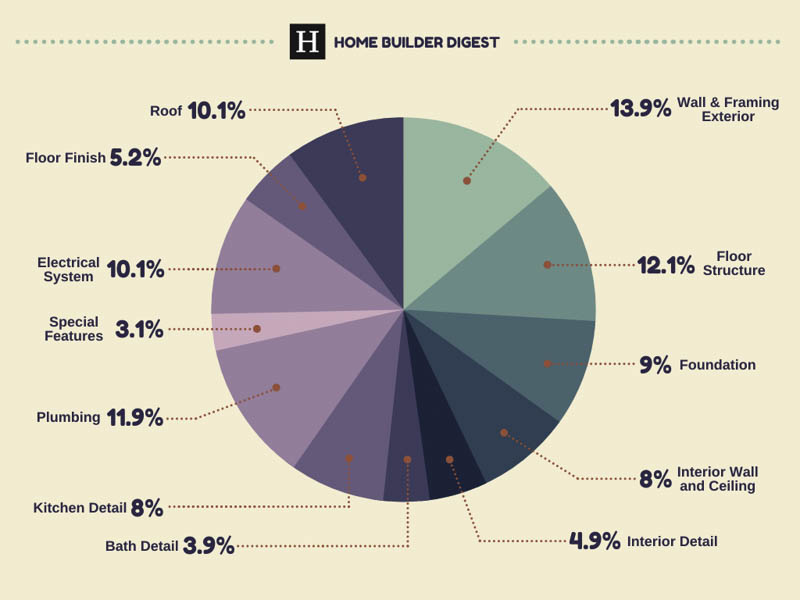
Figure 1. Typical cost breakdown of a single-family home constructed using the conventional method, according to Home Builder Digest.
Starting with the foundation and exteriors, TriStar Concrete, a Brentwood-based contractor, shares that the cost of concrete slabs in Murfreesboro depends on the type and size of the slab. However, projects will generally be $5 to $8 per square foot. For roofing, Franklin-based contractor, Five Points Roofing, LLC shares that project owners in Middle Tennessee may spend around $15,000 for roof installation, which breaks down into 60% labor and 40% materials. This may also depend on several factors such as the square footage of the home, accessibility, and the material used.
The systems inside a home include plumbing, electrical, and the HVAC, or heating, ventilation, and air conditioning system. Manta shares that the cost of plumbing in Murfreesboro ranges from $98 to $711, while homeowners pay an average of $404. For electrical, homeowners may pay around $895, but it may range from $740 to $1,050. Lastly, Murfreesboro-based company, Total Trans4mation Heating and Air Conditioning shares that the cost of an HVAC system depends on the size and type of the system, its efficiency rating, and the labor needed to install it. New installations start at $3,500.
Soft Costs
Soft costs are the expenses that go beyond the actual construction of the home, such as architectural design, land development fees, building permit fees, engineering fees, and other miscellaneous expenses.
Cost of the Land
In constructing your new home, getting the best lot is crucial for the process. Generally, prices may vary due to proximity to metropolitan areas, views, amenities, and land topography. HowMuchly.com reports that lands in Tennessee cost an average of $14,400 per acre or approximately $0.33 per square foot. For Murfreesboro, land and real estate listing websites show that the average land cost in the city is $830,340, while the average cost per square foot is $4.87. This value may still increase depending on the development status of the lot since some of the listed properties may be undeveloped for residential construction.
As of May 2022, the cheapest land available in the area is a 13,939-square-foot property listed at $80,000. It includes a fire-damaged home so prospective buyers will have to demolish the structure before proceeding with construction. The current most expensive land in Murfreesboro is priced at $6,950,000 and consists of five parcels of land with some residential structures. The total property size is 111.35 acres and is mostly unimproved land. For the per square foot comparisons, the cheapest available in the city is a 31.79-acre unimproved property for $350,000 or $0.25 per square foot, while the most expensive is an undeveloped 2.78-acre parcel of leveled land for $25.42 per square foot.
Permits and Other Fees
Project owners have the option to submit their residential building permit applications either online, to Planning@murfreesborotn.gov, or in person, at the Murfreesboro City Hall at West Vine Street. The permit center will process the application, which may take around five to seven days, and will contact the applicant about the total fees and available payment options.
The new construction building permits of single family homes are calculated based on the total heated space, to be measured outside of the exterior walls, and one-third of the unheated space and areas under a roof. This includes garages, unfinished basements, and porches.
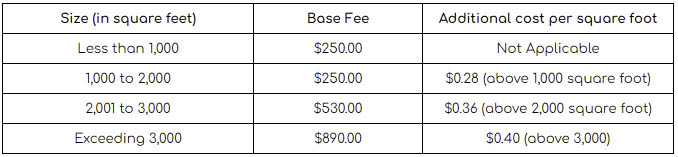
The Murfreesboro city government also requires permits for different fixtures and systems that a home may need, such as plumbing, electrical, gas, and mechanical. Mechanical permit fees for residential construction are fixed at $38, while the Gas permit starts at $20 for the base fee and an additional $5 per fixture. This will require a list of the fixtures that the project owner plans to install. For plumbing and electrical, the fees are indicated in the tables below.
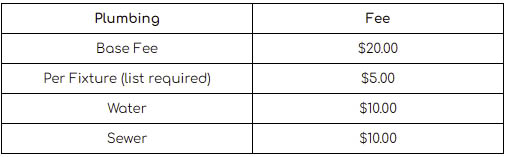
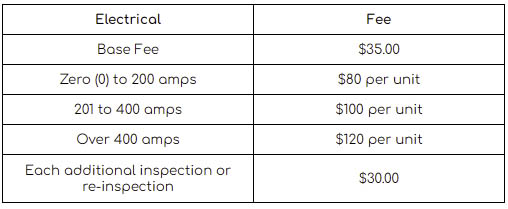
Architecture and Design Fees
Architect and design fees depend on the size, scope, and complexity of the project. The client’s preferences, needs, and lifestyle are also taken into consideration when finalizing a design. While some projects may be simple, others may require extensive planning, attention to detail, and consultation with various industry professionals. The cost of architecture and design is usually taken as a percentage of the total project cost, but some professionals may charge a fixed hourly rate.
Nationally, architect rates range anywhere between 5 and 20% of the project cost. Architect fees in Murfreesboro typically cost around 9% of the total project cost according to ProMatcher. HomeYou also shares that plans are available online for $2,000, but it would be ideal to hire an architect to check the plans and specifications to ensure that the design is doable on the lot. Interior designers in Murfreesboro charge around $50 to $200 per hour, but some may charge by marking up the purchased items by 15 to 25%.
How do the custom home building costs in Murfreesboro compare to other nearby cities?
Nashville is the capital and most populous city of Tennessee. It is known for its music industry, which is said to provide over 50,000 jobs and contribute more than $30 billion to the U.S. economy. The “Southern Boomtown” is the third-fastest growing metropolitan area in terms of economic growth all over the country. The city is approximately 34 miles away from Murfreesboro. On average, construction projects in Nashville cost around $269,332, while the average cost per square foot is $96 per permits gathered through BuildZoom (BZ). New construction projects in the area are mostly residential, such as single family homes and apartments. Single family homes usually include one to two floors, a porch or deck, and a garage that is either attached or detached. Other projects also have basements.
Mount Juliet, the largest city in Wilson County, is regarded as the sixth fastest-growing city in Tennessee. It is a suburb of Nashville and is located 33.1 miles away from Murfreesboro. The city offers a lot of attractions and activity spaces, including Legacy Park, the Encore Theatre Company, Briggs Art Studio, Brookestone Playground and Park, and Charlie Daniels Park. According to permits pulled from BZ, the median cost of construction in Mount Juliet is $323,714. The price of existing homes in the area soared by 14.4% compared to 2021 on Redfin, with an average price of $497,500. Properties have a sale-to-list ratio of 104.1% for regular homes, while in-demand homes sell around 8% higher than the original listing price. The Mount Juliet market is considered very competitive especially since the estates only spend 12 days on the market before it gets sold.
What Leading Custom Home Builders and Architects that Serve the Murfreesboro Area Say
Lucas Neely of Boro Homes, LLC shares that there might be a huge shift in the construction industry given how skilled laborer wages are getting higher. Young people can enter in any trade, open their own business after mastering it, and then clear $100,000 in the first year or more depending on their capability for business. The massive labor shortage is easily giving skilled laborers the platform to negotiate a higher pay. In 10 years, they might be able to name their price unless the gap is fixed.
Given the current situation of the market, Neely advises project owners to research and work with licensed professionals. Having a good contract that protects both the contractor and the project owner is also advisable. With supply chain issues still rampant across the world, having most, if not all, the products onsite prior to a project will ensure a smoother construction process. Try to avoid missing a window with a trade professional, which can cause massive delays especially if they are handling a lot of projects. Neely adds that there are various things in the construction industry that the average person will not understand, such as the hidden portions that constitute a well-constructed home. However, since it is impossible for a perfect construction process, having trust in the contractor will help project owners in navigating through the processes. With the current high demand for construction services, it helps to be patient.
The Future of Murfreesboro’s Residential Construction Industry
Much of Rutherford County’s growth can be attributed to the number of job opportunities for both the residents and the people who are looking to settle in a more affordable area. Another factor is the county’s proximity to Nashville, whose job market is also growing exponentially. The boost in population in recent years pushed the demand for more housing, but with the supply barely catching up because of the pandemic, costs continue to rise. Nashville developers are even looking toward other cities for land. For Murfreesboro, it is on a different scale since out of the 10 most popular districts in the Nashville area, the districts labeled four and five are within the city.
To address the problems with the housing inventory, the Murfreesboro city council approved several zoning-related requests in recent months. Around December last year, an annexation and zoning request to improve the sewer capacity was approved. In addition, a street improvement project worth $11,000,000 was approved just this February, along with its plan of services, annexation, and even a residential zoning request to convert 19 acres of property along Florence Road for residential development. A similar proposal was approved for 25 acres along Salem Highway. While this may be good news to prospective property owners, current residents are having doubts about whether these changes will affect their dwellings positively or negatively. It is obvious that while a number of people may move in, it may disrupt the area. The large estate developments may also bring about depreciated property values, an increase in crime rates, and even negative impacts on the local wildlife. Some locals even expressed concerns over the possibility of flooding.
Cost Saving Tip for Building a Home in Murfreesboro
Lock In Builder Pricing During Murfreesboro’s Off-Peak Season
Murfreesboro is one of the fastest-growing cities in Tennessee, and the surge in residential construction has tightened the local builder market, pushed up subcontractor costs, and created scheduling backlogs during peak building months. One of the most effective cost-saving strategies is to begin your project planning during the late fall and winter—when builder schedules tend to be lighter—and negotiate your construction contract during this slower period. Many Murfreesboro builders offer more competitive pricing on contracts signed in the winter months, as it allows them to plan their crew schedules and material procurement more efficiently for the spring building season. By having your design finalized, permits submitted, and contract executed before the spring rush, you position your project to break ground early in the season and avoid competing with the wave of new starts that typically launch between March and May. This timing advantage can translate into better subcontractor availability, shorter lead times on materials, and fewer scheduling delays throughout the build. In a rapidly growing market like Murfreesboro, where land is being developed quickly and builder capacity is stretched, the buyers who plan ahead and commit during the quieter months consistently get better pricing and smoother project execution than those who enter the pipeline during peak season.
Frequently Asked Questions
Which areas in—or near—Murfreesboro are among the best for custom home building?
The northwest corridor of Murfreesboro, particularly the neighborhoods along Thompson Lane and the areas surrounding Barfield Crescent Park, offers established infrastructure with proximity to the city’s best green spaces and family amenities. The Salem and Blackman communities on the south and east sides have seen significant residential growth, with newer subdivisions offering custom lot opportunities and access to well-regarded Rutherford County schools. Lascassas, northeast of the city, provides a more rural setting with larger acreage parcels and a country feel while remaining within a reasonable commute to both Murfreesboro and Nashville. For buyers who want proximity to Nashville’s job market while building in a more affordable area, the northern corridor along I-24 toward Smyrna and La Vergne offers a balance of price and commuting convenience. The Christiana and Eagleville areas to the south provide even more affordable land with pastoral settings. Within Murfreesboro proper, the areas near the downtown square and MTSU attract infill builders seeking walkable locations with historic character. The overall market benefits from Tennessee’s lack of state income tax and Rutherford County’s comparatively low property taxes, making it an attractive option for buyers relocating from higher-tax states.
How does Murfreesboro’s climate potentially impact home building costs?
Murfreesboro’s humid subtropical climate brings hot, humid summers with temperatures regularly reaching the low to mid-90s, and cool to cold winters with occasional ice storms and light snow. The summer humidity is the most significant climate factor for construction, requiring effective moisture management throughout the building envelope, including sealed crawl spaces, mold-resistant materials, and properly ventilated attic assemblies. HVAC systems must handle both summer cooling with dehumidification and winter heating, and high-efficiency heat pumps are increasingly standard in Middle Tennessee new construction. The region sits in a moderate risk zone for severe thunderstorms and tornadoes, and many custom builders offer storm shelter or safe room options as part of the build. Tennessee’s building code requires structural connections and roofing designed for the local wind loads. The moderate frost line keeps foundation costs reasonable, and the four-season climate allows for year-round construction activity with only brief interruptions during extreme cold or wet conditions. Murfreesboro receives consistent rainfall throughout the year, making site drainage, gutter systems, and proper grading around the foundation essential design elements. The overall climate does not impose extreme requirements in any single category but demands competent all-around design to handle the range of conditions.
What should I know about soil and terrain conditions before buying a lot in Murfreesboro?
Murfreesboro sits in the Nashville Basin of Middle Tennessee, where the predominant soil type is heavy clay over limestone bedrock. The clay soils are moderately expansive, swelling when wet and contracting when dry, which can cause foundation movement if not properly engineered. A geotechnical investigation before purchasing any lot is recommended, as clay content and depth to limestone vary across the metro area. The limestone bedrock that underlies much of Rutherford County can create karst features, including sinkholes and underground drainage channels. While dramatic sinkholes are relatively uncommon in developed areas, karst evaluation is a standard and prudent part of due diligence for building sites in the region. The terrain throughout greater Murfreesboro is gently rolling, which generally simplifies site preparation compared to the hillier areas of Middle Tennessee but still requires attention to drainage engineering on the relatively flat lots common in newer subdivisions. Stones River and its tributaries create flood zone concerns in some areas, and buyers should verify FEMA designations before committing to a lot. Many Murfreesboro homes are built on crawl space foundations, which require proper moisture management in the humid climate, including sealed vapor barriers and adequate ventilation or encapsulation.
Broadly speaking, is it cheaper to build or buy an existing home in Murfreesboro right now?
Murfreesboro’s rapid population growth has driven existing home prices upward sharply, with strong demand from both Nashville commuters and families attracted to Rutherford County’s schools and affordability relative to Davidson County. At the same time, new construction costs have risen due to labor competition in one of the state’s busiest building markets and the broader material price increases affecting the industry nationally. On a cost-per-square-foot basis, buying an existing home in Murfreesboro is generally less expensive than building a comparable custom home. However, the most affordable existing homes tend to be older properties that may need updates to HVAC systems, insulation, and finishes, and some may sit on foundations affected by the region’s clay soils. Building new in Murfreesboro delivers a home designed for the local climate and soil conditions, with modern systems, energy-efficient construction, and the open floor plans that dominate current buyer preferences. Tennessee’s lack of state income tax and Rutherford County’s competitive property tax rates enhance the overall value proposition. For buyers planning to stay long-term, new construction in Murfreesboro offers strong value given the area’s growth trajectory and the long-term savings from reduced maintenance and lower utility costs.
Considering building a home in Murfreesboro?
Contact us for a free consultation