
Home » Cost Guides » Louisiana Cost Guides » How Much Does it Cost to Build a House in New Orleans?
New Orleans is often hailed as the city of Mardi Gras. It’s a cultural center with a bustling nightlife and truly unique sights, traditions and a colorful blend of people. The city is often referred to as The Big Easy since aspiring musicians flock to New Orleans due to the sheer number of clubs, bars, and entertainment venues, which makes it easy to book gigs and performances. In fact, New Orleans is considered the spiritual birthplace of jazz in the United States.
Consequently, tourism plays a significant role in The Big Easy’s economy. Cultural gatherings such as the World Cultural Economic Forum are held in the city. In addition, the world’s largest celebration of Mardi Gras is also celebrated in New Orleans, in which locals drape themselves in colorful wardrobes to celebrate.
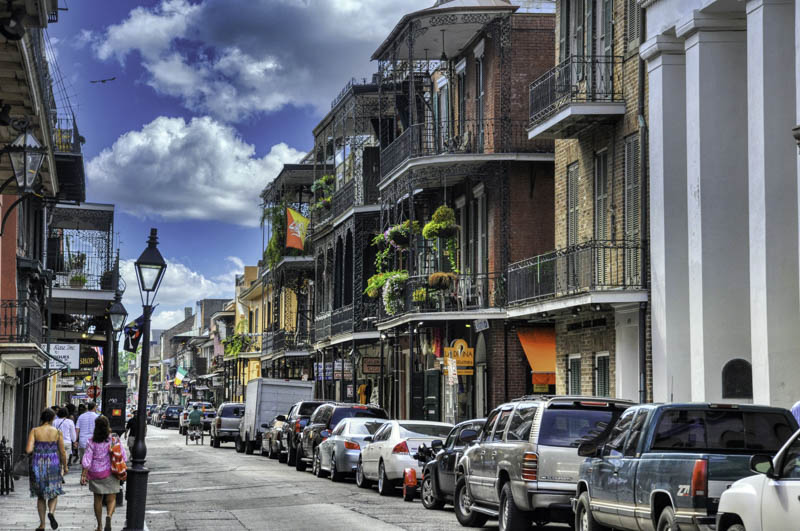
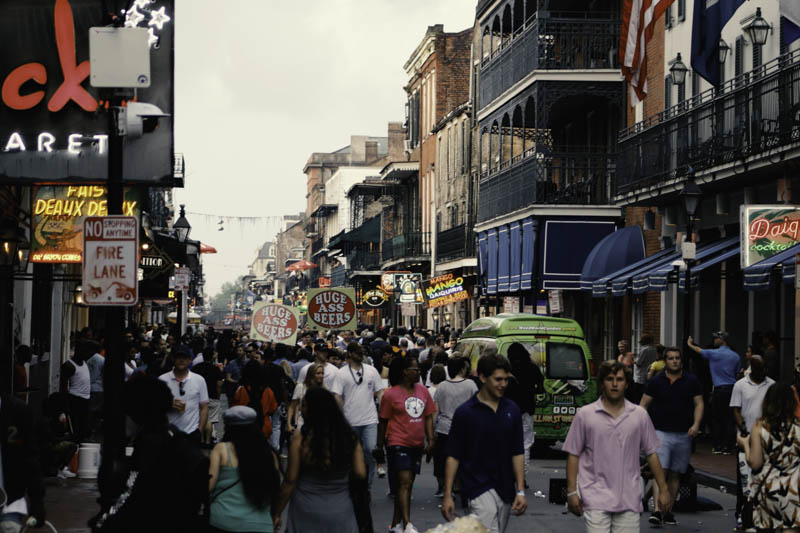
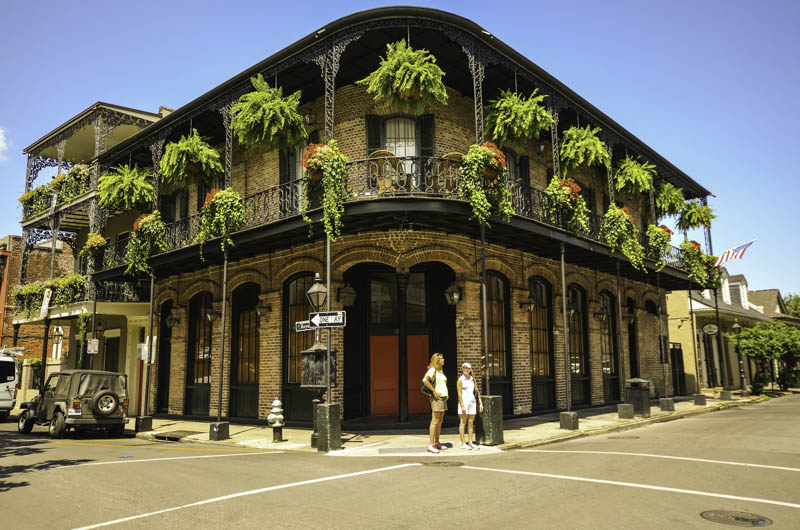
One popular area in the city is The French Quarter. Often coined as The Crown Jewel of New Orleans, is a cultural hotbed in the city known for its classic buildings influenced by Spanish and French architecture. Places such as Bourbon Street in the French Quarter are studded with bars, restaurants and entertainment venues, so it’s easy to pick up some Cajun, Creole or French cuisine with a cup of alcohol in hand. The Big Easy’s resident’s motto is undeniably apt for everything that it is — laissez les bon temps rouler, a crude Cajun-French translation of Let the Good Times Roll.
The Big Easy consistently ranks high in the top cities in the United States. Its popularity among bikers is steadily growing due to the city’s flat landscape. Residents are even more encouraged to cycle with programs such as Bike Easy helping make biking more accessible to residents. The city currently has a bike score of 66.
The Cost of Building a Home in New Orleans


The cost of living in New Orleans is notably higher compared to the state of Louisiana by around 10%, though marginally lower than the national average. It’s worth noting that New Orleans is highly affected by hurricanes, mainly due to its topography. Its proximity to large bodies of water, low elevation (that goes down by 1-2 inches yearly), and poor drainage systems make the city prone to floods. Moreover, New Orleans was left in a state of total devastation when Hurricane Katrina hit in 2005. Government agencies are seeking ways to remedy the city’s climate issue through land restoration programs and a vision of sustainable real estate — characterized by resilient home construction, smart zoning laws, and a lower carbon footprint.
The construction industry in New Orleans is not without its problems, mainly due to the pandemic. The halt of the United States economy has caused a shortage of laborers and a spike in the price of raw materials for construction firms nationwide. Though 2021 has seen a decrease in materials costs, the cost is still high above the national average pre-pandemic. The state of Louisiana has also seen a decline in its number of workers prior to the pandemic, making it difficult for contractors to source manpower.
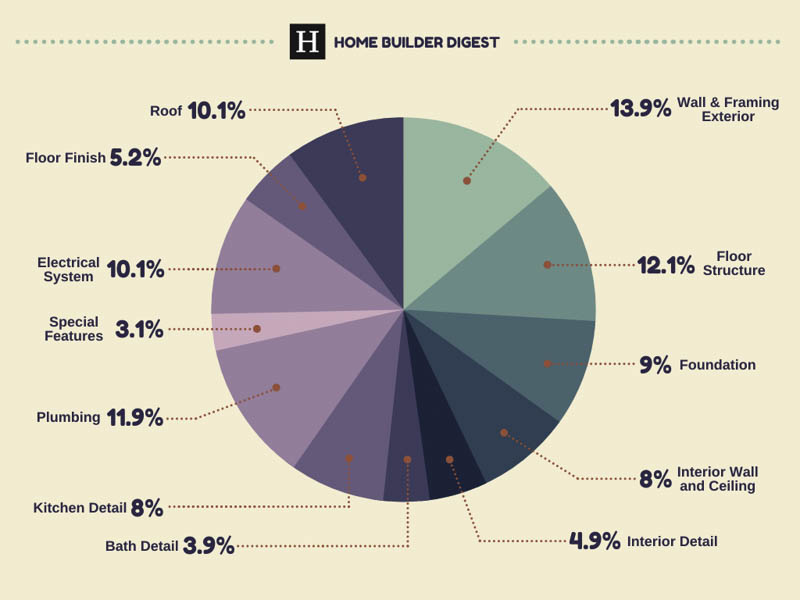
Figure 1. Typical cost breakdown of a single-family home constructed using the conventional method, according to Home Builder Digest. Image Source: National Cost Guide.
Hard Costs
Materials, labor, landscaping and construction fees are all considered hard costs. They all pertain to expenses directly involved with the construction of the physical structure. These figures do not include underlying expenses such as inspection or permit fees.
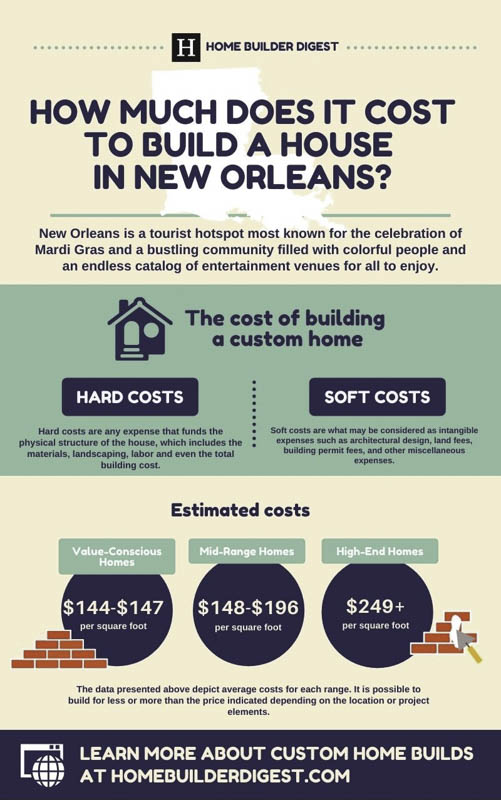
New Orleanian homes run between $148 to $196 per square foot. Higher end houses can cost as much as $287 per square foot. The Louisiana average to build a custom home is around $95 to $141 per square foot—making New Orleans a more expensive option to build a home in compared to most other parts of the state. Zillow marks the average home value for a house in New Orleans at $268,947, noting that mid-tier home values have gone up by 10.3% over the past year. Carpentry framing can cost as much as $3,600 to $4,381 — including the average labor to install framing, the average cost of materials, and the overall project cost, including cleanup fees. The cost of installing a concrete foundation in New Orleans can set homeowners back $6.02 per square foot for a 4-inch reinforced concrete slab on grade (with a typical range of $5.70 to $6.34).
The installation of asphalt roof shingles can cost as much as $3.50 to $6 per square foot; roofing a 1500-square-foot home thus costs around $7,150. The average cost that homeowners pay for hardwood floors fall between $8,685 and $10,814 in Orleans Parish county. Their quotes include material costs, the average labor cost for installation and all other project costs, but do not yet include general contractor fees, which usually add another $1,169.88 to $1,462.35 to the figure above.
The installation of utilities also falls under hard costs. These include heating, ventilation and air conditioning (HVAC), plumbing and electrical wiring. HVAC costs normally run an average of $1805.18 per furnace. The average cost that homeowners pay for a plumber in New Orleans run between $87 to as much as $634, which includes labor cost and other miscellaneous project costs. However, these figures do not yet include any permit or inspection fees and taxes. If a general contractor will be used for the project, homeowners should expect to pay an additional $43.20 to $54 on top of the total cost. Electrical wiring fees fall between $88 and $713 in Orleans Parish county. This includes labor fees, materials and equipment fees, and all project costs, including cleanup fees. If a general contractor will be used, an additional $40.80 to $51 is expected as well.
Homeowners choosing to install vinyl sidings to their homes can expect to pay $3.71 per square foot for mid-range sidings. Installing a concrete patio for those interested can set one back an average of $5.54 per square foot for 4-inch reinforced concrete slabs. Applying concrete finishes can also affect the overall cost of the project, with fees dependent on the difficulty of the design and finish. Finishing can include the following: staining which can run between $3.70 to $7.70 per square foot; stamping which is $11.20 to $13.40 per square foot; smooth finishes that average at $4.50 per square foot for epoxy floor coating; or concrete sealer which cost an additional $4.50 per square foot with an $86 per hour rate for labor.
Soft Costs
All underlying costs such as city-imposed taxes, inspection fees, permits and regulations, and architecture and design fees fall under soft costs. The cost of the physical plot of land also falls under this category. Essentially, these are fees that don’t involve the construction of the physical structure of a home.
Cost of the Land
Redfin listings of land typically range between $11.06 to $53.22 per square foot, with an average cost of $24.53 per square foot. The full price of lots range between $39,300 to $159,000; averaging at $84,733 for a piece of land in New Orleans.
Permits and Other Fees
The city of New Orleans requires homeowners to apply for a new construction permit which can be done through their online portal. New construction permits face an initial cost of $60 with an additional $5 for every $1,000 of work to be performed on the project. Projects needing a plan also need to have it reviewed for $1 per $1,000 of work to be done. Properties that will be constructed within a historic district (e.g., The French Quarter) will incur a 50% surcharge on the permit fee. Electrical permits may also be applied through the city government’s website. It comes with an application fee of $40 with an additional $3 per new circuit plus $0.30 per service amperage.
Architecture and Design Fees
Architects in New Orleans normally charge their clients on a per-hour basis or based on a percentage of the construction cost. Architects opting for the latter normally charge between 9.86% to 10.36% of the total construction cost of a project. Other architects in Louisiana normally charge an hourly fee of around $45 to $80 plus materials. Interior designers, on the other hand, charge fees that range from $50 to as much as $200 per hour. The average cost homeowners normally pay for interior designing services normally falls between $761 to $11,436.
How do the custom home building costs in New Orleans compare to other nearby cities?
Homes in New Orleans typically go higher in the state of Louisiana. Neighboring cities, Chalmette and Kenner are considerably cheaper options. Chalmette homes are currently valued at $164,857, with values going up by 11.6% over the past year. Kenner, on the other hand, has homes valued at $256,751, with mid-tier home values going up by 14% over the past year. Neighboring Metairie on the other hand is considerably more expensive than New Orleans. Homes in Metairie are valued at $256,751.
What Leading Custom Home Builders and Architects that Serve New Orleans Say
Specialists at Koch and Wilson Architects generally charge a rate of 10% of the construction cost, assuming a general contractor is involved in the project. The firm also notes that costs have significantly increased due to damage left by Hurricane Ida and COVID, so it’s quite difficult to get a hold of exact costs.
Ryan McCroskey, CEO at DMG Design + Build, provided estimates for various construction projects. Value-conscious homes typically run at $200-$250 per square foot; mid range homes cost $250-$350 per square foot, and high-end custom homes go upward from $350. They also foresee that inflation and workforce issues will remain an issue for the unforeseeable future. In addition, interest rates are on the rise, but for as long as they remain favorable the firm expects the demand for luxury living to remain strong.
The Future of New Orleans’ Residential Construction Industry
There is a nationwide concern in the residential construction industry regarding the rising prices of hard costs, causing the market to be highly volatile. Raw materials in recent years suffered a spike in material costs and labor, though it has slowly been going down, though still above the average prior to the COVID-19 pandemic.
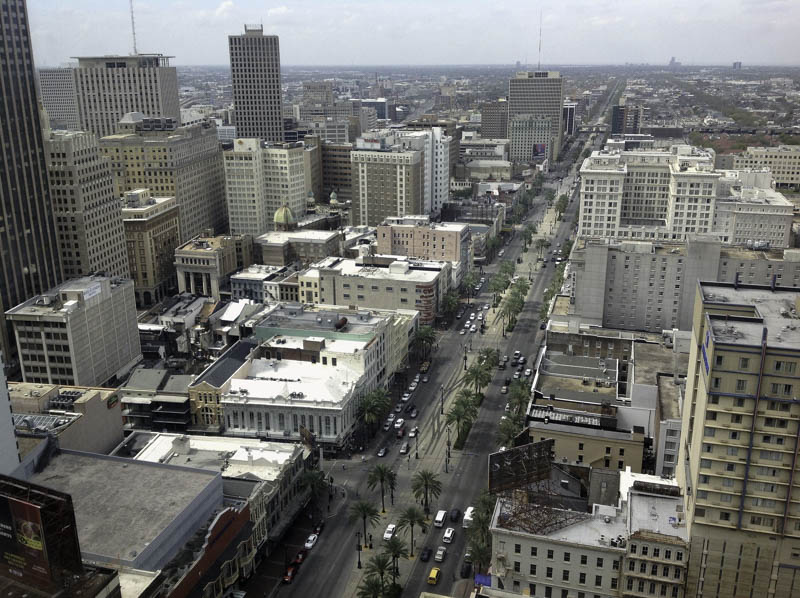
The city of New Orleans is constantly barraged by climate issues, particularly hurricanes and flooding. Recent years have seen the local government and private institutions strive for more sustainable housing and zoning that can help residents prevent and be protected from floods. Agencies such as the New Orleans Redevelopment Authority are pursuing projects that aid residents, particularly those belonging to low to moderate income homeowners, to install smart stormwater management interventions and improvements to counteract, prevent, or overall reduce the risk of flood.
Cost Saving Tip for Building a Home in New Orleans
Understand Elevation Requirements and Flood Zone Classification Before You Commit to a Site
New Orleans is one of the few cities in America where a single regulatory variable—base flood elevation—can swing the cost of building a new home by $50,000 or more. The city’s position in the Louisiana coastal zone, largely below sea level, means that FEMA flood zone classification and the resulting elevation requirements are not background considerations. They are central to every construction budget in the city.
The minimum finished floor elevation required for a new home varies by flood zone, and the cost of achieving that elevation depends on the approach: fill and compacted soil, a raised pier foundation, a slab-on-grade with extended stem walls, or a full pier system that leaves an open, elevated first floor in the traditional raised cottage style. Each has a different cost profile, and none is trivially inexpensive in a city built largely on compressible deltaic soils.
The most effective cost-saving move is to commission a flood elevation certificate and review the flood map for any prospective site before writing an offer. Sites in X zones—outside the Special Flood Hazard Area—carry no mandatory elevation requirement and no mandatory flood insurance, which reduces both construction cost and long-term carrying cost. These sites are worth paying a meaningful premium for over comparable AE or VE zone parcels when all costs are factored over the life of ownership.
Working with a builder who has extensive experience navigating New Orleans’s flood zone requirements is equally important. The most expensive foundation surprises happen when elevation requirements are discovered after a design is finalized, forcing a complete redesign. Building this analysis into the site evaluation phase, before a single design line is drawn, is the most reliable way to control the budget.
Frequently Asked Questions
Which areas in—or near—New Orleans are among the best for custom home building?
Metairie, the established suburban community in Jefferson Parish immediately west of New Orleans, is among the most active markets for custom and semi-custom home construction in the greater metro area. Its higher average elevation compared to much of Orleans Parish reduces flood risk and associated construction costs, and its well-developed infrastructure, strong school options, and convenient access to both the CBD and the lakefront make it consistently attractive to families building new homes.
Old Metairie, the historic core of Metairie along Metairie Road and the surrounding streets, attracts custom infill builders willing to work with smaller urban lots in exchange for one of the most distinctive residential streetscapes in the region. The area’s mature live oak canopy, proximity to City Park, and neighborhood character command a significant premium over newer suburban Metairie addresses.
On the north shore of Lake Pontchartrain, the communities of Mandeville, Covington, and Madisonville in St. Tammany Parish offer the most accessible custom home land in the greater New Orleans metro. Larger lots, higher elevation, strong school systems, and lower flood insurance costs make the north shore an appealing alternative for buyers who can accept the Lake Pontchartrain Causeway commute to Orleans and Jefferson Parish employment centers.
Within Orleans Parish itself, Lakeview—rebuilt substantially after Hurricane Katrina on slightly higher ground than many surrounding neighborhoods—has seen consistent custom and semi-custom construction activity. Gentilly and Broadmoor, both beneficiaries of significant post-Katrina rebuilding investment, offer similarly active new construction markets within the city limits. Buyers in any Orleans Parish neighborhood should carefully review site-specific elevation data before purchase.
How does New Orleans’s climate potentially impact home building costs?
New Orleans has one of the most demanding climates for residential construction in North America—a combination of extreme heat and humidity, a lengthy hurricane season, and a precipitation environment that produces some of the highest annual rainfall totals of any major American city. Each of these factors shapes construction costs in ways that distinguish this market from virtually every other.
The humidity is pervasive and relentless from April through October. Indoor air quality and moisture control are not optional considerations in a New Orleans home—they are engineering requirements. Properly sized dehumidification integrated with the HVAC system, vapor barriers detailed for a hot-humid climate, and building envelope assemblies that manage moisture vapor rather than trapping it are all standard elements of competent construction here. Cutting corners on these assemblies produces mold, deterioration, and unhealthy indoor environments within a few years of occupancy.
Hurricane resilience adds a meaningful layer of construction cost that buyers from other regions sometimes underestimate. Louisiana’s building code incorporates wind speed requirements reflecting the Gulf Coast’s exposure, and impact-resistant windows, reinforced roof-to-wall connections, and hurricane strapping are standard specifications rather than upgrades. Homes in the coastal parishes closest to open water face even more demanding code requirements, though most of the metro area’s residential new construction operates under the same enhanced wind provisions.
The subtropical climate also means that wood decay and insect damage—particularly from termites and wood-boring beetles—are genuine long-term concerns. Borate-treated lumber, concrete board and fiber cement exterior products, and subterranean termite treatment systems are standard parts of new construction in Louisiana in a way they are not in drier or colder markets.
What should I know about soil and terrain conditions before buying a lot in New Orleans?
New Orleans was built on the natural levees of the Mississippi River delta—ridges of sediment deposited over millennia that sit slightly higher than the surrounding backswamp. Much of what was natural backswamp has since been drained and developed, and these areas—including large swaths of Lakeview, Gentilly, and the Lower Ninth Ward—sit at or below sea level on highly compressible organic soils that continue to subside over time.
Soil subsidence is an ongoing reality of New Orleans construction. The organic-rich clays and peats that underlie much of the city compress under the weight of buildings, and this compression is not uniform—it continues over decades and can cause differential settlement that damages foundations, interior finishes, and utility connections. Pile foundations driven to depth are the engineering response that most effectively addresses this behavior, and they are common in new construction across the metro.
The bearing capacity of New Orleans soils is generally low near the surface, and standard shallow foundations are rarely appropriate for new construction here. Helical piers, concrete piles, or timber piles bearing on deeper competent material provide the structural support that the near-surface soils cannot. This foundation requirement adds cost compared to most other U.S. markets but is non-negotiable for durable construction in this environment.
Buyers of any New Orleans metro lot should obtain a survey showing the existing ground elevation relative to the base flood elevation and the most current FEMA flood map panel. They should also ask about the soil conditions from any neighboring builders or from the sellers of recently constructed homes nearby. The combination of flood zone, base flood elevation requirement, and subsidence risk is the full picture of what any site will cost to build on—and understanding all three before purchase is essential.
Broadly speaking, is it cheaper to build or buy an existing home in New Orleans right now?
New Orleans presents a genuinely complex build-vs-buy calculation that is heavily influenced by the flood zone and elevation variables that define every residential transaction in the metro. The apparent price of an existing home must always be evaluated alongside its flood zone designation, its current finished floor elevation relative to base flood elevation, and its flood insurance cost—all of which can transform a seemingly affordable purchase into an expensive long-term commitment.
With that caveat noted, purchasing an existing home is generally less expensive on a straightforward construction-cost comparison than building new. The metro area’s housing stock includes a substantial inventory of post-Katrina rebuilt homes, many of which were constructed to current code standards and elevated above base flood elevation as a condition of the recovery financing that funded their rebuilding.
Building new in New Orleans offers specific advantages that matter most to buyers who want the traditional raised cottage form, maximum elevation above base flood, and the energy performance that modern construction provides in a climate where utility costs are substantial. The hot-humid climate demands high-performance mechanical systems and building envelopes that most of the existing housing stock—even post-Katrina rebuilds—does not deliver at the same level as purpose-designed new construction.
For buyers drawn to a historic neighborhood in Orleans Parish, the tear-down-and-rebuild path is increasingly common, and it allows the buyer to combine the architectural character of the original neighborhood streetscape with a new home built to current flood, wind, and energy standards. It is rarely inexpensive, but it is a uniquely New Orleans solution to a uniquely New Orleans set of constraints.
Considering building a home in New Orleans?
Contact us for a free consultation