

Home » Cost Guides » California Cost Guides » How Much Does it Cost to Build a House in Sacramento?
As the state capital, Sacramento is the fastest-growing major city in California. It is considered a financial center on the West Coast, as well as an educational hub and major center for the state’s healthcare industry, the seat of Sutter Health, the world-renowned UC Davis Medical Center, as well as its School of Medicine. It has also been dubbed the “most hipster city in California” for its evolving contemporary culture.
The Cost of Building a Custom Home in Sacramento


According to home buying and selling platform Knock, the median new construction home price in Sacramento is $650,000 — the second-highest among the major metro areas. The U.S. median for 2021 was $390,900. With a median household income of $76,706, 80% of Sacramento households have been priced out of the new home construction market. Alternatively, the average time it takes first-time homebuyers in the city to save for down payment on a new construction home is 21 years.
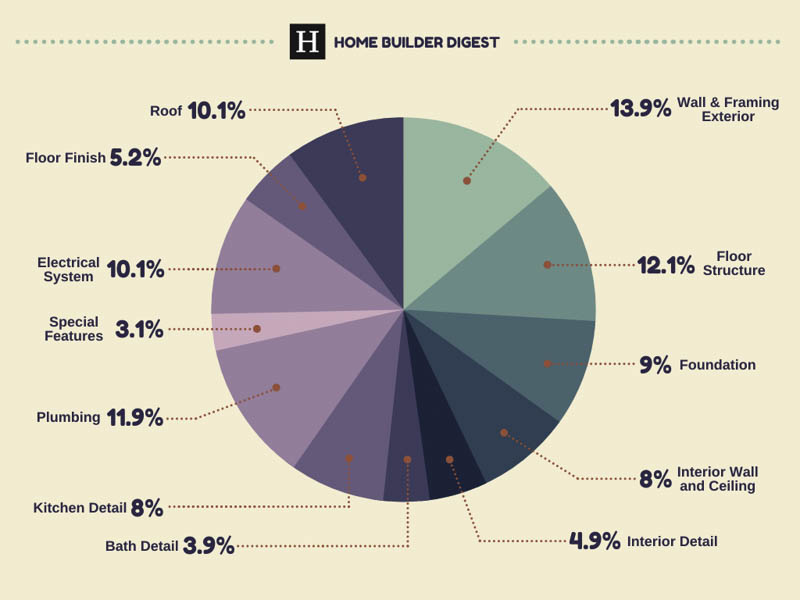
Figure 1. Typical cost breakdown of a single-family home constructed using the conventional method, according to Home Builder Digest. Image Source: National Cost Guide.
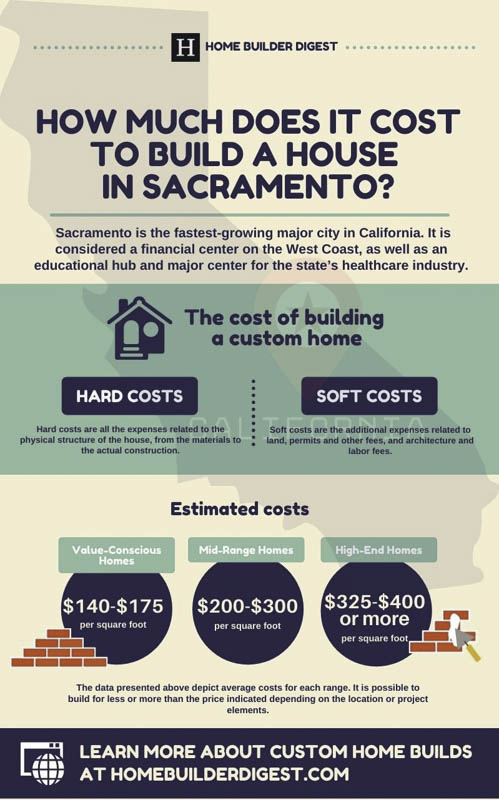
On a per square foot level, the average market rate to build a house in Sacramento is around $237 per square foot, while the national average is around $207 per square foot. There are many factors that affect the difference in the cost to build a home in specific cities. They can be classified into two major categories: hard costs and soft costs. Hard costs are all the expenses related to the physical structure of the house, from the materials to the actual construction. Soft costs are the additional expenses related to land, permits and other fees, and architecture and labor fees.
Hard Costs
Hard costs cover all expenses related to the physical structure of the home, from materials to the actual build. Based on data gathered from online contractor marketplace BuildZoom (BZ), the low-end cost to build a house in Sacramento is around $140 to $175 per square foot. The mid-range is around $200 to $300 per square foot, while the high-end cost starts at around $325 to $400 per square foot and beyond.
Sacramento-based design-build firm HouseIdea also details the following costs per square foot:
- Foundation, Slab & Piers $30
- Flatwork (Drive & Walk) $15
- Rough Hardware $7
- Finish Hardware $5
- Rough Lumber $30
- Finish Lumber $30
- Countertops $5
- R19 Ceiling Insulation $7.5
- Roofing $7.5
- Painting $4.50
- Shower & Tub Enclosure $7
- Fireplace $2
- Built-in Appliances $4
- Heating and Ducting $8
- Plumbing & Sewer Connections $10
- Doors $3
- Garage Door $3
- Windows & Sliding Doors $5
- Exterior Stucco $10
- Gypsum Wallboard $8
- Flooring $5
- Carpeting $2
- Electrical $8
- Lighting Fixtures $2
Material costs typically total around $150 per square foot, accounting for 45 to 55% of the total construction cost, although this will vary depending on material choice. More durable and energy-saving materials may cost more. The same is true for more high-end finishes, fixtures, and appliances.
Costs for additional features are detailed as follows:
- Concrete Patio $5,000-$15,000
- Driveway $15,000-25,000
- Deck $5,000-$15,000
- Screened-In Porch $2,000-$8,000
- Patio Enclosure $8,100-$18,700
- Landscaping with Pool $15,000-$200,000
The firm also differentiates the cost to build with a developer versus a custom home builder in Sacramento. Building with a developer can cost about 15% less than building with a custom home builder since developers usually build numerous houses — whole subdivisions — at once, costing less per square foot and often also completed sooner. These subdivisions often already have a variety of floor plans to choose from and include playgrounds, picnic tables, BBQ areas, and pools within the planned community. The downside is this could mean homes will continue to be surrounded by the ongoing construction of latter phases for some time and most homes would look alike. Custom home builders provide the option of building anything the homeowner wants because they focus on just a few homes, but will cost more.
Soft Costs
Soft costs are all the other expenses beyond the physical structure of the house, such as the cost of the land, permits and other fees the city or county may charge, and the cost to hire an architect or builder.
Cost of the Land
Lot sizes have gotten smaller in Sacramento. In 2016, the average lot size was about 6,122 square feet. In 2019, it was down to 5,509 square feet — a 10% decrease. Single family homes have also gotten smaller themselves, from 2,565 square feet in 2016 to 2,370 square feet in 2019 — a 7.6% decrease.
Listings on Zillow and Redfin for lots ranging from 4,500 to just under 11,000 square feet average at just a little over $200,000 or about $30 per square foot.
According to HouseIdea, site work averages around $15,000. Light grading excavation typically costs $5 per square foot, but if special excavation is required due to rocks in the ground, the foundation cost could increase by around $5,000 to $20,000.
Permits and Other Fees
HouseIdea further details that the typical cost to connect to local public services such as water and sewer infrastructure, which will involve water and sewer inspection fees, is about $5,000.
The Sacramento County’s Building and Construction Fee Schedule details other permit fees that apply to the city. Building permit fees are based on the total project valuation and charged at an hourly rate as follows:
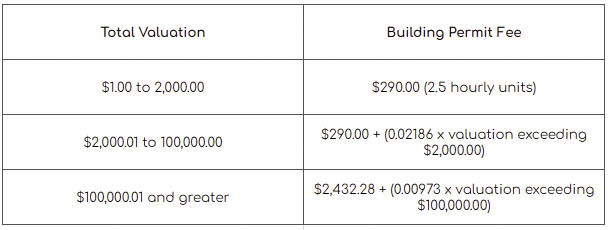
Plans for projects valued at $40 million and below will incur a plan review fee of 40% of the total building permit fee. For projects exceeding this amount, the fee schedule details a corresponding change in the plan review fee. Plans for production houses of five or more similar units in the same subdivision will be granted a 50% discount on its plan review fee.
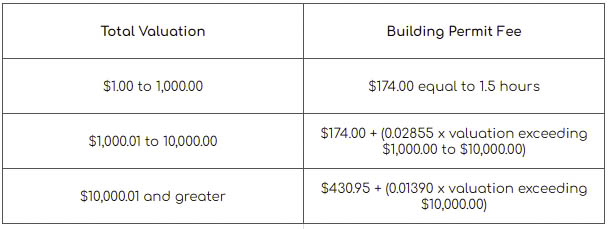
Carports, decks, patio covers, fences, and other additions will incur the following additional fees:
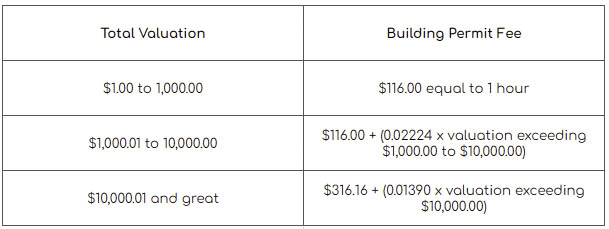
(Structures requiring minimal plan review)
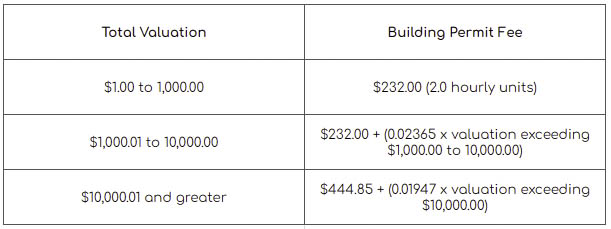
Private pools or spas will incur the following fees:
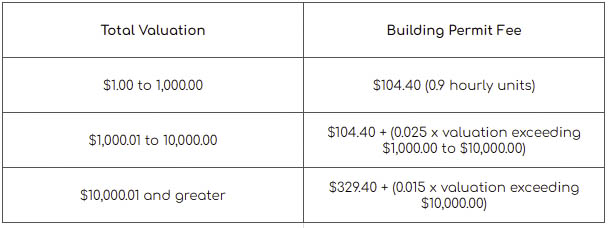
Plumbing, Mechanical, and Electrical permit fees start at the following rates:
The fee schedule also details the costs incurred for other specifics such as solar power installation and energy plan reviews as necessary.
According to the North State Building Industry Association, in total, impact fees average at about $95,000 per house in the Sacramento region. This is $40,000 dollars higher than in the Central Valley and Inland Empire, where they average at $55,000. These fees cover basic infrastructure such as roads, water treatment, schools, or parks.
Architecture, Design, and Labor Fees
HouseIdea shares that the cost to bring in a general contractor for new home construction ranges between $45 to $85 per square foot. It is when other expenses, such as profit, and finishing, are factored in that the average cost to build goes up to around $250 to $500.
Hiring an architect for precise drawing requirements, construction papers, and project management costs between 8 to 15% of the total building cost, which can range between $15,000 to $80,000. In some cases, architects may also charge an hourly rate ranging between $100 to $250. Bringing in a bespoke house designer will add about 10 to 17% to the overall budget, with high-end pros charging between $30,000 to $50,000. Homeowners can save up to 30% by choosing all of their designs upfront or working with a builder who has a network of local vendors with in-stock options.
In total, labor costs around 35% of the entire construction cost. For a 2,000-square-foot home, the cost can be broken down as follows:
- Site Work $15,000
- Foundation $30,000
- Framing $60,000
- Exterior Finishes $35,000
- Major Systems $34,100
- Interior Finishes $70,800
- Final Steps $17,300
Framing a house costs approximately $13 per square foot covering both labor and lumber for a single-story home, and about $22 per square foot for a two-story home. On average, a typical new roof costs about $9,211 to install, while a high-end solar roof can cost $60,000 or more. Duct Pros HVAC Service Center estimates the cost of heating, ventilation, and air conditioning (HVAC) installation in Sacramento to range from $2,832 to $14,159 and possibly more depending on the characteristics and components of the system.
How do the custom home building costs in Sacramento compare to other nearby cities?
Based on permits from the last five years gathered from online contractor marketplace BuildZoom (BZ), the cost to build a home in the nearby city of Elk Grove is just a little lower than the cost to build in the state capital today. Homes in the city, which is also part of the Sacramento–Arden-Arcade–Roseville metropolitan statistical area, typically range from 1,600 square feet to 2,149 square feet, with building cost valued from $209,694 to $262,527, averaging at about $120 per square foot.
What Leading Custom Home Builders and Architects that Serve the Sacramento Area Say
Darko Borovnica, owner of Sacramento-based custom home building firm Core Construction, shares that building costs in the city are “all over the place nowadays.” He does give some average costs for three proposed building scenarios, namely around $200 per square foot for a value build, $250 to $300 per square foot for a mid-level build, and $400 and above for a high-end build.
Moving forward, Borovnica sees the trend of adding accessory dwelling units (ADUs) on existing properties continuing in the city. “Smaller costs to build, but still getting a separate living space. We’re getting a lot of calls for ADUs or garage conversion,” he says. After the passage of California Senate Bill 9, he also sees the market moving towards multifamily builds. “Due to high construction and land costs, I see the market turning to building duplex where possible,” he explains.
“I don’t see the costs going back down, so if the client is looking to build or remodel, still very low refinance interest rates are a great source of funds to do the work now,” Borovnica says of starting new projects. “At a 3% rate, it’s free money, and if the trends continue with costs going up, this is as good a time as any to get your house built or remodeled.” He says most of their clients are seeing money well-invested at this time. “The higher cost to build is rewarded with higher equity and property value. Reality is that if you spend $300 per square foot to build, but the finished product is worth $400 per square foot, it’s still a great investment.”
Looking at the greater Sacramento region, which also includes the west part of El Dorado County, South Placer County, and parts of Yolo County, as well as the rest of Sacramento County, Christopher Grenz, president of Grenz Homes Inc., shares costs can vary a little bit. “Most of Sacramento is pretty flat, but as you get into Folsom (still in Sac County) and El Dorado Hills, grading costs can easily be $50-100k on these hillside lots which would also need retaining walls, engineering & extra permits to build.” Different municipalities within the region also have different permit pricing structures. The cost to build high-end homes can also go up to $500 per square foot for high-end subdivisions like Serrano.
Grenz also shares how the considerations for building a home have changed in recent years. “Since 2020 we have had to include Solar and front landscaping in CA. Solar can easily add $20k and landscape seems to start at $25k & can easily go 2-3X on the higher end.”
When it comes to looking at bids, Grenz advises homeowners to be discerning in matching them “apples to apples.” He says many builders may bid using allowances, such as:
- $10,000 for plumbing finishes
- $5,000 for carpet
- $3,000 for front door
- $30,000 for appliances
- $7,000 for light fixtures
“Some builders might use 6-10 different allowances, others might have all their materials on allowances. This protects against inflation. Some builders will short allowances just to make their bid look good, this is where apples to apples comes to play,” he says.
The Future of Sacramento’s Residential Construction Industry
In a market where “new construction home prices are at unseasonable highs,” the Sacramento–Arden-Arcade–Roseville metropolitan statistical area very nearly tops the list with its median new construction home price at $650,000, second only to the Miami-Fort Lauderdale-West Palm Beach, Florida area, where it is at $720,000. The national median is $390,000. For median existing home prices, the Sacramento area holds the top spot at $550,000.
U.S.-wide, the increase in pricing is outpacing the national median household income, which decreased 2.9% over the pandemic to $67,521. This is why home affordability remains a challenge despite mortgage rates dropping to near historic lows, according to mortgage and housing finance resource Fannie Mae’s Chief Economist, Doug Duncan.
As of September 2021, Fannie Mae has lowered its 2022 new construction home sale projections from 846,000 units to 789,000 in the face of supply chain issues and skyrocketing home prices. Still, the National Association of Home Builders’ (NAHB) 2021 survey on What Home Buyers Really Want shows that 60% of home buyers prefer a newly constructed home over an existing one.

High Impact Fees
However, building in Sacramento is made even more expensive by its high impact fees, which average at $95,000 per new homebuyer. Every $1,000 increase prices out about 936 families from being able to afford an average home. This creates a ripple effect among middle and low-income families seeking better homeownership prospects.
A study by the North State Building Industry Association has found that communities with similar environments and lifestyles in the Central Valley and the Inland Empire region are able to keep fees much lower for the same amenities covered by these impact fees. As such, it recommends the implementation of “policy-driven fee reductions for specific land use categories or districts to incentivize desired growth.” Assembly Bill 602 could be one such springboard to standardize local fee calculations if passed with additional provisions allowing local governments to reduce and eliminate unnecessary fees. It also recommends the reassessment of the scope of fee-funded facilities in line with the current demand characteristics of new development and conservation mandates as they apply to infrastructure such as those related to water, wastewater, and storm drainage.
Cost Saving Tip for Building a Home in Sacramento
Time Your Material Purchases Around the Construction Schedule
Sacramento’s position as a major inland hub with strong highway, rail, and port connections gives custom home builders a practical advantage that more remote California markets lack: access to a competitive local supplier network where timing purchases strategically can produce real savings. Material costs in residential construction are not fixed; they fluctuate with demand cycles, and builders who understand these patterns can capture meaningful discounts. Framing lumber, for example, tends to be less expensive when regional construction activity softens in the winter months, even though Sacramento’s mild climate allows year-round building. Engaging your builder early in the design phase to identify which high-cost items—windows, roofing systems, cabinetry, mechanical equipment—have the longest lead times allows you to lock in pricing when market conditions favor the buyer rather than scrambling to order under deadline pressure. Sacramento’s Title 24 compliance requirements mean that high-performance windows, insulation, and HVAC systems represent a significant share of the material budget, and these items in particular benefit from early specification and competitive bidding. Local suppliers serving Sacramento’s active new construction market are often willing to negotiate on volume, and builders with established supplier relationships can pass those savings to clients. The broader lesson is that treating material procurement as a managed process—with decisions made during the design phase rather than driven by the construction schedule—consistently outperforms the reactive approach in this market.
Frequently Asked Questions
Which areas in—or near—Sacramento are among the best for custom home building?
El Dorado Hills, in the Sierra Nevada foothills east of Sacramento, has emerged as one of the most desirable custom home destinations in the greater Sacramento region, combining panoramic foothill views, top-rated schools, and a newer infrastructure base with land prices lower than comparable communities in the Bay Area foothills. The Serrano community within El Dorado Hills offers gated neighborhoods with golf course access and architectural standards that attract high-end custom builders. Folsom, immediately adjacent to El Dorado Hills, provides a complementary mix of established neighborhoods with lake access via Folsom Lake and actively developing outer edges where custom lots are available within master-planned communities. Within Sacramento County proper, Elk Grove has absorbed a significant share of new residential construction over the past two decades, with newer neighborhoods offering larger lots and competitive pricing relative to closer-in Sacramento locations. Rancho Cordova, along the Highway 50 corridor, has undergone substantial revitalization and appeals to builders seeking infill opportunities with urban accessibility. For buyers who want the Sacramento suburb experience with a lower price point, Lincoln in Placer County to the north offers growing master-planned communities, a revitalizing historic downtown, and land costs that compare favorably to Folsom and El Dorado Hills. Within Sacramento city limits, the Curtis Park, Land Park, and East Sacramento neighborhoods attract custom infill builders who value mature tree canopies, proximity to amenities, and established walkable community character.
How does Sacramento’s climate potentially impact home building costs?
Sacramento’s Central Valley climate is defined by some of the most intense summer heat in California—temperatures regularly exceed 100 degrees from June through September—combined with mild, wet winters and one of the most reliably sunny annual climates in the country. For custom home builders, the summer heat profile is the dominant factor shaping mechanical system requirements and material choices. California’s Title 24 energy code requires new residential construction to meet high standards for insulation, window thermal performance, air sealing, and solar energy readiness; in Sacramento’s climate zone, these requirements are among the most demanding in the state because the cooling load is so pronounced. HVAC systems sized for Sacramento’s summers must have sufficient capacity to maintain comfortable indoor temperatures during multi-day heat events, and the trend toward high-efficiency heat pump systems—which serve both heating and cooling functions—adds upfront equipment cost that is offset over time by lower operating costs. Roofing material selection matters more in Sacramento than in cooler markets: cool-roof products with high solar reflectance meaningfully reduce attic temperatures and cooling loads, and this benefit is captured faster in Sacramento’s climate than almost anywhere else in California. The dry, predictable summers are an operational advantage during construction, as rain delays are essentially nonexistent from May through October and exterior work can proceed continuously. The wet season from December through March concentrates the weather risk for projects with outdoor work scheduled in that window.
What should I know about soil and terrain conditions before buying a lot in Sacramento?
The Sacramento region spans several distinct soil environments, from the flat alluvial plain of the Sacramento Valley floor to the terraced uplands of the American River corridor and the volcanic-influenced soils of the Sierra Nevada foothills. Most residential lots within Sacramento city limits and its immediate suburbs sit on valley alluvium—deep, generally well-compacted soils that provide adequate bearing capacity for standard slab-on-grade construction and carry relatively predictable foundation costs. However, some areas of the valley contain expansive clays that swell seasonally with irrigation and rain and contract during the dry summer, creating ground movement that can damage foundations designed without accounting for this behavior. The Sacramento-San Joaquin Delta communities west of the city, including parts of the West Sacramento area, include former floodplain and drained marshland with highly compressible organic soils and high water tables—conditions that can require specialized deep foundation systems and add substantially to site development costs. Lots in the foothill communities east of the city, including El Dorado Hills, Folsom, and Lincoln, often encounter a different challenge: shallow depth to bedrock or hardpan caliche layers that require specialized equipment to excavate for foundations, utility connections, and pool construction, adding to site cost in ways that are not always apparent from the surface. Buyers purchasing any lot in the Sacramento region, particularly in foothills communities or areas with known drainage issues, should commission a geotechnical investigation before finalizing their purchase to understand what foundation system will be required and how it affects their overall construction budget.
Broadly speaking, is it cheaper to build or buy an existing home in Sacramento right now?
Sacramento’s housing market sits at an interesting inflection point. The city attracted substantial migration from the Bay Area during the pandemic years, driving median home prices to levels that earlier generations of Sacramento residents would have found remarkable. Those prices have come off their peak but remain elevated relative to pre-2020 baselines. On a per-square-foot basis, purchasing an existing Sacramento home is generally less expensive than building a new custom home—new construction costs in the region, factoring in land, impact fees, Title 24 compliance requirements, and labor, have risen sharply since 2020. Impact fees alone in Sacramento County jurisdictions have drawn attention from industry groups for their scale, averaging well over $100,000 per new home in some communities, and representing a cost that buyers of existing homes do not face. That said, Sacramento’s existing housing stock includes a significant proportion of homes built in the 1950s through 1980s that were constructed to standards far below current energy code requirements. Running a household in an older Sacramento home without modern insulation, high-performance windows, and an efficient cooling system carries measurably higher utility costs through the long summers—a gap that compounds over years of ownership. For buyers who plan to stay in Sacramento long term and who value the ability to design a layout suited to their household, new custom construction offers the combination of code-compliant energy performance, full design control, and a building warranty that existing homes simply cannot match, despite the higher initial investment.
Considering building a home in Sacramento?
Contact us for a free consultation