
Home » Cost Guides » New Mexico Cost Guides » How Much Does it Cost to Build a House in Santa Fe?
Santa Fe, meaning “Holy Faith” in Spanish, is the capital city of the state of New Mexico and the oldest state capital in the U.S. It is also the highest capital city, situated 7,000 feet high, nestled in the foothills of the southern Rocky Mountains. The city is generally known as one of the world’s greatest art cities celebrating its cultural identity and embodying its rich history of Hispanic, Anglo, and Native American cultures. These cultural influences are apparent in the city and can be seen in almost everything, from architecture to food. In fact, the city is home to over 5,000 artists, numerous art institutions, and year-round art events. Additionally, the United Nations Educational, Scientific, and Cultural Organization (UNESCO) recognized Santa Fe among the cities wherein the creativity and arts sector contributes the most to the city’s urban development.
The Cost of Building a Home in Santa Fe
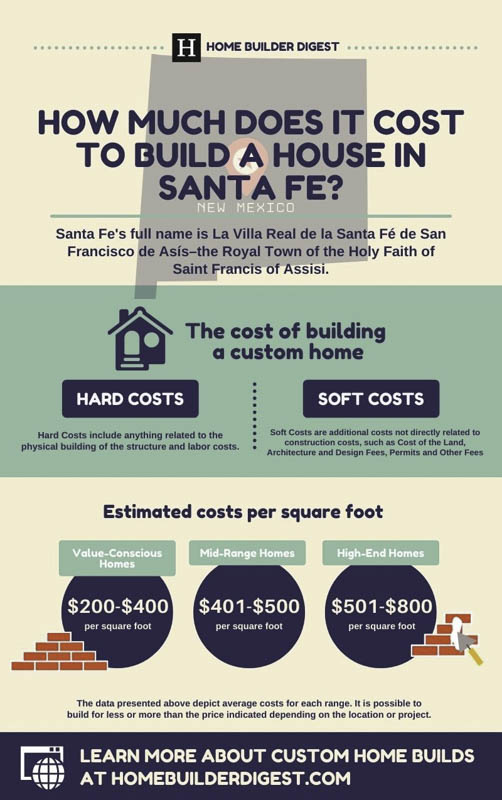


A 2,600-square-foot home in the United States will cost around $400,000 or $155 per square foot, according to Home Builder Digest. Fixr estimates a $360,000 quotation, which is somewhat lower. At either price point, homeowners can build a standard-built home with mid-grade materials. The cost structure increases in proportion to the size, quality of materials, and level of finish as the house is modified further.
The average cost of constructing a home in Santa Fe is roughly $450 per square foot. Adopting a value-conscious approach might cut the price from $200 to $400 per square foot. A more luxurious approach, on the other hand, will boost the value from $500 to $800 per square foot. To develop a 2,500-square-foot home in Santa Fe, aspiring homeowners need a budget between $500,000 and $2,000,000. This estimated price could increase even more depending on the factors that will be discussed later.
It can be challenging to give a specific figure for how much it costs to build a house in Santa Fe. The owner’s preferences and needs will influence the final building cost. An issue to be noted is the several challenges in the construction industry that still remain unsolved, most notably the unpredictable state of material pricing. Aside from that, there are a few more factors to consider, as they can significantly impact the overall construction cost. These are separated into two categories: hard costs and soft costs.
Hard Costs
The term “hard costs” refers to all the fees associated with the actual home construction. Materials used, labor fees, additional amenities, and landscaping are examples of these.
In Santa Fe, building a house typically costs around $300 per square foot. A 2,500-square-foot home could cost as low as $200 per square foot or as high as $400 per square foot — about $500,000 and $1,000,000. These costs reflect the overall cost of building a home as well as the costs of finished living areas. The total cost of construction may rise even further as more amenities and other house improvements are made. The complexity of the site and the type of house will also significantly influence the ultimate cost.
The cost breakdown is as follows:
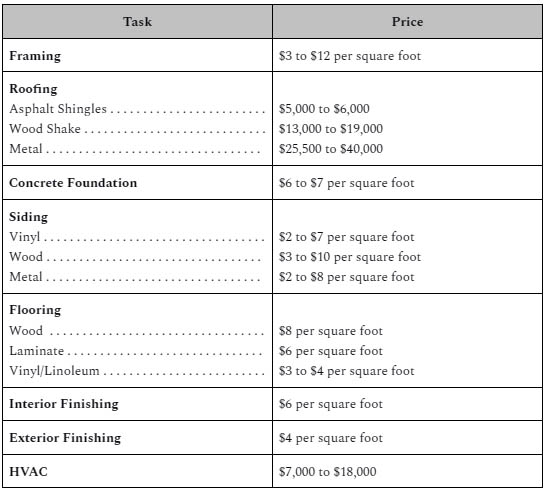
Material and labor prices have a significant impact on the entire cost of construction. The materials’ quality, quantity, and type determine this, which is generally about 50% of the construction budget. On the other hand, labor costs vary from 30 to 60% depending on the location, size, style, and structure of the home.
Average labor fees per assignment, as per ZipRecruiter:
- Construction Manager: $38 per hour
- Framer: $18 per hour
- Roofer: $21 per hour
- Electrician: $24 per hour
- Plumber: $23 per hour
- HVAC Technician: $24 per hour
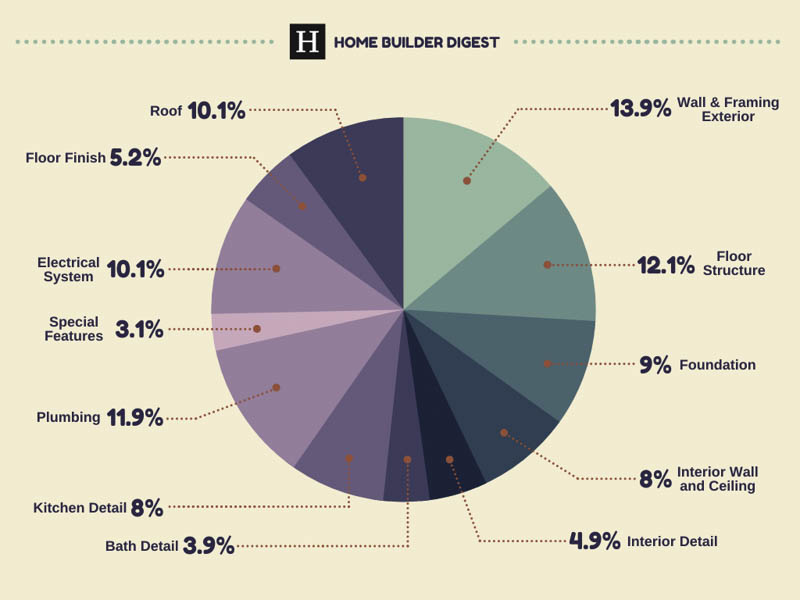
Figure 1. Typical cost breakdown of a single-family home constructed using the conventional method, according to Home Builder Digest.
Soft Costs
Soft costs are fees that are not directly related to the actual building of the physical home. Typically, these costs are estimated and settled prior to the start of construction. Fees relating to land acquisition and development, local government authorizations, and the overall design and layout of the home are included in this category.
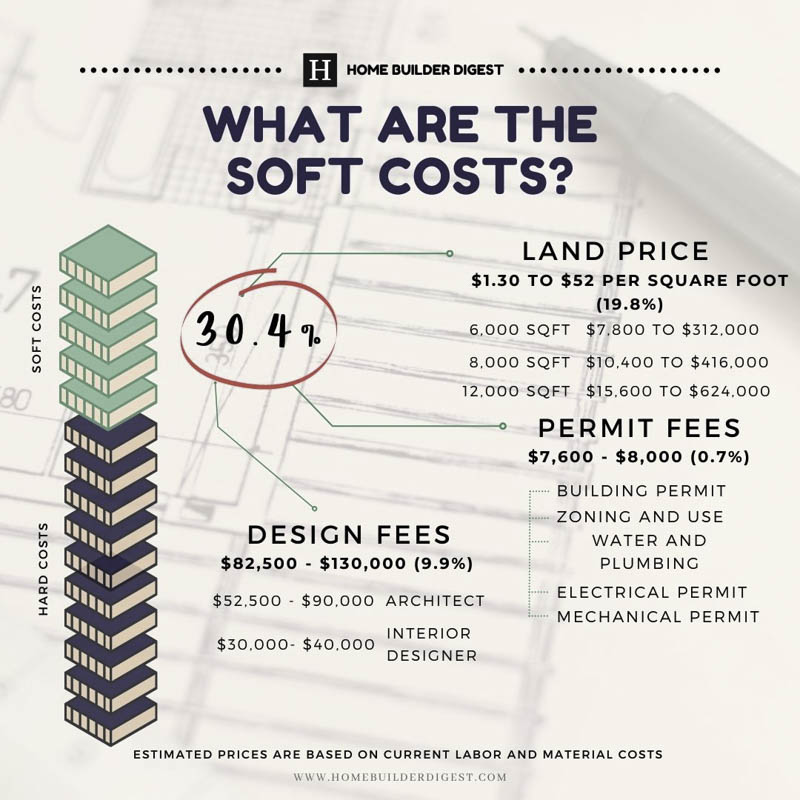
Figure 2. Soft cost percentage and average price range of additional fees, determined from the overall cost of custom home building in Santa Fe.
Cost of the Land
According to recent listings in the real estate marketplace Redfin, the median land cost in Santa Fe is around $270,000 or $5 per square foot. The cheapest land available costs only $45,000 for a 34,848-square-foot plot of land — about $1.30 per square foot. It is located along Calle Abeja by Highway 285. On the other hand, the most expensive land costs $1,650,000 for a 31,528-square-foot plot of land — about $52 per square foot. It is located within walking distance of the city’s historic plaza and downtown Santa Fe. Additionally, the land offers expansive views of the enveloping mountain ranges.
The local government implemented a regulation that states that each dwelling unit should have land with at least 4,000 square feet, provided that the area has already reached the maximum gross density. Following this regulation, land acquisition in Santa Fe will cost roughly $5,200 to $210,000.
Permits and Other Fees
Before starting any construction, project owners must secure a permit from the local authorities. Board members will review the plans and determine whether or not the project is feasible. If the request is approved, the project owners will be issued a permit that will act as a green light for the project. If it is rejected, it must be modified, and the plan must adhere to the regulations. This is an important step since it guarantees that the structure and property are safe for the homeowners and the surrounding community.
Each building permit issued in Santa Fe is settled with an administrative fee that costs $40, as per the fee schedule of the city’s Planning and Land Use Department. In terms of the actual building permit fee to be settled, it will be calculated based on the total valuation of the proposed project. The following are the fees for each valuation:
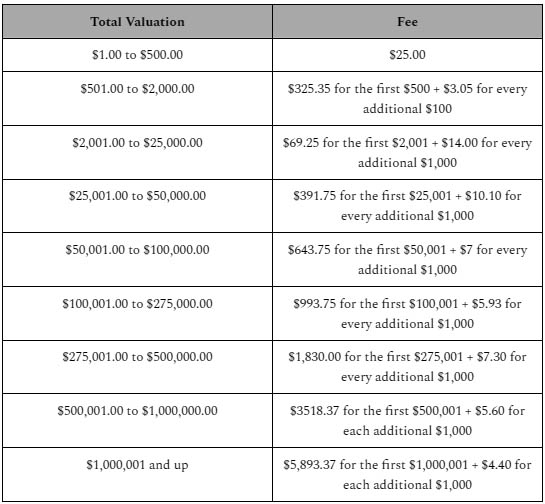
Suppose it will cost $750,000 to build a 2,500-square-foot home in the city. The total building permit fees to be settled will be around $5,000. There will also be an additional fee for reviewing every proposed residential plan, costing 50% of the total building permit fee. If the building permit fee costs $5,000, the residential plan review fee will cost $2,500. In total, the payments to be settled costs about $7,500.
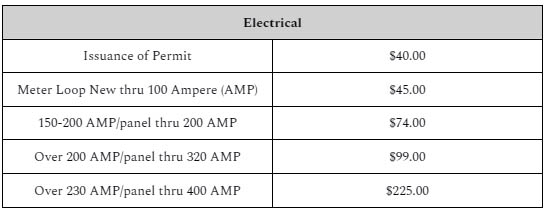
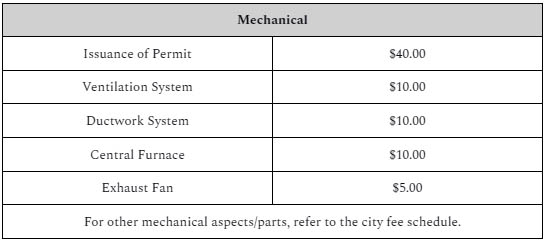
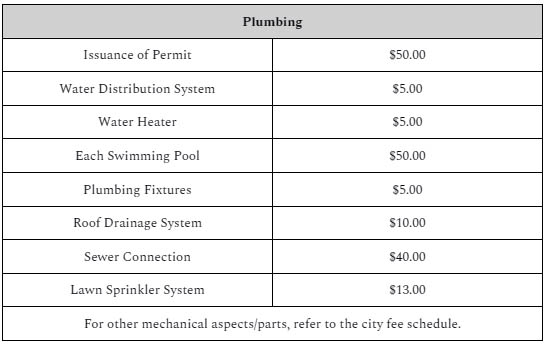
For the other permits required, such as mechanical, electrical, and plumbing, the fees for each are as follows:
Architecture and Design Fees
Architects and designers charge in a variety of ways for their services. The percentage method is the most used approach. When project owners and architects negotiate, other techniques are adopted, such as the hourly method or a hybrid of the two. The cost of a design project is also determined by the designer’s experience, expertise, and reputation. Reputable designers are more likely to charge greater design fees than newer designers.
Architects in Santa Fe typically charge 7 to 12% of the total construction cost in percentage terms. Depending on the workload, complexity, intricateness of details, and the size of the residence, this rate may change. Suppose a $750,000 basic construction charge for a 2,500-square-foot home in Santa Fe. A new single family home’s total architecture fee will range from $52,500 to $90,000. Any additional services are usually charged hourly.
How do Santa Fe’s custom home building costs compare to nearby cities?
Average home building costs across major cities in New Mexico range from $120 to $135 per square foot, or roughly $300,000 to $340,000 for a 2,500-square-foot home. This price mainly accounts for the basic construction of the house and the finished living areas. As mentioned, house improvements, such as material upgrades and adding more space and amenities, will come at a cost and raise the overall cost per square foot. The median price of a new home in each city is shown below:
- Albuquerque: $126 per square foot
- Carlsbad: $117 per square foot
- Las Cruces: $124 per square foot
- Los Alamos: $135 per square foot
- Roswell: $118 per square foot
What Leading Custom Home Builders and Architects that Serve the Santa Fe Area Say
According to Greg Reid of Plan A Architecture, Santa Fe’s current housing costs is a significant increase compared to two years ago. This is generally brought by multiple industry issues, mainly material costs, labor shortages, and lead time delays.
William Prull, president of Prull Custom Home Builders, further confirmed the skyrocketing building costs. He explained that pre-covid prices have an average of 6% annual increase. During the pandemic and the current inflationary period, the annual growth doubled. The issues mentioned by Reid also forced Prull and his firm to order products and materials earlier than usual. Glass doors, window packages, wood flooring, and other materials are being purchased as early as possible. It usually costs them to store these materials but lock in the price and make it available when needed. To help aspiring homeowners that are uncertain and nervous about starting a home building project, Prull gave a piece of helpful advice. He explained that the firm cannot provide a guaranteed home building cost. They can only guarantee that it will cost project owners more if they wait for another year; thus, it is better to build now. Manufactured goods have been increasing multiple times in a year now, and those prices will never go back down.
The Future of Santa Fe’s Residential Construction Industry
Home values typically appreciate yearly. However, this rate has rapidly increased in the past few years. For Santa Fe specifically, single family homes are currently valued at almost $700,000, which is a 23% increase from last year’s $560,000. The median price for single family homes also increased to 10%, according to the Santa Fe Association of Realtors. This was brought about by multiple issues in the housing and construction industry. These problems include high demands for housing, inventory shortage, and construction delays.
According to Kelly O’Donnell of Homewise, a nonprofit organization that helps aspiring homeowners in Santa Fe, the city is becoming less and less affordable. With the skyrocketing home prices surpassing the average increase in hourly wages, it is becoming a troubling combination for the residents. O’Donnell and Homewise’s CEO Mike Loftin expressed their concern that this combination may jeopardize Santa Fe’s ability to remain one of the most vibrant cities, as it wouldn’t be able to retain workers and attract employers like before. Rent prices are also bringing the city further complications. With historically low inventory, numerous residents opt to rent, which drives up the rent prices as demand for apartment occupancy increases. In fact, rent prices have gone up by 30% in just one year.
Fortunately, the city and state governments are actively eyeing a more affordable Santa Fe and are exploring various ways to solve these issues. The city council recently approved multiple affordable housing projects amounting to $3 million. They aim to support both low-income renters and prospective homebuyers. Adding to its roster of affordable projects is the Tierra Contenta, a mix of low and moderate-income housing. Alexandra Ladd, Santa Fe’s director for affordable housing, said that the expansion of this community will potentially add about 1,200 units. Calle La Resolana, another affordable housing complex, has also started letting residents move in.
Further helping with the housing demands is the Santa Fe City Council’s approval to loosen casita restrictions. This regulation allows property owners to build two accessory dwelling units. Many consider this a great help to the industry as it increases the number of rental properties in the city. Additionally, over 29 new accessory dwelling units were built a year after the regulation change.
Cost Saving Tip for Building a Home in Santa Fe
Design With the Land Instead of Against It
In Santa Fe’s hilly, high-desert terrain, one of the most impactful cost-saving strategies is designing your home to work with the natural topography of your lot rather than reshaping it. Extensive grading, blasting through rock, and building elaborate retaining walls to create a flat building pad on a sloped site can easily add tens of thousands of dollars to a project before a single wall is framed. Experienced Santa Fe architects and builders often recommend a stepped or terraced floor plan that follows the natural contour of the land, reducing the volume of earthwork required while creating architectural interest through varied ceiling heights and distinct living zones. This approach also positions the home to take advantage of passive solar design—a particularly effective strategy at Santa Fe’s altitude and latitude. South-facing windows capture low winter sun for natural heating, while thick adobe or insulated concrete walls provide thermal mass that absorbs warmth during the day and releases it at night, reducing reliance on mechanical heating systems. Orienting the home thoughtfully can also minimize the need for extensive landscaping and irrigation by preserving native vegetation and natural drainage patterns. Builders familiar with the local terrain can identify the optimal building envelope on a lot during the pre-design phase, and this early collaboration between architect, builder, and site often produces the most cost-efficient and visually striking results.
Frequently Asked Questions
Which areas in—or near—Santa Fe are among the best for custom home building?
The historic eastside of Santa Fe, particularly the neighborhoods surrounding Canyon Road and the Old Santa Fe Trail, remains among the most prestigious locations for custom building, offering walkability to galleries, restaurants, and the Plaza. However, lots here are scarce, expensive, and subject to strict historic district design review. Las Campanas, a gated master-planned community northwest of the city, is one of the premier destinations for luxury custom homes, offering large lots with sweeping mountain views, two Jack Nicklaus–designed golf courses, and a private club atmosphere. The Aldea community south of town provides a more moderately priced option with strong community amenities and convenient access to the city. Neighborhoods along the Old Las Vegas Highway and the Hyde Park Road corridor offer larger parcels with forested settings at the base of the Sangre de Cristo Mountains. For buyers seeking more acreage at lower cost, areas south of Santa Fe toward the Turquoise Trail—including Cerrillos and Madrid—offer expansive desert lots with dramatic views, though they are farther from city services. Los Alamos, about 35 miles northwest, appeals to those working at the national laboratory and offers a distinctly different mountain-town character. Tesuque, just north of Santa Fe, provides a semi-rural feel with artist community roots and relative proximity to the Plaza.
How does Santa Fe’s climate potentially impact home building costs?
Santa Fe’s high-desert climate—sitting at 7,000 feet of elevation—creates a set of building requirements distinct from lower-altitude Southwestern cities. Cold winters with regular snowfall and temperatures that frequently drop below freezing demand well-insulated building envelopes, including thicker wall assemblies, high-performance windows, and robust heating systems. Foundations must extend below the local frost line, which is deeper here than in cities like Albuquerque or Phoenix, increasing excavation and concrete costs. The region’s arid conditions and intense UV exposure at altitude accelerate the weathering of exterior materials, requiring careful selection of stucco mixes, sealants, and wood treatments that can withstand dramatic temperature swings—sometimes 40 degrees or more in a single day. Santa Fe’s limited annual rainfall also means that water management is a consideration in home design, with many custom homes incorporating rainwater harvesting systems and drought-tolerant landscaping to comply with local water conservation guidelines. On the cost-saving side, the dry climate means builders rarely contend with the mold, humidity, and moisture-related complications common in Southeastern or coastal markets, and the relatively mild summers reduce the need for oversized cooling systems.
What should I know about soil and terrain conditions before buying a lot in Santa Fe?
Santa Fe’s terrain is shaped by its location within the San Francisco volcanic field foothills and the southern Sangre de Cristo Mountains, resulting in highly varied soil and topographic conditions even within short distances. Much of the area features expansive clay soils that swell when wet and shrink when dry, creating a cycle that can crack foundations and shift structures over time if not properly engineered. A geotechnical soil report is essential before purchasing any lot, as it will identify clay content, bearing capacity, and recommendations for foundation type—whether standard slab, post-tensioned slab, or pier-and-beam. Lots on sloped terrain, which are common in the foothills and offer coveted mountain views, typically require additional site work including grading, retaining walls, and engineered drainage systems, all of which add substantially to the pre-construction budget. Rocky subsurface conditions in some areas can increase excavation costs, particularly for utility trenching and foundation work. Buyers should also investigate water availability, as some parcels outside the city water system rely on wells, and drilling depth and yield can vary significantly by location. Septic system feasibility is another consideration for lots beyond the municipal sewer network, as soil percolation rates must meet county health department standards.
Broadly speaking, is it cheaper to build or buy an existing home in Santa Fe right now?
Santa Fe is one of the more expensive markets in New Mexico, and the gap between building and buying has narrowed considerably in recent years. Median existing home prices have climbed sharply, driven by limited inventory, strong demand from out-of-state relocators, and the city’s enduring appeal as a cultural and lifestyle destination. At the same time, new construction costs in Santa Fe are notably higher than the state average due to the city’s architectural design standards, the premium cost of skilled adobe and stucco craftspeople, and the price of materials that must often be shipped to a relatively remote mountain market. On a simple cost-per-square-foot basis, purchasing an existing home in Santa Fe is generally less expensive than building a comparable custom home. However, many of the city’s existing homes are older adobe or territorial-style structures that may require significant investment to modernize—including updated electrical, plumbing, insulation, and seismic or structural improvements—which can close the price gap. For buyers who want a home tailored to Santa Fe’s unique aesthetic while incorporating modern energy efficiency, contemporary floor plans, and current building codes, custom construction often delivers stronger long-term value despite the higher upfront cost.
Considering building a home in Santa Fe?
Contact us for a free consultation