
Home » Cost Guides » Kansas Cost Guides » How Much Does it Cost to Build a House in Wichita?
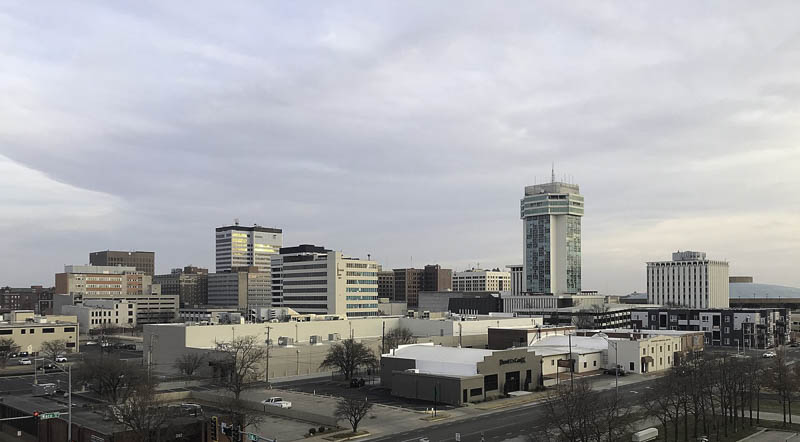
Wichita is an industrial hub filled with businesses from the cultural, media, and trade industries. It is also well known for being the center of America’s aircraft industry, with companies like Boeing and Airbus manufacturing in the city. Unfortunately, these industries suffered the effects of the COVID-19 pandemic in 2020. In 2021, however, Wichita began to undergo a steady recovery and is reported to be faring better than other cities.
The Cost of Building a Home in Wichita


Wichita State’s Center for Economic Development and Business Research reported that Kansas State’s labor force has fully recovered. The report showed that the number of people working was similar to pre-pandemic levels. Additionally, the construction industry shows the highest growth in employment as a result of the high housing demand.
Homeowners are slowly turning towards construction companies for a chance to own a house due to the rise in home prices in 2021. Kansas State’s average home price has increased from $198,826 in 2017 to $236,942 in 2020 alone. Prices are expected to go up by more than 10% in 2022.
In addition to the increasing house prices, the housing supply is too low to properly meet demand. Market experts have shared that the low inventory is a result of a lull in homebuilding.
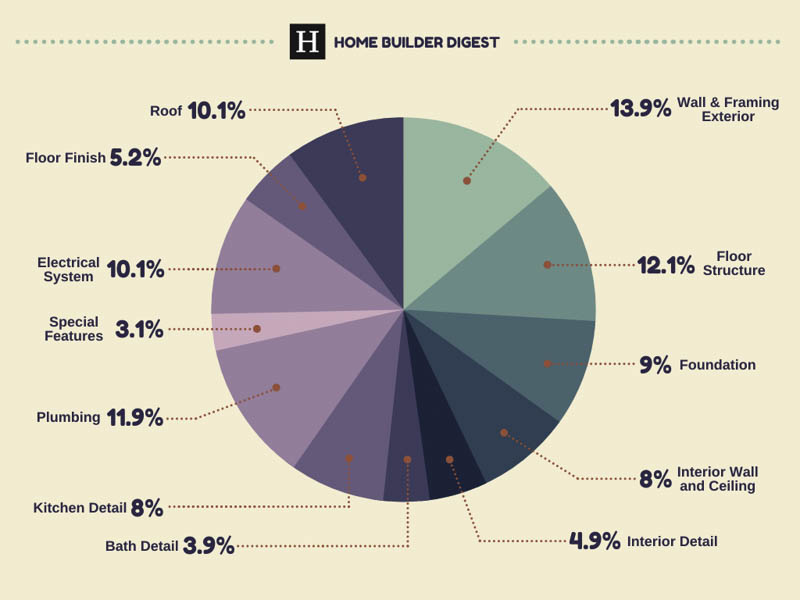
Figure 1. Typical cost breakdown of a single-family home constructed using the conventional method, according to Home Builder Digest. Image Source: National Cost Guide.
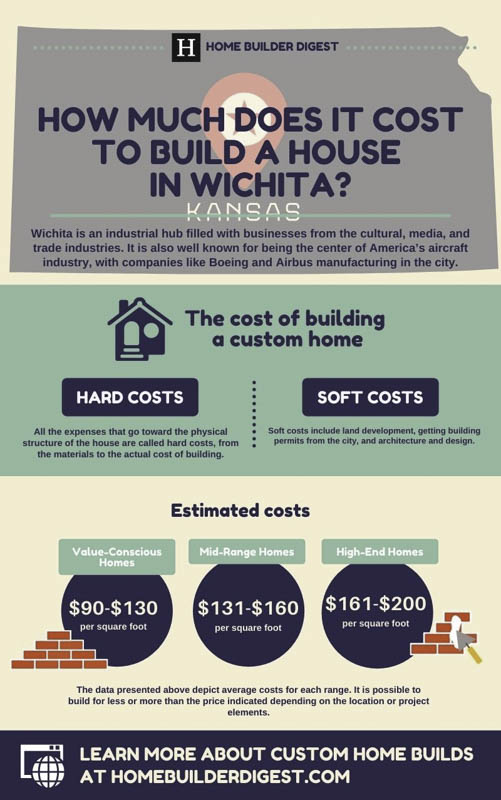
The national average of new home construction costs $100 to $155 per square foot, while Wichita’s new home construction cost range is generally $90 to $200 per square foot. New home construction figures are estimates and will vary depending on whether the plan is to build a basic, mid-value, or high-end home. Additionally, the total cost will also change based on hard and soft costs.
Hard costs are the costs related to building of the physical house itself; this includes framing, foundation, plumbing, roofing, and flooring. Soft costs on the other hand include everything else like land costs, architectural and design fees, permitting costs, builder fees, and additional features. It should be noted that soft and hard costs will fluctuate independently.
Hard Costs
New home construction projects in Wichita cost $265,349.20 on average. A basic home project would cost about $90 to $130 per square foot, although finding a firm to work on the lower end will be difficult for prospective homeowners. Mid-value construction costs, meanwhile, cost about $131 to $160 per square foot and high-end construction costs $161 to $200 per square foot. The given pricing ranges are not inclusive of things like site work and land.
A project’s cost per square foot will increase the more detailed and personalized the plans are to accommodate higher-end finishes and custom features. Homeowners can also expect the pricing to vary based on the location. However, it should be noted that the cost per square foot mentioned above does not include the other hard costs like foundation, roofing, HVAC installation, electrical, and air conditioning.
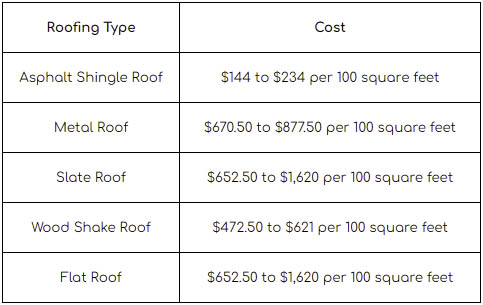
The foundation costs range between $5.20 to $5.79 per square foot for a four-inch reinforced slab on grade. Roofing installation in Wichita is priced differently for each roofing type. The costing is featured in the table below:
Air conditioning installation costs between $3,219 to $5,913 per unit. In addition, electricians require an average fixed fee of $125.10 to install a 120-volt outlet. The general pricing range for electricians is between $117 to $133.20.
Soft Costs
Soft costs factor in the parts of new home construction that are not involved with the physical building of the structure. These costs include land, the permitting process, and architectural and design fees.
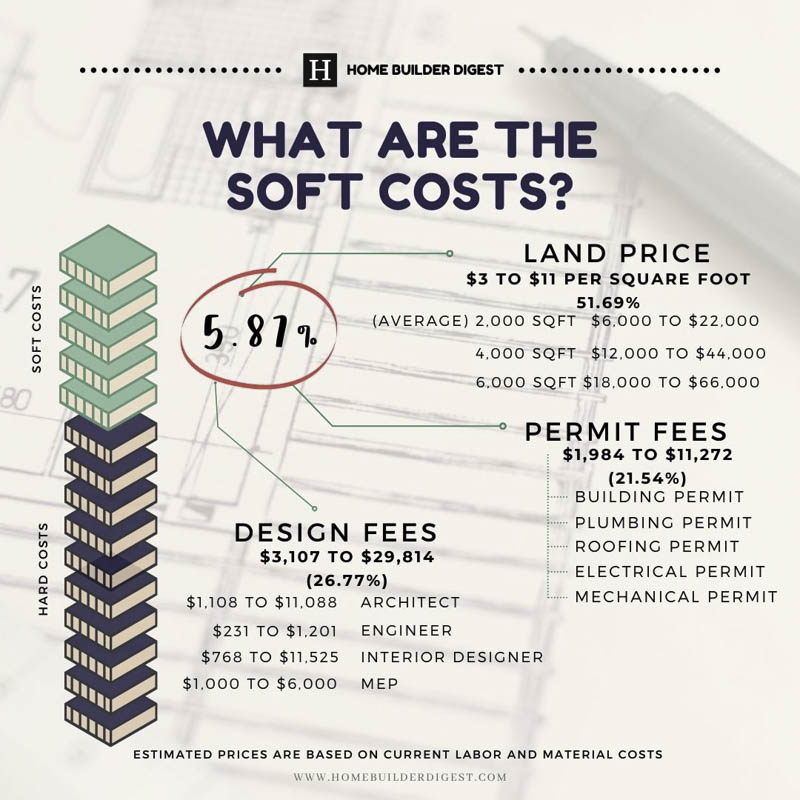
Figure 2. Soft cost percentage and average price range of additional fees, determined from the overall cost of custom home building in Wichita.
Cost of the Land
Wichita is not receiving as much inbound population growth compared to cities in other states. This means that land pricing will not be going up as quickly as in other areas. Prospective homeowners should remain aware that land costs can be higher or lower in certain areas, depending on the location, available amenities, and infrastructure.

Based on Zillow posts, the average cost of land in Wichita is $47,870 while the average lot size is 12,371.04 square feet. The lots that have posted their size range between 7,500 to 21,780 square feet. Wichita’s cheapest lot on Zillow is $31,900 for 13,068 square feet, located at East Pheasant Ridge Street. Meanwhile, the most expensive lot is $160,000 for 15,246 square feet. This particular lot is located in North Veranda Circle.
Lots on LandWatch have a limited number of residential lots posted for Wichita. Currently, the price range is between $44,500 to $49,500. Both the least and most expensive posts are 40,46.86 square feet but are located in different areas. The cheapest lot is in Tapestry Lane while the most expensive lot is in West 37th Street in Sedgwick County.
Permits and Other Fees
Permit applications for Wichita can be completed digitally through the MABCD Portal. Appointments for the permitting process can be scheduled through an online platform. The local government has posted reminders for residential permits on this section of its website.
Total permitting costs vary based on each project’s details, including square footage and the number of floors. The following table is according to Wichita’s fee schedule:
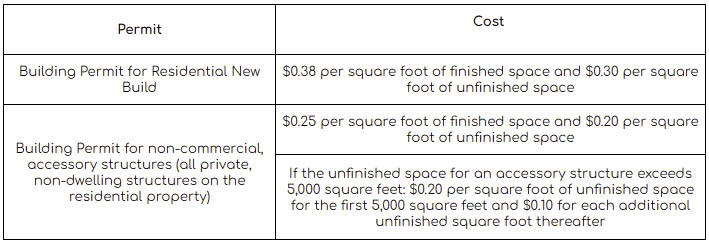
In addition, there is a permit fee calculator available for download on the local government’s website.
Data from the last two years gathered from online contractor marketplace BuildZoom (BZ) show that the average cost for residential permits is about $5,349.65, with a range of $4,065 to $5,998. Permit files of this range were typically for residential construction, plumbing, and electrical work.
Architecture and Design Fees
Architectural fees are most commonly based on the total construction costs. For Wichita, it will cost around 9% to 9.45% of construction costs for most firms. Depending on the complexity of the work and the type of service rendered, a homeowner could even reach $40,000 for full design and site management.
Architects charging by the hour will generally price their services between $100 to $250. Some architects and firms may charge higher or lower based on the work request, location, and the architect’s position, experience, training, and reputation.
Some architects will price their services based on square footage. Architects tend to work for $2 to $15 per square foot, depending on the service. Some of the available services are layer drawings, project management or administration, concept development and drafts, including consultation, site visits, and initial draft documents.
The Future of Wichita’s Residential Construction Industry
Wichita is seeing a shortage of available homes on the real estate market, which is attributed to the lull in homebuilding from the past years. The housing shortage is enticing buyers to switch to having homes built from the ground up instead. A compilation of historical residential permits from the Wichita Area Builders Association shows that there is an increase in new home construction projects. November 2021 registered 148 new residential permits for the entire Wichita area compared to 121 from November 2020. Experts perceive the shortage as an opportunity for the construction industry to work on more projects moving forward. Demand is expected to provide enough projects for 2022.
Cost Saving Tip for Building a Home in Wichita
Negotiate a Fixed-Price Contract in Wichita’s Competitive Builder Market
Wichita’s construction market benefits from a healthy supply of experienced builders competing for projects in one of the most affordable metro areas in the country. This competitive landscape gives homeowners meaningful leverage to negotiate fixed-price contracts—an arrangement where the total construction cost is locked in at signing, protecting you from the material price volatility and subcontractor cost increases that have created budget overruns for builders and homeowners nationwide. In a cost-plus contract, the homeowner absorbs every price fluctuation, which can lead to a final bill that is significantly higher than the original estimate. A fixed-price contract shifts that risk to the builder, who prices in a reasonable contingency but is then responsible for managing costs within the agreed-upon amount. In Wichita, where builder competition is strong and the cost of living is low, many established firms are willing to offer fixed-price terms to secure work. The key to making this strategy effective is having a thorough set of plans and specifications finalized before signing the contract, with all materials, finishes, and allowances clearly defined. Ambiguity in the scope of work is what leads to costly change orders that erode the value of a fixed-price agreement. By investing the time upfront to make detailed design decisions, you gain budget certainty from groundbreaking through closing—a significant advantage in any construction market.
Frequently Asked Questions
Which areas in—or near—Wichita are among the best for custom home building?
East Wichita, particularly the neighborhoods along East 21st Street and the areas surrounding the Tallgrass and Auburn Hills communities, remains a top destination for custom home construction, offering strong schools, established commercial amenities, and well-maintained infrastructure. Andover, immediately east of Wichita, has seen significant residential growth and is highly regarded for its school district, making it one of the most popular suburbs for families building custom homes. The northeast corridor toward Bel Aire provides a mix of newer developments and larger lots with a suburban feel. West Wichita, particularly the Goddard school district area, offers more affordable land and has attracted a wave of new construction in communities like Westlinks and the areas along Maple Street. Maize, northwest of Wichita, combines a small-town atmosphere with a strong school district and growing commercial base. For buyers seeking more acreage, the rural areas surrounding Derby to the south and Mulvane to the southeast offer larger parcels with open prairie views at accessible price points. Within Wichita proper, the College Hill and Eastborough neighborhoods attract buyers interested in infill custom builds near the city’s most walkable and culturally vibrant districts.
How does Wichita’s climate potentially impact home building costs?
Wichita’s climate is characterized by hot summers with temperatures frequently exceeding 100 degrees, cold winters with sub-zero wind chills, and a severe weather season that places the city squarely in Tornado Alley. This wide range of temperature extremes requires homes to be designed for both efficient cooling and reliable heating, typically with dual-fuel HVAC systems that optimize performance across seasons. The tornado and severe storm risk is a defining feature of building in Wichita, and the demand for storm shelters, safe rooms, and impact-resistant roofing materials is higher here than in most U.S. markets. Many custom builders in the area include storm shelters as a standard feature, and insurance companies commonly offer premium discounts for homes built with fortified wind-resistance features and Class 4 impact-rated shingles. Kansas is also subject to frequent hailstorms, which can damage roofing and siding, making durable exterior material selection a practical cost consideration. The frost line in the Wichita area extends approximately three feet, requiring foundations to be set below this depth. Wichita’s relatively flat terrain and open exposure to wind mean that homes benefit from wind-resistant design features, including properly braced gable ends and reinforced garage doors. Construction can generally proceed year-round, though extreme cold or wet conditions may cause brief winter delays.
What should I know about soil and terrain conditions before buying a lot in Wichita?
Wichita sits in the Arkansas River lowlands of south-central Kansas, and the predominant soil concern for builders is the presence of expansive clay. Much of the Wichita metro area features heavy clay soils that swell with moisture and contract during drought, creating a cycle of ground movement that is the leading cause of foundation problems in the region. For new construction, this means engineered foundation systems—typically post-tensioned slabs or pier-and-beam designs—are strongly recommended to accommodate anticipated soil movement. A geotechnical investigation before lot purchase is essential, as clay content, moisture levels, and expansion potential vary across the metro area. Lots closer to the Arkansas River or its tributaries may have sandy alluvial soils with better drainage but potential flood zone concerns. The terrain throughout greater Wichita is predominantly flat, which simplifies grading and site preparation but also means that drainage must be carefully engineered, as water does not naturally flow away from structures on flat ground. Proper site grading, downspout extensions, and French drain systems are standard components of Wichita custom builds. Buyers should also verify whether a lot has municipal water and sewer access, as some parcels on the metro fringe may require well and septic installations.
Broadly speaking, is it cheaper to build or buy an existing home in Wichita right now?
Wichita is consistently ranked among the most affordable housing markets in the country, and this holds true for both building and buying. Existing home prices remain well below the national median, and the market offers a wide selection of properties across price points. On a direct cost comparison, purchasing an existing home in Wichita is generally less expensive than building a new custom home. However, the affordability of Wichita’s existing housing stock comes with caveats: many homes were built on foundations that have been affected by the region’s expansive clay soils, and foundation repair is a frequent and expensive issue with older properties. Older homes may also lack storm shelters, modern energy-efficient systems, and updated mechanical equipment. Building new in Wichita offers the advantage of a properly engineered foundation, a built-in storm shelter, energy-efficient construction, and a modern floor plan—all at costs that are well below what custom construction would cost in most other metro areas. Kansas’s moderate property tax rates and Wichita’s affordable cost of living make the overall economics of homeownership here particularly favorable. For buyers who plan to stay in their home for the long term, building new provides better protection against foundation problems, storm damage, and the escalating cost of maintaining an aging structure.
Considering building a home in Wichita?
Contact us for a free consultation